Post Views: 74
Aarav Sen
Part 1 — The Envelope in Room 307
The rain had started three days before the body was found. Not the soft kind of monsoon rain that turned Kolkata nostalgic and poetic, but a relentless metallic downpour that drowned electricity lines, flooded alleys, and wrapped the city in a permanent grey fever. By the fourth evening, every newspaper office in central Kolkata smelled of wet paper, burnt coffee, and exhausted ambition. Inside the old colonial building of The Eastern Herald, crime journalist Rishan Dutta sat alone beneath a flickering tube light while the city outside dissolved into water.
The newsroom had emptied hours ago. Editors had gone home after shouting over headlines no one would remember the next morning. Junior reporters had rushed toward metro stations before the tracks flooded again. Only Rishan remained behind, staring at the anonymous envelope placed at the edge of his desk like an accusation. There was no stamp, no sender’s name, no markings except a handwritten number in blue ink.
The envelope had arrived during the evening shift. The receptionist claimed an elderly man delivered it personally and disappeared before security could question him. That detail should have sounded ordinary in a city overflowing with secrets, yet something about the envelope disturbed him. Perhaps it was the smell. A faint odour of damp soil clung to it, as if it had been buried underground before reaching him.
Outside, thunder rolled over the city.
Rishan finally opened the envelope with the edge of a steel ruler. Inside rested a hotel keycard and a single folded sheet of paper. The note contained only one sentence.
“Before the river rises again, find what they buried.”
No signature followed.
The keycard belonged to Room 307 of the abandoned Maharaja Residency near Strand Road, a hotel shut down nearly eight years ago after a mysterious fire killed eleven guests during Durga Puja season. Official reports blamed faulty wiring. Rumours blamed politicians, land brokers, and a trafficking racket protected by powerful men. The investigation vanished within weeks. Witnesses changed statements. CCTV footage disappeared. Files went missing from Lalbazar police headquarters. Kolkata forgot.
But Rishan remembered.
Eight years ago he had been a young intern carrying tea for senior reporters while secretly collecting copies of testimonies connected to the fire. One testimony had never left his memory — a housekeeping staff member claiming she heard children crying from a locked basement minutes before the flames spread. Two days later the woman was found floating near Babughat.
Suicide, according to police.
The storm intensified. Rain battered the glass windows like handfuls of stones. Somewhere deep in the building, an ancient generator groaned awake. Rishan looked again at the keycard.
Room 307.
A part of him wanted to throw the envelope away and leave. Kolkata already had enough ghosts. Yet another part — the dangerous instinct responsible for every reckless decision in his career — whispered that the envelope had reached him for a reason.
By 10:40 PM he stood outside Maharaja Residency.
The building rose beside the river like the carcass of a drowned palace. Rainwater streamed down cracked pillars blackened by old fire scars. Half the windows were broken. Rusted iron gates leaned open slightly, moving with the wind like something breathing in sleep. The hotel should have been sealed permanently, yet a faint yellow light flickered somewhere near the third floor.
Rishan stepped inside.
The smell hit him immediately. Mold, stagnant water, burned wood, and something older beneath it all — a heavy smell resembling forgotten hospital corridors. His footsteps echoed through the lobby where ruined chandeliers hung from the ceiling like skeletal remains. Portraits had been ripped from walls. Reception desks lay overturned beneath layers of dust. Rain leaked steadily through cracks above.
The elevator no longer worked.
He climbed the staircase using the flashlight on his phone. Each floor seemed colder than the last. Water dripped rhythmically somewhere in the darkness. By the time he reached the third floor, his breathing had changed. Not from exhaustion, but from the sensation that someone else occupied the corridor with him.
Room 307 stood at the far end.
The door was slightly open.
Rishan pushed it gently.
Inside, the room appeared untouched by time. Dust covered everything except the desk near the window where a small lamp glowed dimly beside an old cassette recorder. Rain hammered against cracked glass while curtains moved slowly in the wind. On the bed rested a newspaper dated eight years earlier — the morning after the fire.
A headline screamed across the front page.
TRAGIC ACCIDENT CLAIMS ELEVEN LIVES.
Someone had circled the word “accident” repeatedly with red ink.
The cassette recorder suddenly clicked.
Rishan froze.
Static filled the room. Then came breathing. Slow, uneven breathing followed by the trembling voice of a woman.
“They locked them downstairs… they locked them downstairs before the fire started…”
The recording crackled violently.
“I saw Minister Chatterjee enter the basement… there were children there… oh God…”
A loud bang interrupted the tape. Screaming erupted briefly in the background before the recording ended.
Silence returned.
Rishan felt cold spread through his spine.
Minister Arindam Chatterjee was now one of the most powerful politicians in West Bengal. Untouchable. Revered publicly. Feared privately. If the tape was authentic, it connected him directly to something buried beneath the hotel fire.
Then Rishan noticed the photograph taped beneath the recorder.
A group photo.
Five men stood together outside the hotel during its inauguration. One of them was a younger Arindam Chatterjee. Another was police commissioner Devraj Sanyal. The third man made Rishan’s pulse stop.
His own father.
Anirban Dutta.
Rishan stared at the image while thunder exploded outside.
His father had died six years earlier from what doctors called cardiac arrest. Before his death, Anirban rarely spoke about his work as a civil engineer. He avoided discussions about the Maharaja Residency project whenever Rishan mentioned it. Sometimes, late at night, he drank silently in darkness while old Bengali songs played from a radio beside him. Back then Rishan believed grief had made him distant.
Now another possibility crawled into his mind.
Maybe his father had been afraid.
The floorboards creaked behind him.
Rishan turned instantly.
No one stood there.
But the bathroom door inside the room had opened slightly.
The darkness beyond it looked unnaturally deep.
Water dripped slowly from inside.
One drop.
Then another.
Rishan approached carefully. Every instinct screamed at him to leave, yet curiosity dragged him forward with terrible force. The smell near the bathroom was stronger now — damp earth mixed with rust.
He pushed the door wider.
A human hand lay inside the bathtub.
Grey.
Swollen.
Dead.
Rishan stumbled backward in shock. The corpse wore a security uniform partially covered in bloodstains washed pale by water. Its throat had been slit so deeply the head tilted unnaturally sideways. But what truly froze him was the symbol carved into the dead man’s chest.
The same number written on the envelope.
A sudden sound echoed in the corridor outside.
Footsteps.
Heavy.
Multiple people moving rapidly toward the room.
Rishan grabbed the photograph instinctively and switched off the lamp. Darkness swallowed the room immediately. The footsteps grew louder. Voices emerged through static rain noise below.
Police.
Someone shouted his name.
Fear slammed into him with brutal clarity.
Whoever sent the envelope knew he would come here. Whoever killed the guard knew he would find the body. And now the police were arriving before anyone else could possibly know he was inside the hotel.
The setup unfolded inside his mind piece by piece.
He had been brought here deliberately.
Framed.
Rishan looked once more at the dead body inside the bathroom while red police lights flashed faintly through broken windows below. Somewhere in the building, an elevator alarm suddenly screamed to life despite the electricity being dead for years.
Then the cassette recorder clicked again by itself.
A final voice emerged through static.
“They’re coming for the journalist next.”
Part 2 — The Flooded City
By the time the police reached the third floor, Room 307 had already emptied itself of silence. Boots thundered across wet corridors while torchlights sliced through darkness like hunting knives. Rainwater streamed down staircases. Somewhere below, wireless radios crackled with hurried instructions drowned beneath thunder. The entire building seemed awake now, groaning under the weight of old secrets disturbed too suddenly.
Rishan moved through the rear service corridor with his heartbeat crashing violently inside his ears. The photograph remained clenched in his fist, damp from sweat and rain. He could still hear the final sentence from the cassette recorder repeating inside his head with mechanical cruelty.
“They’re coming for the journalist next.”
The corridor narrowed toward a rusted fire exit staircase. Half the railing had collapsed years ago. Wind pushed cold rain through broken concrete arches while distant police voices echoed behind him. He descended carefully, skipping fractured steps covered in moss. Every floor smelled different. Burnt plastic on one level. Rotting wood on another. But beneath everything lingered the same buried odour of stagnant water and decay, as if the hotel itself had become a giant sealed grave.
On the second floor he stopped suddenly.
Someone stood at the opposite end of the hallway.
A woman.
Tall. Motionless. Wrapped in a pale raincoat stained dark near the sleeves. Her face remained hidden beneath wet hair. For one suspended second neither of them moved. Then lightning illuminated the corridor.
Her eyes looked terrified.
“Don’t go downstairs,” she whispered.
Before Rishan could respond, a gunshot exploded above them. Concrete dust rained from the ceiling. Police voices roared from the staircase behind him. The woman stepped backward instantly and vanished through a side passage before he could follow.
Another gunshot rang out.
Rishan ran.
The rear staircase ended near the flooded hotel kitchen where ankle-deep water reflected broken ceiling lights. Steel utensils floated silently across the floor like drifting bones. Rats disappeared beneath overturned counters. He crossed the kitchen and reached a side exit facing the riverbank.
The city outside looked half-drowned.
Rain battered Strand Road mercilessly while traffic lights blinked uselessly through rising floodwater. The Hooghly River had swollen dangerously close to the embankment. Sirens echoed across distant intersections. Kolkata during monsoon always carried a strange exhaustion, but tonight the city felt predatory, watching from behind wet windows and dark alleys.
Rishan pulled his hood lower and disappeared into the rain just as police entered the kitchen behind him.
He did not stop moving for nearly forty minutes.
By midnight he reached the old apartment building in north Kolkata where his father had lived before dying. The narrow lane outside remained deserted except for stray dogs sheltering beneath shuttered tea stalls. Rainwater rushed along broken pavements carrying plastic packets, leaves, and floating flowers from roadside temples. Above the lane, tangled electric wires trembled in the storm like black veins.
The building caretaker looked startled seeing him.
“You came at this hour?”
Rishan ignored the question and climbed the stairs rapidly. His father’s apartment remained locked since the funeral. Dust gathered everywhere now. Old furniture lay covered beneath white sheets resembling sleeping ghosts. The air smelled faintly of old books and medicine.
He shut the door behind him and finally examined the photograph carefully beneath a table lamp.
Five men.
His father stood beside Minister Arindam Chatterjee with an uncomfortable expression, as though he wanted to leave before the photograph had even been taken. Behind them, partially visible near the hotel entrance, stood another figure almost hidden by shadow.
A child.
Thin.
Barefoot.
Watching the camera.
Rishan felt unease spread slowly through him.
He searched the apartment for anything connected to Maharaja Residency. Old files. Project blueprints. Newspaper cuttings. His father had never thrown documents away. Every shelf overflowed with papers stacked obsessively according to year and subject. Hours passed while rain hammered the windows without pause.
At 2:17 AM he finally discovered a locked metal trunk beneath the bed.
The key hung inside the wardrobe behind neatly folded sweaters.
His hands trembled slightly while opening it.
Inside lay dozens of documents tied with red ribbon. Engineering reports. Financial ledgers. Land acquisition papers. At the bottom rested a leather diary.
Anirban Dutta. Personal Notes.
Rishan opened the first page.
The handwriting appeared rushed, increasingly unstable with each entry.
“May 14. Basement structure modified again under minister’s instruction. Original plan removed.”
“May 19. Heard sounds below restricted area tonight. Children crying.”
“June 2. Devraj warned me not to ask questions.”
“June 11. I think people are being kept there temporarily before transport.”
The next few pages contained fragmented names, vehicle numbers, shipping schedules near Kolkata port, and repeated mentions of midnight river transfers. Then one final line written violently across an entire page.
“They burned the hotel to erase the basement.”
Thunder shook the apartment.
Rishan stared at the sentence while cold realization settled inside him like poison. Maharaja Residency had not been an accident. It had been a cover-up. Human trafficking. Illegal detention. Possibly murder. And somehow his father became trapped inside it all.
A phone vibrated suddenly somewhere in the room.
Rishan froze.
The sound came again from inside the metal trunk.
There was an old Nokia phone beneath the diary.
Still charged.
Still active.
The screen displayed one unread message received ten minutes earlier from an unknown number.
“Your father tried to expose them. Meet me before sunrise at Sovabazar घाट. Come alone if you want the truth.”
Another message followed instantly.
“Police already know where you are.”
At that exact moment, headlights appeared through rain outside the apartment window.
Multiple vehicles stopped near the building entrance below.
Doors opened.
Men stepped out wearing plain clothes instead of police uniforms.
One of them looked up directly toward Rishan’s window.
The apartment buzzer rang downstairs.
Once.
Twice.
Then continuously.
Rishan grabbed the diary, photograph, and phone before switching off the lights. His pulse hammered through him while footsteps entered the building below. Not police procedure. Too fast. Too aggressive.
The men already knew exactly which apartment to enter.
He moved toward the rear balcony where rain lashed violently against rusted iron grills. Four floors below, floodwater rushed through the alley like a dark river. Voices echoed from the staircase outside.
Closer now.
The apartment door handle moved slightly.
Someone whispered outside.
“He’s inside.”
Wood cracked under the first impact.
Rishan climbed over the balcony railing just as the front door burst open behind him. Rain swallowed his body instantly while gunmen stormed the apartment searching room to room. He lowered himself desperately using a drainage pipe slick with water.
Halfway down, the pipe loosened.
Metal tore free from concrete.
For one terrifying second he hung above the flooded alley before crashing downward into filthy water hard enough to steal breath from his lungs. Pain exploded through his shoulder. Shouts erupted above as flashlights swept downward from balconies.
Rishan forced himself up and ran through the alley blindly.
Gunshots cracked behind him.
Bullets struck walls beside his head.
The city blurred into rain and panic while he disappeared deeper into north Kolkata’s sleeping labyrinth. Closed sweet shops. Temple bells moving in storm wind. Rickshaws abandoned beneath trees. Every shadow now felt occupied. Every passing vehicle looked dangerous.
Near Rabindra Sarani he finally stopped beneath an old tram shelter, soaked completely and struggling to breathe. The unknown phone vibrated again in his pocket.
Another message appeared.
“They killed your father because he refused to stay silent.”
Before he could react, a photograph arrived next.
It showed his father kneeling beside several frightened children inside a concrete basement room.
The timestamp on the image was dated two nights before the hotel fire.
And standing near the doorway behind him was police commissioner Devraj Sanyal holding a revolver.
Part 3 — The Basement Photograph
The photograph remained frozen on the screen while rainwater dripped steadily from Rishan’s hair onto the cracked tram shelter floor. The image looked grainy, probably captured using an old phone camera, yet every detail struck with horrifying clarity. His father’s face appeared exhausted and terrified beneath the dim basement light. Around him sat six children wrapped in dirty blankets, their expressions hollow with sleepless fear. Concrete walls surrounded them from all sides. No windows. No visible exit except the doorway where Commissioner Devraj Sanyal stood partially hidden in shadow.
The revolver in Devraj’s hand pointed downward casually, like an object he carried every day.
Rishan zoomed further into the image.
Behind the children, numbers had been painted across the basement wall in red industrial ink.
A sequence of locked rooms.
His stomach tightened.
Room 307 was not a hotel room at all. It was part of a coded system connected to the basement.
Another message appeared immediately.
“They used room numbers for transport batches.”
The sender typed again before he could respond.
“Your father helped some children escape. That was his death sentence.”
A sudden burst of headlights illuminated the rain outside the shelter. A police jeep moved slowly across the crossing barely fifty meters away. Rishan stepped backward instinctively into darkness. Even from this distance he recognized the officer seated in front.
Inspector Subhajit Roy.
Crime branch.
Once an ambitious young officer who used to exchange information with reporters for publicity. Two years earlier Subhajit suddenly received rapid promotions after joining Commissioner Devraj’s inner circle. Rumours claimed he now handled sensitive political operations directly.
The jeep stopped briefly.
Subhajit stepped out holding a photograph under streetlight glare.
Rishan’s photograph.
Search teams were already spreading across the neighborhood.
The unknown sender called suddenly.
The old Nokia phone vibrated violently in his hand.
For several seconds he hesitated before answering.
Static crackled across the line. Heavy rain drowned most sounds. Then a woman’s voice emerged quietly.
“You should have left the city when they framed you tonight.”
The same voice from the hotel corridor.
Rishan lowered his tone immediately. “Who are you?”
Silence lingered briefly.
“Someone who survived the basement.”
The words cut through him sharper than thunder.
“Where are you?” he asked.
“Moving.”
“How do I know this isn’t another trap?”
“Because if they catch you before sunrise, you will disappear exactly like the others.”
The line crackled again. Somewhere near her location, metal shutters rattled violently in the storm wind.
“They’re listening to police frequencies tonight,” she continued. “Devraj has sealed every exit from central Kolkata. Railway stations. Ferry terminals. Airport roads. Your photograph has already circulated through every station.”
“Why help me?”
Another pause.
“Because your father saved my life.”
Rishan closed his eyes briefly.
The sentence landed with unbearable weight.
“My father never told me anything.”
“He couldn’t. After the fire they monitored him constantly.”
Rain hammered the tram roof harder.
Across the crossing, the police jeep moved again slowly.
The woman spoke rapidly now.
“There’s a locker inside Sealdah station. Platform twelve cloak room. Number A-19. Your father left something there before he died.”
“What?”
“The original basement files.”
Before he could ask another question, the line disconnected.
The shelter suddenly felt too exposed.
Rishan slipped deeper into the alleyways behind old north Kolkata houses while police sirens echoed intermittently through flooded streets. The storm showed no signs of stopping. Water levels had risen high enough to swallow entire footpaths. Electricity failed block by block across the city, leaving neighbourhoods submerged in darkness broken only by passing headlights and lightning flashes.
Near Girish Park he stole a raincoat hanging outside a shuttered tea stall and continued southward on foot.
His mind refused to stay calm.
His father had helped children escape.
Commissioner Devraj Sanyal had known.
Minister Arindam Chatterjee had possibly ordered everything.
And somewhere within this machinery of corruption existed a basement hidden beneath a luxury hotel burned deliberately to erase evidence.
The scale of it all felt impossible.
Yet the evidence kept growing.
At 3:40 AM Rishan reached Sealdah station.
The enormous terminal looked half-deserted under emergency flood warnings. Homeless families slept beneath leaking ceilings while delayed passengers crowded around flickering information boards. Police patrols moved constantly near the entrances. Loudspeakers repeated cancellation announcements drowned beneath storm noise from outside.
Rishan entered through the eastern gate keeping his face lowered.
Every television screen inside the station displayed breaking news.
“Journalist Suspected in Strand Road Murder.”
His photograph appeared beneath the headline.
The report claimed police discovered a security guard murdered inside Maharaja Residency moments before Rishan fled the scene. Anonymous sources described him as mentally unstable and obsessed with conspiracy theories connected to the old hotel fire.
The speed of the narrative terrified him.
They had prepared everything already.
He moved carefully through crowds toward platform twelve. The cloak room stood near the far end beside an old tea counter where exhausted railway workers smoked silently. An elderly clerk sat behind rusted grills barely paying attention to incoming customers.
Locker A-19 rested inside the final row.
Rishan inserted the small key attached to the old Nokia phone chain.
The locker opened with difficulty.
Inside lay a sealed brown packet and a cassette tape wrapped carefully in newspaper. Beneath them rested a handwritten note.
“If you are reading this, I failed.”
His father’s handwriting.
Rishan’s throat tightened instantly.
“I tried going to the police first. Devraj already controlled them. I tried going to newspapers. Editors refused to print names. Too many powerful people involved. The children arriving through the river routes were moved between hotels, warehouses, and medical camps before transport outside India. Maharaja Residency basement was only one location among many.”
Rain thundered against the station roof above.
Rishan kept reading.
“I copied documents proving financial transfers connected to politicians, businessmen, and senior officers. I hid originals because they planned another transfer during Durga Puja week. They discovered I helped three children escape. After that I understood they would kill everyone connected to the basement.”
The final paragraph looked shakier.
“If anything happens to me, trust nobody wearing authority. Not police. Not media. Not government. The network survives because respectable men protect it.”
A sound behind him interrupted the moment.
Footsteps.
Slow.
Measured.
Rishan folded the note instantly.
A railway porter stood near the corridor entrance staring strangely toward him before walking away. Yet something felt wrong. The porter had not been carrying luggage.
Instinct screamed again.
Rishan looked around carefully.
Two men wearing plain shirts entered platform twelve from opposite directions simultaneously. Another emerged near the staircase pretending to check his phone. All three scanned faces methodically.
Searching.
His chest tightened.
They found the station already.
Rishan grabbed the packet and cassette tape before moving quickly toward the crowded platforms. Announcements echoed overhead. A delayed local train slowly entered platform nine through heavy rain. Hundreds surged forward at once creating chaos beneath dim yellow lights.
Perfect cover.
He blended into the crowd just as one of the plainclothes men spotted him.
“Stop!”
The shout vanished beneath train noise.
Passengers screamed as officers pushed through bodies aggressively. Rishan leaped across puddles and climbed into the moving train seconds before doors jammed with commuters. One officer almost grabbed his sleeve before losing balance against the crowd.
The train lurched forward.
Sealdah station began sliding away behind sheets of rain.
Breathing heavily, Rishan pushed deeper into the packed compartment filled with wet strangers and exhausted silence. No one looked at him directly. In Kolkata, people learned long ago that survival often meant pretending not to notice fear in another man’s eyes.
He finally opened the brown packet carefully beneath dim compartment lights.
Inside were photographs.
Dozens of them.
Children.
Basement rooms.
Shipping manifests.
Political meetings.
And one photograph that froze every thought inside him completely.
It showed Minister Arindam Chatterjee standing beside a much younger Devraj Sanyal near the river docks at midnight.
Between them stood a teenage girl.
The same woman who warned him inside the hotel corridor.
Part 4 — The Girl from the Docks
The local train moved through the sleeping city like a wounded animal, screeching across rain-soaked tracks beneath an endless storm. Inside the compartment, exhausted passengers swayed silently with the motion while dim fluorescent lights flickered overhead. Water dripped steadily through cracks near the ceiling. Nobody spoke. Nobody looked at each other for long. Kolkata during monsoon carried a strange collective fatigue, as if the entire city survived by enduring one more night at a time.
Rishan sat near the doorway gripping the brown packet beneath his raincoat.
The photograph would not leave his mind.
The woman standing beside Minister Arindam Chatterjee and Commissioner Devraj Sanyal looked barely sixteen in the image. Thin. Frightened. Wearing a faded blue salwar stained near the shoulder. Behind them, enormous cargo containers lined the river docks under yellow industrial lights.
Yet the eyes remained unmistakable.
The same woman from the hotel corridor.
The same voice from the phone.
Thunder rolled across the dark outskirts while the train crossed a flooded canal shimmering beneath lightning. Rishan turned the photograph over carefully. On the back, someone had written a date.
October 7.
Eight years earlier.
Three days before the Maharaja Residency fire.
Another line appeared beneath the date in hurried handwriting.
“Transfer witness — keep alive until shipment.”
A pulse of nausea moved through him.
Witness.
Not victim.
Not prisoner.
Witness.
The woman had seen something inside the basement important enough to keep her alive temporarily. And somehow she escaped before the hotel burned.
The train slowed near Dum Dum Junction.
Suddenly the compartment lights died.
Darkness swallowed everything.
Passengers groaned softly while rain hammered against metal walls. Outside, emergency sirens echoed faintly across distant roads. For a few seconds only lightning illuminated faces inside the compartment.
Then Rishan noticed the man standing near the opposite door.
Black raincoat.
Motionless.
Watching him.
The train lights flickered weakly back to life.
The man lowered his gaze instantly and stepped away into the next compartment.
Every instinct inside Rishan tightened.
He slipped the photographs back into the packet and stood carefully without drawing attention. The man ahead moved too calmly for an ordinary passenger. No luggage. No visible destination. One hand remained buried inside his raincoat pocket continuously.
Following.
The train slowed again approaching Belgachia.
Rishan jumped off before it stopped completely.
Rain hit him like cold metal. He crossed the nearly empty platform rapidly while the train screeched onward into darkness. Seconds later the same man appeared at the compartment doorway scanning the platform.
Their eyes met briefly.
The man immediately jumped down after him.
Rishan ran.
Floodwater splashed violently around his legs as he crossed the station exit and entered narrow lanes behind the market area. Vegetable carts floated half-submerged near overflowing drains. Stray dogs barked wildly somewhere ahead. The storm distorted every sound, every shadow.
Footsteps followed steadily behind him.
Not rushing.
Professional.
Rishan turned sharply into an abandoned warehouse lane and hid behind stacked wooden crates soaked by rain. His breathing slowed deliberately while footsteps approached through water.
Closer.
Closer.
The man entered the lane holding a suppressed pistol.
Tall. Clean-shaven. Expressionless.
Not police.
Something colder.
The assassin moved carefully through darkness scanning corners with terrifying patience. Rishan grabbed a broken iron rod lying beside the crates. His injured shoulder screamed in pain the moment he lifted it.
The man stopped suddenly.
Listening.
For one suspended second the storm itself seemed to hold breath.
Then lightning exploded overhead.
Rishan swung the rod with full force.
Metal cracked against the assassin’s wrist. The pistol fell into floodwater. The man reacted instantly despite the impact, driving his elbow brutally into Rishan’s ribs hard enough to collapse breath from his lungs. Pain burst across his chest. The assassin grabbed his throat and slammed him against a wall.
Cold eyes stared directly into his.
“You should have stayed in Room 307.”
The voice sounded calm. Educated.
Rishan struck blindly at the man’s face. The assassin barely flinched. Fingers tightened around his throat harder. Darkness began creeping into the edges of his vision.
Then a motorcycle engine roared into the lane.
Headlights blinded everything.
Gunshots erupted.
The assassin released him instantly and disappeared behind crates with impossible speed just as another bullet shattered concrete nearby. A motorcycle skidded through floodwater toward Rishan.
The rider wore a dark helmet and black raincoat.
“Get on!”
A woman’s voice.
Rishan hesitated only one second before climbing behind her. The motorcycle accelerated violently through the lane while more shots cracked behind them. The assassin emerged briefly beneath lightning holding another weapon before disappearing again into darkness.
Within moments the city swallowed them whole.
They rode southward through deserted monsoon streets at terrifying speed. Rain lashed against Rishan’s face while tram tracks flashed beneath wheels slick with water. The woman never spoke. She moved through Kolkata’s labyrinth effortlessly, cutting across alleys, abandoned markets, and flooded intersections with instinctive precision.
After nearly twenty minutes they reached an old warehouse district near the river.
The motorcycle finally stopped beside a crumbling printing factory hidden behind rusted gates. No lights burned nearby. Only distant thunder and river wind filled the darkness.
The woman removed her helmet slowly.
The same eyes from the photograph.
Older now. Harder. Carrying the permanent alertness of someone who had survived too long while being hunted.
Water dripped from strands of wet hair across her face.
“My name is Meera.”
Rishan stared at her silently.
“You were in the basement.”
She looked toward the river instead of answering immediately.
“For eleven months.”
The storm seemed quieter suddenly.
Rishan felt every question inside him collide at once.
“What was that place?”
Meera’s jaw tightened.
“A holding facility.”
“For trafficking?”
“For many things.”
Lightning illuminated the factory walls briefly while ships sounded faint horns somewhere beyond the river fog.
Meera entered the abandoned factory without another word. Rishan followed carefully.
Inside, old printing machines rested beneath dusty tarpaulins like dead industrial animals. Rain leaked through holes in the roof forming shallow pools across cracked floors. A single lantern glowed near a table covered with maps, photographs, newspaper cuttings, and police files.
An underground investigation.
Years in the making.
Rishan noticed multiple photographs pinned across the wall.
Missing children.
Political rallies.
Cargo manifests.
Police officers.
Judges.
Businessmen.
Connected through red marker lines like a spider web spreading across the entire city.
“This isn’t just Kolkata,” he whispered.
“No.”
Meera removed soaked gloves slowly.
“The network moves through ports across India. Kolkata, Chennai, Mumbai, Kochi. Children disappear from villages after floods, riots, migration crises. Some are sold into labor. Some vanish into foreign routes. Some are used for organ trade. Some become leverage against powerful people.”
Rishan felt sick.
“And the hotel?”
“Maharaja Residency stored witnesses before transport.”
Thunder shook the factory.
Meera opened a metal drawer and removed another photograph.
Rishan nearly stopped breathing.
It showed his father alive inside the basement beside Meera herself.
Younger. Terrified. Whispering something urgently to her near a locked steel door.
“He helped me escape,” she said quietly.
The image blurred briefly in Rishan’s hands.
“My father knew all this…”
“He discovered the basement while supervising structural repairs. Devraj wanted him eliminated immediately. But Minister Chatterjee delayed it because your father understood the underground layout better than anyone.”
Rishan remembered his father’s sleepless nights. The silence. The drinking. The fear hidden beneath ordinary routines.
Everything looked different now.
“What happened after you escaped?”
Meera’s eyes hardened instantly.
“They hunted everyone.”
Rain pounded the factory roof harder.
“I changed cities. Names. Jobs. Every time I thought I disappeared, someone found me again. Witnesses died one by one. Journalists vanished. Officers transferred suddenly. The fire erased most evidence.”
She looked directly at him now.
“But your father kept copies.”
Rishan pulled the cassette tape from the brown packet.
“What’s on this?”
Meera’s expression changed immediately.
“Where did you get that?”
“Locker A-19.”
For the first time since meeting her, genuine fear crossed her face.
“That tape contains the transfer list.”
Before he could ask further, a distant engine echoed outside the factory gates.
Both of them froze instantly.
Another engine followed.
Then another.
Headlights appeared faintly through broken windows.
Multiple vehicles.
Meera extinguished the lantern immediately.
Darkness consumed the factory.
“They found us already,” she whispered.
Part 5 — The Transfer List
Darkness spread across the abandoned printing factory like spilled ink while engines growled outside the rusted gates. Rain hammered the corrugated roof hard enough to drown distant sounds, yet the approaching vehicles carried a deliberate rhythm that felt organized. Controlled. Professional.
Not police.
Worse.
Meera moved instantly through the darkness with practiced familiarity. She grabbed a small torch, a revolver wrapped in cloth, and several folders from the table before pulling Rishan toward the rear section of the factory where giant printing drums stood abandoned beneath layers of rust.
“Quiet,” she whispered.
Headlights swept briefly through broken windows.
Doors slammed outside.
Boots entered floodwater.
Rishan’s pulse accelerated violently.
The factory suddenly felt too open, too exposed. Rain leaked through shattered skylights while wind pushed loose papers across the floor like frightened insects. Somewhere beyond the machines, a metal chain swung slowly against a wall with hollow rhythmic clangs.
Meera crouched behind an enormous offset printer and carefully opened the cassette case.
Inside rested a small handwritten label.
“Puja Transfer / Final Batch.”
She closed her eyes briefly after reading it.
“What does that mean?” Rishan whispered.
Her voice came low and cold.
“The children transported before the fire.”
Lightning flashed outside.
“The tape contains names, routes, buyers, political handlers. Your father copied the audio during a meeting between Devraj and the dock coordinators.”
Another sound interrupted them.
The factory gate creaked open fully.
Flashlights entered.
Multiple beams cutting through darkness methodically.
Rishan counted at least six men moving inside.
One carried a shotgun.
Another held a police radio.
They spread through the building with terrifying calm, checking every row of machines.
Hunting.
Meera leaned closer.
“There’s a tunnel beneath the old paper storage room. It connects to the drainage canals near the river.”
“You knew they’d come here?”
“I knew eventually they would.”
The flashlight beams moved nearer now.
Voices echoed faintly.
“Search upstairs too.”
“Boss said alive if possible.”
“Commissioner wants the tape first.”
Rishan felt his stomach tighten.
Alive if possible.
Meaning dead if necessary.
Meera handed him the revolver.
“You know how to use it?”
“No.”
“You’ll learn fast tonight.”
The nearest flashlight beam crossed only meters away now. Dust floated through white light while rainwater dripped steadily from broken pipes above.
A man’s silhouette emerged beside the printing drums.
Tall.
Holding a pistol fitted with a suppressor.
The same assassin from Belgachia station.
His voice carried calmly through darkness.
“You’re making this harder than necessary, Meera.”
Silence.
He stepped forward slowly.
“I warned the journalist already.”
Lightning illuminated his face briefly — sharp features, emotionless eyes, rainwater sliding down a healed scar near his jaw.
“The Commissioner is willing to negotiate if you surrender the tape.”
Meera laughed softly in the darkness.
A terrible sound. Empty of fear.
“Devraj negotiates only with corpses.”
The assassin stopped moving.
For several seconds only the rain spoke.
Then another voice echoed from near the entrance.
“Burn the place if needed.”
Rishan recognized it instantly.
Inspector Subhajit Roy.
The men began spreading fuel.
Panic surged through him.
“They’ll trap us inside.”
Meera nodded once.
“That’s why we move now.”
She threw a metal tool suddenly across the factory.
It crashed loudly against machinery on the opposite side.
Instant chaos followed.
Flashlights swung wildly.
Shouts erupted.
Meera grabbed Rishan’s arm and ran through darkness between towering printing machines while gunshots exploded behind them. Sparks burst from metal walls. Someone screamed orders near the entrance.
They reached the paper storage section moments before flames ignited near the front hall.
Fire spread frighteningly fast across spilled fuel.
Heat rolled through the factory instantly.
Smoke followed.
Meera kicked aside rotten plywood flooring revealing a narrow concrete shaft beneath.
“Down!”
Rishan climbed first into freezing darkness while gunfire echoed overhead. Meera descended after him just as flames swallowed the storage room ceiling. She dragged the wooden cover back into place above them.
Complete darkness returned.
The tunnel smelled of mud, sewage, and stagnant river water. Barely enough space to crawl through. Rats scattered ahead beneath the torchlight while distant explosions shook dust from the ceiling.
They moved forward desperately.
Behind them, the factory burned.
Smoke leaked slowly into the tunnel.
Rishan crawled through knee-deep water while clutching the cassette tape inside his jacket. His injured shoulder throbbed unbearably now. Every breath tasted of rust and wet concrete.
“How long is this tunnel?” he asked between breaths.
“Almost one kilometer.”
Thunder echoed faintly above ground.
The tunnel curved sharply left before widening slightly into an older brick passage probably built during colonial drainage construction. Water rushed stronger here toward the river outlets.
Then Meera stopped suddenly.
The torchlight revealed fresh footprints in the mud ahead.
Not theirs.
Someone else had used the tunnel recently.
Rishan tightened his grip on the revolver.
The silence changed.
A faint sound floated through darkness ahead.
Breathing.
Very close.
Meera switched off the torch instantly.
Total blackness swallowed them.
The breathing continued.
Slow.
Uneven.
Then came a weak voice from somewhere ahead in the tunnel.
“Help me…”
Rishan froze.
The voice sounded like a child.
Meera grabbed his wrist sharply before he could move.
“It’s a trap.”
The voice came again.
Softer now.
“Please…”
A metallic click echoed ahead.
Weapon safety released.
Gunfire erupted instantly through darkness.
Bullets tore across the tunnel walls spraying concrete fragments everywhere. Meera shoved Rishan sideways into filthy water as more shots exploded past them. Torchlights burst alive ahead revealing three armed men blocking the tunnel exit.
“They’re here!”
The assassin had anticipated the escape route.
Meera fired twice blindly while dragging Rishan deeper behind a brick support column. Bullets ricocheted violently inside the narrow tunnel. Deafening. Claustrophobic.
One attacker collapsed screaming into the water.
The others advanced carefully.
Smoke now crept into the tunnel behind them from the burning factory.
Trapped from both sides.
Rishan’s hands shook around the revolver.
Meera reloaded calmly despite the chaos.
“There’s another exit through the maintenance shaft,” she whispered.
“Where?”
“Above them.”
Before he could respond, she stood suddenly and fired continuously down the tunnel forcing the attackers to retreat behind cover. Then she pointed upward.
An iron ladder disappeared into darkness overhead.
Rishan climbed instantly.
Bullets struck the wall beneath him.
Rusted metal groaned dangerously under his weight while smoke thickened below. Meera followed close behind firing one-handed downward as attackers advanced again through shallow water.
Rishan reached the top first.
A circular iron hatch blocked the way.
Locked.
He slammed against it desperately.
Nothing.
Below him, the attackers were getting closer.
One flashlight beam caught Meera directly.
Gunfire exploded.
Meera cried out sharply.
Blood splashed across the ladder.
Rishan felt terror rip through him.
She nearly lost grip but forced herself upward another step. More bullets struck metal around them showering sparks into darkness.
“Open it!” she shouted.
Rishan threw his entire weight against the hatch again.
This time rust cracked loudly.
The hatch burst open.
Cold monsoon rain poured inside instantly.
Rishan pulled himself out onto a deserted riverside alley and grabbed Meera’s arm as she climbed behind him bleeding heavily from her side. Bullets continued erupting below through the open shaft.
He dragged the hatch closed seconds before armed men reached the ladder beneath.
The lock snapped back into place.
For the moment.
Safe.
Barely.
Rain crashed over them while Meera pressed trembling fingers against the wound near her ribs. Blood mixed with rainwater beneath her knees.
Distant flames from the burning factory reflected across the river behind them like the city itself was on fire.
Then police sirens began approaching from every direction.
Part 6 — The House Beneath the Temple
The sirens multiplied across the riverside roads while rain blurred the city into streaks of red and blue light. Somewhere behind the warehouses, the abandoned printing factory burned fiercely against the storm-dark sky, sending smoke rolling over the Hooghly like a second monsoon cloud. Kolkata had started waking now. Windows lit up across old riverside buildings. Curious faces gathered beneath balconies. Rumours would spread before sunrise.
A journalist accused of murder.
A warehouse fire.
Police movement across half the city.
But the truth still remained buried underground.
Rishan half-carried Meera through narrow lanes behind the ghats while thunder shook loose water from ancient temple walls. Blood continued seeping through her fingers despite the rain washing most of it away instantly.
“You need a hospital,” he whispered.
“No hospitals.”
Her voice sounded weaker now.
“They monitor emergency admissions.”
She stopped briefly beside a crumbling Shiva temple hidden between abandoned houses. The structure leaned dangerously toward the alley, its stone walls blackened by time and moss. Most of the idols inside had eroded beyond recognition. Only a single oil lamp still burned near the entrance despite the storm.
Meera pushed open a small wooden gate beside the temple courtyard.
A staircase descended underground.
Rishan stared.
“Another tunnel?”
“No. Safe house.”
They descended carefully into darkness.
The underground chamber beneath the temple looked older than the city above it. Thick stone walls. Arched ceilings. Shelves lined with medicine boxes, batteries, canned food, old newspapers, and stacks of files wrapped in plastic. A generator hummed softly somewhere deeper inside. The air smelled of incense, damp earth, and antiseptic.
Someone had prepared this place for survival.
For hiding.
Meera collapsed onto a narrow cot immediately after entering. Her face had turned dangerously pale beneath the lantern light. Blood spread steadily across her side where the bullet grazed through flesh near the ribs.
Rishan searched frantically through medical supplies.
“Can you remove a bullet?” she asked quietly.
“I’ve never done this before.”
“It went through.”
Rain echoed faintly above through temple stone.
His hands shook while cleaning the wound with alcohol. Meera never screamed during the process. Only once did her breathing break sharply when he pressed cloth against torn skin. The silence between them felt strange now. Not distrust anymore. Something heavier.
Shared knowledge.
Shared danger.
When he finally wrapped the bandage, Meera leaned back exhausted against the wall.
“You should leave Kolkata before daylight,” she murmured.
“They’ll kill me anywhere.”
“Yes.”
The honesty of the answer settled heavily in the room.
Rishan removed the cassette tape from his jacket carefully. Somehow it had survived the tunnel water and gunfire. The tiny plastic case now felt more dangerous than explosives.
“How do we hear this?”
Meera pointed toward an old tape recorder resting beside the files.
“No copies exist.”
Rishan inserted the cassette slowly.
For several seconds only static emerged.
Then voices.
Distorted initially beneath background machinery and river sounds.
A man spoke first.
Commissioner Devraj Sanyal.
“There are nineteen in this batch.”
Paper rustled.
Another voice answered calmly.
Minister Arindam Chatterjee.
“The overseas buyers confirmed payment?”
“Yes.”
“Any complications?”
A pause followed.
Then Devraj again.
“One engineer became curious about the basement.”
Rishan felt cold move through him.
His father.
Minister Chatterjee sounded irritated rather than concerned.
“Handle it quietly after the festival. No noise before elections.”
Another voice entered the recording suddenly. Unknown. Rougher. Possibly one of the dock coordinators.
“What about the witness girl?”
Silence crackled briefly.
Then Chatterjee answered.
“Temporary transfer. If she becomes difficult, dispose of her with the others before the fire.”
Meera closed her eyes.
The tape continued.
Shipping routes.
Payment numbers.
Politicians.
Police officers.
Names spilled through static like poison leaking into air. The scale stretched far beyond Kolkata exactly as Meera warned. International routes. Offshore accounts. Children categorized through coded numbers instead of identities.
Then came the final section.
Devraj lowered his voice slightly.
“The journalist’s father copied structural maps.”
“Recover them.”
“And if he already shared information?”
A long silence followed.
Minister Chatterjee answered softly.
“Then flood the river.”
The tape ended abruptly there.
Only static remained.
Rishan sat motionless.
His father had not died naturally.
The phrase suddenly became horrifyingly clear.
Flood the river.
Bodies lost during monsoon often disappeared forever.
Meera switched off the recorder quietly.
“That meeting happened three nights before the hotel burned.”
Rishan stared at the stone floor beneath him.
“All these years… nobody exposed them.”
“Some tried.”
She pointed toward stacks of files lining the walls.
“Journalists. Social workers. One judge from Odisha. A customs officer from Chennai. Most are dead now.”
The underground chamber suddenly felt like a graveyard built from unfinished investigations.
Rishan looked toward another wall covered with photographs.
Faces.
Dozens of faces.
Each marked differently.
Missing.
Dead.
Unknown.
One photograph near the corner caught his attention immediately.
A young investigative reporter smiling beside television cameras.
The name below froze him.
Aditi Sen.
His former fiancée.
She vanished four years earlier while investigating illegal port activity near Haldia.
Police never solved the case.
Rishan stood abruptly.
“You knew her?”
Meera’s expression changed carefully.
“She contacted me once.”
“When?”
“Before she disappeared.”
The room seemed to tilt slightly.
“What did she find?”
Meera hesitated.
“She believed the trafficking network had political protection reaching Delhi.”
Rishan’s throat tightened painfully.
“Aditi never told me.”
“She stopped trusting phones. Emails. Anyone connected to media.”
Rain intensified overhead again.
Rishan stared at Aditi’s photograph while old memories returned with brutal force. Her endless obsession with unfinished stories. The arguments. The nights she disappeared chasing leads without explanation. Then suddenly nothing. One missing-person report swallowed by bureaucracy.
Another ghost connected to the same darkness.
“She’s dead, isn’t she?” he whispered.
Meera looked away silently.
The answer hurt more because it came without words.
A distant sound interrupted them.
Temple bells above.
Three slow rings.
Meera’s eyes snapped upward instantly.
“Someone entered the courtyard.”
The underground chamber fell silent.
No rain now.
Only faint footsteps overhead moving across old temple stone.
Careful footsteps.
Not police.
Too controlled.
Meera reached for the revolver despite the pain.
Another bell rang softly.
Then a male voice echoed faintly from above.
“Rishan Dutta.”
The voice sounded familiar.
Cultured.
Calm.
“Your father once trusted me. That mistake destroyed him.”
Rishan’s pulse stopped.
Commissioner Devraj Sanyal himself had found them.
Part 7 — The Commissioner’s Offer
The underground chamber froze beneath absolute silence.
Above them, rainwater dripped steadily from the temple roof while the old bells moved faintly in the storm wind. Yet the voice standing in the courtyard outside carried impossible calm, as though the man had arrived not for a hunt but for a conversation already decided long ago.
Commissioner Devraj Sanyal.
One of the most powerful officers in eastern India.
The same man whose voice echoed through the cassette tape discussing children like cargo.
The same man standing beside Rishan’s father in the basement photograph.
Meera gripped the revolver tightly despite blood loss weakening her hands. Her breathing had changed again — slower now, focused entirely on survival.
“He never comes personally,” she whispered.
Footsteps moved across the temple floor above.
Not alone.
At least four others.
Rishan extinguished the lantern immediately. Darkness swallowed the chamber except for faint generator light leaking through cracks in the walls. The underground room suddenly felt too small for fear this large.
Devraj spoke again from above.
“You’re running out of exits.”
His tone remained controlled. Almost gentle.
“Your father believed truth mattered more than power. He died disappointed.”
Rishan felt anger surge violently through him.
Meera touched his arm instantly.
“No emotions,” she whispered. “That’s how he traps people.”
Another pause followed overhead.
Then Devraj continued.
“I know the tape survived.”
Temple bells rang softly once more.
“Bring it upstairs, and you both walk out alive.”
Meera almost laughed under her breath.
“He rehearses these speeches.”
Rishan looked around desperately. There had to be another escape route. Another tunnel. But the chamber walls looked ancient and sealed. The staircase leading upward remained the only visible exit.
Above them, wooden furniture scraped across stone.
Barricading the entrance.
Devraj had no intention of letting them leave.
Rishan leaned close to Meera.
“How many bullets?”
“Three.”
Not enough.
The Commissioner’s voice returned again, colder now.
“The media already believes you murdered a security guard. By sunrise the city will believe you killed a witness too.”
Rishan understood immediately.
Meera.
They planned to turn her into another corpse attached to his name.
“The story is ready already,” Devraj continued calmly. “Unstable journalist obsessed with conspiracy theories kidnaps woman connected to old trafficking rumors. Violence follows. Tragic end.”
Lightning flashed faintly through cracks above.
Everything felt orchestrated years in advance.
Rishan suddenly remembered something from his father’s diary.
“The underground layout…”
Meera looked at him.
“What?”
“My father designed structural modifications beneath the hotel.”
Understanding crossed her face instantly.
“You think he built emergency exits elsewhere too?”
“Maybe.”
They searched rapidly through old files stacked along the walls while footsteps shifted overhead. Devraj no longer spoke. Perhaps he understood panic worked better in silence.
Finally Rishan found it.
A yellowed engineering blueprint folded beneath newspapers.
Temple Restoration — 1987.
The underground chamber connected originally to a drainage canal running beneath several colonial buildings toward the river.
But most of the passage had collapsed decades earlier.
One section remained marked differently in red pencil.
“Secondary ventilation shaft.”
Meera pointed toward the rear wall behind rusted shelves.
Together they shoved boxes aside quietly. Dust exploded into the air. Behind the shelves rested a narrow iron grille almost invisible beneath layers of grime.
Rishan pulled hard.
The grille moved slightly.
Above them, footsteps stopped suddenly.
They heard it.
A gun cocked upstairs.
“Enough games,” Devraj called down quietly.
The first shot blasted through the staircase ceiling instantly.
Stone fragments rained across the chamber.
Meera fired back without hesitation. Her bullet shattered part of the stair railing above. Men shouted outside.
Rishan tore the iron grille free completely.
A narrow shaft opened behind it.
Barely enough space to crawl.
Another gunshot exploded downward.
The generator sparked violently and died.
Darkness returned completely.
“Go!” Meera shouted.
Rishan crawled into the shaft first while bullets ripped through shelves behind them. Ancient bricks scraped against his shoulders as he dragged himself forward blindly through suffocating darkness. The passage smelled of wet soil and old river mud.
Meera followed behind him breathing heavily.
Voices echoed through the chamber now.
“They’re escaping!”
Flashlights swept across the shaft entrance.
Gunfire erupted again.
One bullet struck the brick beside Rishan’s face spraying dust into his eyes. He crawled faster despite pain burning through his shoulder and ribs.
The shaft sloped upward sharply.
Then downward.
Water trickled beneath his palms.
Behind him Meera suddenly gasped sharply.
“You’re hit?”
“No. Keep moving.”
But her voice sounded wrong.
Weaker.
The passage widened slightly before ending at another rusted barrier.
Blocked.
Rishan slammed against it desperately.
Nothing moved.
Behind them flashlight beams appeared inside the shaft now.
Closing fast.
Meera fired once backward.
A scream echoed through darkness.
The attackers slowed briefly.
Rishan pushed harder against the barrier.
Metal groaned.
Rust cracked.
Then the entire grate burst outward suddenly.
Cold night air flooded inside.
Rishan tumbled into an abandoned riverside courtyard behind a row of collapsing colonial houses. Rain crashed over everything instantly. The river lay barely fifty meters away beyond broken walls and overgrown weeds.
Meera crawled out behind him.
Blood covered one side of her jacket now.
Too much blood.
Flashlights burst from the shaft opening moments later.
“Stop!”
Gunfire exploded across the courtyard.
Rishan grabbed Meera and ran toward the river while bullets shattered bricks around them. The ground turned slippery with mud and rainwater. Old statues lay broken beneath weeds like forgotten gods.
Ahead, several fishing boats rocked violently against wooden posts.
One still had keys hanging from the engine.
Hope.
They reached the boat seconds before more men emerged into the courtyard.
Rishan untied the rope desperately while Meera collapsed near the engine clutching her wound. Gunfire tore through the wooden hull. Water splashed upward around them.
“Start it!”
“I don’t know how!”
Meera forced herself upright and slammed the ignition.
The engine coughed.
Died.
More bullets struck metal beside them.
The attackers moved closer.
Then suddenly another voice thundered across the courtyard.
“Enough!”
Commissioner Devraj himself stepped into the rain holding an umbrella beneath the storm like a man arriving at a ceremony instead of a gunfight.
Every shooter stopped instantly.
Devraj looked older than television ever showed. Silver hair. Immaculate white shirt beneath a dark overcoat. Calm eyes untouched by panic or urgency. The kind of face people trusted instinctively.
Which made him more terrifying.
Rain bounced harmlessly from the umbrella while he studied Rishan quietly.
“You resemble your father most when frightened.”
Rishan felt rage burning through him.
Devraj ignored it completely.
“He also believed evidence could change systems.”
Lightning illuminated the river behind him.
“Young men always misunderstand power. Governments survive scandals. Police survive inquiries. Ministers survive elections.”
His eyes shifted briefly toward Meera.
“But witnesses rarely survive monsoon seasons.”
The engine finally roared alive beneath Meera’s trembling hands.
Devraj noticed immediately.
Yet he did not order anyone to shoot.
Instead he reached into his coat slowly and removed a photograph.
Aditi Sen.
Alive.
Recent.
Rishan’s breath stopped.
“She’s not dead,” Devraj said softly.
The world seemed to collapse inward.
Rain vanished. Gunmen vanished. Even the river disappeared beneath the force of those words.
“Aditi worked for us eventually.”
No.
Impossible.
Devraj studied his reaction carefully.
“She understood something your father never did. Truth is useful only when controlled.”
Rishan stared at the photograph.
Aditi looked older, exhausted, standing beside an unfamiliar building somewhere outside India.
Alive.
Devraj folded the photograph calmly.
“Bring me the tape,” he said, “and I’ll take you to her.”
Part 8 — The Monsoon Deal
Rain swallowed the riverbank beneath sheets of silver darkness while the fishing boat rocked violently against broken wooden posts. The engine growled unevenly beside Meera’s trembling hands. Gunmen stood frozen across the courtyard awaiting a single command from Commissioner Devraj Sanyal.
But no one fired.
Because Devraj understood something more valuable than violence.
Hope.
The photograph of Aditi remained burned into Rishan’s mind with unbearable force. She had looked thinner. Older. But alive. Every year of grief inside him suddenly collided against the possibility that everything he believed about her disappearance had been manufactured deliberately.
Devraj watched him carefully.
Calculating.
Rain rolled down the Commissioner’s umbrella without touching his face. Even now he appeared composed, untouched by chaos like a man who had spent decades standing above consequences.
“She searched too deeply,” he continued calmly. “Eventually she understood the world works differently from newspaper morality.”
Meera’s voice cut sharply through the storm.
“He’s lying.”
Devraj barely glanced toward her.
“She’s alive because she cooperated.”
The word echoed heavily.
Cooperated.
Rishan’s grip tightened around the cassette tape hidden beneath his jacket.
“What do you want?” he asked finally.
“The tape.”
Devraj’s answer came instantly.
“You release it and everything collapses into noise. Political inquiries. Media hysteria. A few sacrificial arrests. Then the network rebuilds itself under different names.”
Lightning illuminated the river.
“You give it to me quietly, and at least some lives remain untouched.”
Meera laughed bitterly despite blood loss weakening her voice.
“Listen to him. Even now he talks like a savior.”
The Commissioner ignored her.
“You still think this is about villains and heroes,” he said to Rishan. “But governments survive by managing chaos, not eliminating it.”
The storm intensified again. Water rushed through the courtyard like black veins.
Rishan remembered the photographs inside the underground chamber. Missing children. Dead journalists. His father’s terrified diary entries. None of it resembled management.
It resembled organized evil wearing civilized clothes.
Yet Aditi’s face kept returning.
Alive.
What if Devraj spoke the truth?
The Commissioner stepped slightly closer.
“She asked about you often.”
Pain moved through Rishan like a blade.
Meera grabbed his wrist instantly.
“Don’t let him inside your head.”
Devraj smiled faintly.
“Too late.”
Then suddenly headlights exploded across the riverside road behind the courtyard.
More vehicles approaching.
Not police jeeps this time.
Black SUVs.
Even Devraj’s expression changed slightly.
One of his men hurried toward him through rain.
“Sir, the Minister’s convoy reached the bridge already.”
Minister Arindam Chatterjee himself was coming.
The realization shifted something instantly.
Devraj no longer controlled the situation completely.
The Commissioner looked back toward the boat.
“Decision time ends now.”
Gunmen raised weapons again.
Meera slammed the throttle suddenly.
The boat jerked violently away from the dock.
Gunfire erupted instantly across the riverbank.
Bullets tore through wood and metal while the fishing boat spun into dark monsoon waters. Rishan nearly lost balance as waves crashed against the hull. Meera steered desperately through rain-blinded currents while searchlights exploded behind them from the arriving convoy.
The chase began immediately.
Two larger motorboats detached from the riverside docks and accelerated after them through the storm.
The Hooghly River during monsoon looked monstrous at night. Swollen black water surged beneath floating debris and violent rain while distant bridge lights shimmered like ghosts through fog. The small fishing boat bounced dangerously against rising currents.
Gunshots echoed across water.
Bullets struck near the engine.
Meera struggled to maintain control.
“They’ll corner us before Howrah Bridge,” she shouted.
Rishan looked behind.
The pursuing boats moved faster.
Armed men stood at their fronts holding automatic weapons beneath waterproof covers. Searchlights swept across the river relentlessly.
Then another memory surfaced suddenly from his father’s diary.
“Floodgate channels beneath the old port…”
Rishan grabbed the map packet desperately and searched through soaked papers while waves crashed over the hull. Finally he found it.
An old drainage route branching beneath abandoned dock structures near Armenian Ghat.
Too narrow for larger boats.
“Turn east!” he shouted.
Meera trusted him instantly.
The fishing boat swerved sharply toward darker sections of the river where ruined colonial warehouses leaned over black water. Pursuing searchlights struggled briefly against the sudden maneuver.
Gunfire intensified.
One bullet shattered the windshield.
Glass exploded across the deck.
Meera flinched hard.
Another bullet tore into her shoulder.
She nearly collapsed.
The boat slammed against floating debris violently before entering a narrow canal hidden between stone embankments.
The larger boats followed seconds later.
But the canal narrowed rapidly exactly as the map predicted.
Massive drainage pillars emerged from darkness ahead.
The first pursuing boat clipped one at full speed.
Metal screamed.
The vessel flipped sideways instantly and crashed against the embankment in an eruption of water and sparks. Men were thrown into the flood currents screaming.
The second boat slowed too late.
It became trapped sideways between stone walls.
Gunmen continued firing blindly after them but distance finally widened.
For several moments only rain and engine noise remained.
Then Meera collapsed against the steering wheel.
Blood spread heavily beneath her now.
Too much.
Rishan grabbed control desperately while the fishing boat drifted deeper through forgotten waterways beneath old Kolkata docks.
“Stay awake,” he whispered.
Meera forced weak eyes open.
“You still have the tape?”
“Yes.”
“Good.”
Her breathing sounded shallow.
The canal eventually widened near abandoned port warehouses swallowed by weeds and rust. Rishan guided the boat beneath a collapsed jetty and killed the engine. Darkness consumed everything except distant thunder.
For the first time in hours, silence returned.
But it felt temporary.
Fragile.
Rishan examined Meera’s wounds beneath weak torchlight. The second bullet remained lodged near the shoulder. Fever already burned beneath her skin.
“You need surgery.”
“No time.”
Her voice barely carried now.
“The tape must leave India before morning.”
Rishan looked toward the rain beyond the jetty.
“How?”
“There’s a journalist in Dhaka waiting for proof. Independent network. Harder to silence.”
She reached weakly inside her jacket and handed him a folded passport.
Different name.
Different nationality.
“Aditi arranged it years ago.”
Rishan froze.
“She really was helping you?”
Meera nodded slowly.
“She disappeared because she got too close to Devraj’s offshore operations.”
The world shifted again.
“So the photograph—”
“Could be old. Could be manipulated. Devraj uses hope like a weapon.”
Rishan sat silently beside her while rain echoed through broken warehouses around them. Exhaustion crashed over him all at once now that movement had stopped.
Then his phone vibrated suddenly.
Impossible.
He thought it died hours earlier.
The screen flickered weakly.
One new message.
Unknown number.
A video attachment.
Rishan opened it carefully.
Static filled the screen first.
Then a dimly lit room appeared.
A woman sat tied to a chair beneath a hanging bulb.
Bruised.
Exhausted.
Alive.
Aditi Sen looked directly into the camera.
The timestamp showed it was recorded only two hours earlier.
Her voice emerged through static.
“Rishan… if you receive this… don’t trust anyone…”
The video glitched violently.
Then another figure entered the frame slowly from darkness behind her.
Commissioner Devraj Sanyal.
Smiling.
Part 9 — The Room Across the Border
The video ended abruptly.
Rain continued falling beyond the broken warehouse roof while the frozen image of Devraj’s smile remained burned inside Rishan’s mind. For several seconds he could not breathe properly. The possibility that Aditi might still be alive no longer felt like manipulation alone. The bruises on her face looked fresh. The timestamp could not be ignored.
Meera watched him carefully despite the fever consuming her.
“He sent it to destabilize you.”
“What if it’s real?”
“It probably is.”
The answer hit harder than denial.
Rishan stared at the black phone screen trembling slightly in his hand. Every instinct inside him pulled in opposite directions now. The tape could expose a network operating across borders for years. But somewhere beyond India, Aditi might be imprisoned because she learned too much.
A second message arrived instantly.
“Midnight tomorrow. Petrapole crossing. Come alone with the tape if you want her alive.”
No signature.
None needed.
Thunder rolled over the river.
Meera closed her eyes briefly.
“He’s forcing a choice.”
Rishan looked toward her wound. Blood still seeped slowly through the bandages despite his attempts to stop it.
“If I go, they’ll kill me.”
“Yes.”
“If I don’t—”
“They kill her.”
Silence settled heavily between them.
Somewhere in the distance police sirens echoed faintly again. Search operations across Kolkata had probably intensified by now. By sunrise every checkpoint would carry his face.
Meera struggled upright painfully.
“Listen carefully. Devraj never risks direct exposure unless something frightened him.”
“The tape.”
“No. Publicity.”
She pointed weakly toward the cassette.
“The tape alone creates scandal. But if it reaches international journalists alongside witnesses, financial records, and political names, governments outside India begin asking questions. That threatens people above Devraj too.”
Rishan finally understood.
The Commissioner was no longer cleaning evidence.
He was panicking.
Rainwater dripped steadily through holes in the warehouse roof onto rusted machinery surrounding them like drowned skeletons. The hidden canal outside had gone silent again except for distant thunder.
Then Meera whispered something unexpected.
“Aditi saved my life twice.”
Rishan looked at her sharply.
“She arranged documents for me after Chennai. Found safe houses. Passed information through journalists abroad.” Meera swallowed painfully before continuing. “The last time I saw her, she knew someone inside Devraj’s network was feeding her controlled leaks.”
“A mole?”
“She suspected a senior customs officer.”
Rishan remembered the photograph again.
Aditi tied to a chair.
Devraj standing behind her.
A staged message perhaps. Or something worse.
“Why keep her alive for four years?” he asked.
Meera’s eyes darkened.
“Because she knows where the offshore accounts are hidden.”
Lightning illuminated the warehouse briefly.
Money.
That explained everything.
Trafficking networks survived through financial invisibility. If Aditi uncovered the accounts, she possessed leverage more dangerous than any tape.
Rishan stood slowly.
“I’m going to Petrapole.”
Meera shook her head immediately.
“That’s exactly what he wants.”
“He already controls Kolkata. Running changes nothing.”
“You still have another option.”
She reached toward an old metal locker hidden beneath the warehouse stairs. Inside rested a satellite phone wrapped carefully in plastic.
“There’s a journalist in Dhaka named Farhan Rahman. He’s been tracking the network for years. If he publishes everything simultaneously through foreign media, Devraj loses control of the narrative.”
“And Aditi?”
Meera looked away silently.
The answer hurt because there wasn’t one.
Rishan took the satellite phone anyway.
Outside, dawn slowly began bleeding into the storm clouds. Kolkata’s skyline appeared faintly beyond the river mist like a drowned civilization waking reluctantly after catastrophe.
The city no longer felt familiar to him.
Too many hidden rooms beneath its surface now.
Too many graves.
By early morning they abandoned the warehouse and moved through forgotten riverside lanes toward an old truck depot where Meera hid another vehicle. She drove despite the fever burning through her body. Every few minutes she coughed blood quietly into cloth without speaking.
The highways leaving Kolkata looked tense under heavy police presence. Barricades. Checkpoints. Armed patrols. Giant posters of Minister Arindam Chatterjee fluttered across flooded roads promising safety and development while the machinery beneath his power hunted witnesses through the monsoon.
They avoided main roads entirely.
Villages blurred past beneath endless rain.
Rice fields drowned under grey water.
Small tea stalls played television news loudly as they crossed district after district toward the Bangladesh border.
Every channel repeated the same narrative.
“Journalist Linked to Multiple Murders.”
Rishan’s face appeared constantly beside images of the burned printing factory and Maharaja Residency.
The framing was complete now.
Near Krishnanagar they stopped briefly beneath an abandoned petrol station. Meera’s condition had worsened badly. Her skin burned with fever. Blood stained the backseat despite improvised bandages.
“You need rest,” Rishan said quietly.
“No time.”
She handed him a folded document from her jacket.
Bank records.
International transfers.
Political names.
Police pensions connected to shell companies.
Amounts large enough to buy entire governments.
“These are copies only,” she whispered. “Original accounts are with Aditi.”
Rishan felt cold realization move through him again.
That was why Devraj kept her alive.
Not mercy.
Control.
As evening approached, the rain finally weakened into mist. They reached the outskirts of Bongaon just before sunset. Border tension hung heavily across the town. Military trucks moved along highways. Refugee camps spread near flooded fields after recent river overflows displaced thousands.
Perfect conditions for trafficking routes.
Chaos always helped predators.
Meera parked near an abandoned rice mill overlooking railway tracks.
“Petrapole is twelve kilometers ahead.”
The air smelled of wet soil and diesel.
Rishan checked the satellite phone. One missed call waited already from the Dhaka journalist.
Time was collapsing around every decision now.
“What happens if Devraj gets the tape?” he asked.
Meera answered immediately.
“He disappears witnesses. Sacrifices a few officers. Survives.”
“And if the tape goes public?”
“The country burns for a while.”
Darkness settled slowly over the fields.
Rishan thought about his father. About the children in the basement. About Aditi trapped somewhere across invisible borders because she refused to stop digging.
Then headlights appeared suddenly beyond the railway crossing.
Three black SUVs approaching slowly through evening fog.
Too early.
Devraj had found them again.
Meera saw them too.
“No more running,” she whispered.
The SUVs stopped near the rice mill.
Armed men stepped out first.
Then Commissioner Devraj emerged calmly beneath the fading rain carrying no umbrella this time.
Only a small pistol.
He walked toward the mill alone while his men remained behind.
Almost respectful.
Rishan stepped forward instinctively.
Meera grabbed his arm weakly.
“Careful.”
Devraj stopped several meters away.
The wind moved softly through flooded fields around them while distant train horns echoed across the borderlands.
“You inherited your father’s inability to compromise,” the Commissioner said quietly.
Rishan said nothing.
Devraj’s eyes shifted briefly toward Meera.
“She should already be dead. Impressive survival instinct.”
Meera raised the revolver despite shaking hands.
“Another step and I shoot.”
Devraj smiled faintly.
“You won’t.”
Then he reached into his coat slowly and removed a small memory card.
“Aditi recorded a message for you personally.”
Rishan’s pulse tightened.
“She’s alive?” he asked.
“For now.”
The Commissioner looked almost tired suddenly.
“This can still end peacefully.”
“Peacefully?” Meera spat blood onto the ground. “You burned children alive.”
For the first time, Devraj’s calm expression cracked slightly.
“No,” he said quietly. “Minister Chatterjee gave that order.”
The world seemed to stop moving.
Even Meera froze.
Devraj continued speaking before either could react.
“I built the system. I managed routes. But the fire was never supposed to happen.”
Rain drifted softly through the evening mist now.
“The Minister panicked after your father copied files. He decided dead witnesses create fewer headlines.”
The confession hung heavily in the dark.
Then Devraj lowered his voice.
“Chatterjee is coming here tonight to erase everything. Including me.”
Headlights appeared again far beyond the highway.
A much larger convoy approaching through the mist.
Part 10 — The River That Remembered
Night returned over the borderlands like a closing wound.
Beyond the flooded railway tracks, the approaching convoy cut through mist with long white beams that looked almost unreal against the monsoon darkness. Engines growled across wet roads while distant thunder rolled over Bengal one final time. Minister Arindam Chatterjee was coming personally now, not as a politician surrounded by cameras and slogans, but as the last surviving architect of a machine built from disappearances.
The rain had softened into thin drifting sheets.
The world felt quieter before violence.
Commissioner Devraj Sanyal stood motionless in the muddy field beside the abandoned rice mill while headlights slowly grew larger behind him. For the first time since Rishan met him, the Commissioner looked old. Not frightened exactly. Just exhausted beneath the enormous weight of too many buried years.
Meera leaned weakly against the rusted mill wall, revolver still raised despite blood loss turning her face ghostly pale.
“Why tell us now?” she whispered.
Devraj watched the convoy lights approaching.
“Because men like Chatterjee never allow loose ends.”
A train horn echoed somewhere across the Bangladesh border.
Long.
Melancholic.
The Commissioner looked toward Rishan again.
“You think monsters are born. They aren’t. Systems create them slowly.”
Rishan’s anger finally broke through exhaustion.
“You sold children.”
“Yes.”
The honesty struck harder than denial.
Devraj did not look away.
“At first it was intelligence work. Refugee monitoring. Political leverage during border unrest. Then businessmen became involved. Foreign buyers. Elections. Money.” Rain moved through his silver hair while he spoke. “After a point, the network became larger than any single person controlling it.”
“And my father?”
“Your father still believed decency mattered.”
Silence settled again.
The convoy drew closer.
Multiple vehicles now clearly visible through mist.
Armed escorts.
Government plates.
Meera suddenly coughed violently, blood staining her lips dark red. Rishan moved toward her immediately.
“She needs a hospital,” he said.
“She needs time,” Devraj answered quietly. “Which none of us have anymore.”
The Commissioner extended the memory card toward Rishan.
“Aditi recorded coordinates before disappearing.”
Rishan hesitated before taking it.
“Where is she?”
“Across the border. Safe house near Khulna.”
“Alive?”
“For tonight.”
The phrasing chilled him.
Devraj looked toward the convoy again.
“Chatterjee already suspects I copied account records years ago. He tolerated me because I managed problems efficiently.” A bitter smile crossed his face briefly. “Tonight he solves his final problem.”
The first SUV entered the rice mill grounds.
Doors opened instantly.
Black-clad security men spread across the area carrying automatic rifles beneath rainproof covers. More vehicles followed behind them, headlights swallowing the flooded fields in harsh white light.
Then Minister Arindam Chatterjee stepped out.
Even in darkness his presence carried frightening authority. Crisp white kurta untouched by mud. Grey hair perfectly combed. Calm political smile resting naturally across his face like a permanent mask. The kind of man entire crowds trusted without hesitation.
He looked first at Devraj.
Then at Meera.
Finally at Rishan.
“So much destruction,” the Minister sighed softly. “All because some people refused to let the past drown quietly.”
Nobody answered.
The Minister walked forward slowly while his security teams surrounded the mill.
“You should have burned the tape immediately, Devraj.”
The Commissioner’s voice remained calm.
“You burned children.”
A flicker of irritation crossed Chatterjee’s face.
“I protected the state.”
“No,” Meera whispered through bloodied breath. “You protected yourself.”
The Minister finally looked at her properly.
Recognition entered his eyes.
“The witness girl survived after all.”
Lightning flashed across the border sky.
For one suspended second everyone stood perfectly still beneath the rain.
Then Chatterjee smiled faintly.
“Kill them.”
Gunfire exploded instantly.
Chaos tore through the rice mill grounds.
But the first bullets did not come from the Minister’s men.
They came from Devraj Sanyal.
The Commissioner shot two security officers beside him before diving behind a concrete barrier while automatic fire erupted everywhere. Headlights shattered. Mud exploded beneath bullets. Men screamed across the flooded field.
Rishan dragged Meera behind rusted machinery as gunfire ripped through the mill walls. Devraj moved with terrifying efficiency despite his age, firing controlled shots while Chatterjee’s convoy guards scattered for cover.
The alliance had collapsed completely.
Minister against Commissioner.
Predator against predator.
The monsoon night devoured both.
“Go!” Devraj shouted through gunfire. “Get across the border!”
Rishan looked toward him in disbelief.
The Commissioner reloaded calmly behind cover.
“This ends only if the accounts become public!”
More vehicles arrived suddenly from the highway.
Police sirens.
Not Devraj’s men.
Different units.
For one brief moment everyone hesitated.
Then floodlights burst across the rice mill grounds.
Media vans.
Television crews.
Dozens of cameras.
Rishan stared in shock.
Meera whispered weakly beside him.
“The Dhaka journalist…”
Farhan Rahman had leaked everything already.
The satellite phone.
The documents.
The tape.
News spread faster than murder tonight.
Journalists poured across the highway filming the gunfight live while police units froze uncertainly between ministerial security forces and the Commissioner’s armed men. Reporters shouted questions through rain chaos. Cameras captured everything.
For the first time in years, darkness lost control of the narrative.
Minister Chatterjee realized it instantly.
Panic finally cracked his composure.
“Stop filming!” he roared.
Nobody listened.
Devraj almost laughed beneath the rain.
Then a single gunshot echoed above all others.
The Minister staggered backward.
Blood spread slowly across his white kurta.
Everyone froze.
Commissioner Devraj lowered the smoking pistol.
For several seconds only rain moved.
Arindam Chatterjee collapsed silently into mud beneath flashing news cameras broadcasting live across the country.
History changed in that instant.
But consequences arrived immediately after.
Devraj looked toward Rishan one final time.
“Tapes aren’t enough,” he said quietly. “Make them remember the names.”
Then he turned the pistol toward himself.
The shot vanished beneath thunder.
Silence followed.
Long.
Heavy.
Television cameras kept rolling while rain washed blood through flooded fields toward the border drains. Police officers moved uncertainly through the chaos. Journalists shouted into microphones. Somewhere far away, political careers were already collapsing.
Meera slid slowly down the mill wall beside Rishan.
Her breathing had become dangerously shallow.
“You did it,” he whispered.
She shook her head weakly.
“No. Survivors did.”
The rain softened further.
Almost gentle now.
Rishan held her hand while ambulances finally approached through the flooded highway. Across the borderlands, dawn slowly began rising behind storm clouds.
Grey light spread over Bengal.
Weeks later, the scandal exploded across India.
Hidden trafficking routes surfaced through leaked financial records. International investigations opened. Senior officers vanished. Ministers resigned. Bodies were discovered in riverbanks and abandoned warehouses across multiple states. Television channels screamed outrage for months.
People called it the Monsoon Files.
But the deeper machinery never disappeared entirely.
It simply retreated underground again.
Years later, Rishan would understand that systems built on fear rarely die completely. They survive inside silence, waiting for exhaustion, waiting for memory to weaken.
Yet some things endured.
The names.
The children.
The witnesses who refused drowning.
And somewhere near the Bangladesh coast, in a safe house hidden beside another restless river, Aditi Sen finally opened a door after years of captivity and stepped into morning light while monsoon rain washed the world clean around her.
END


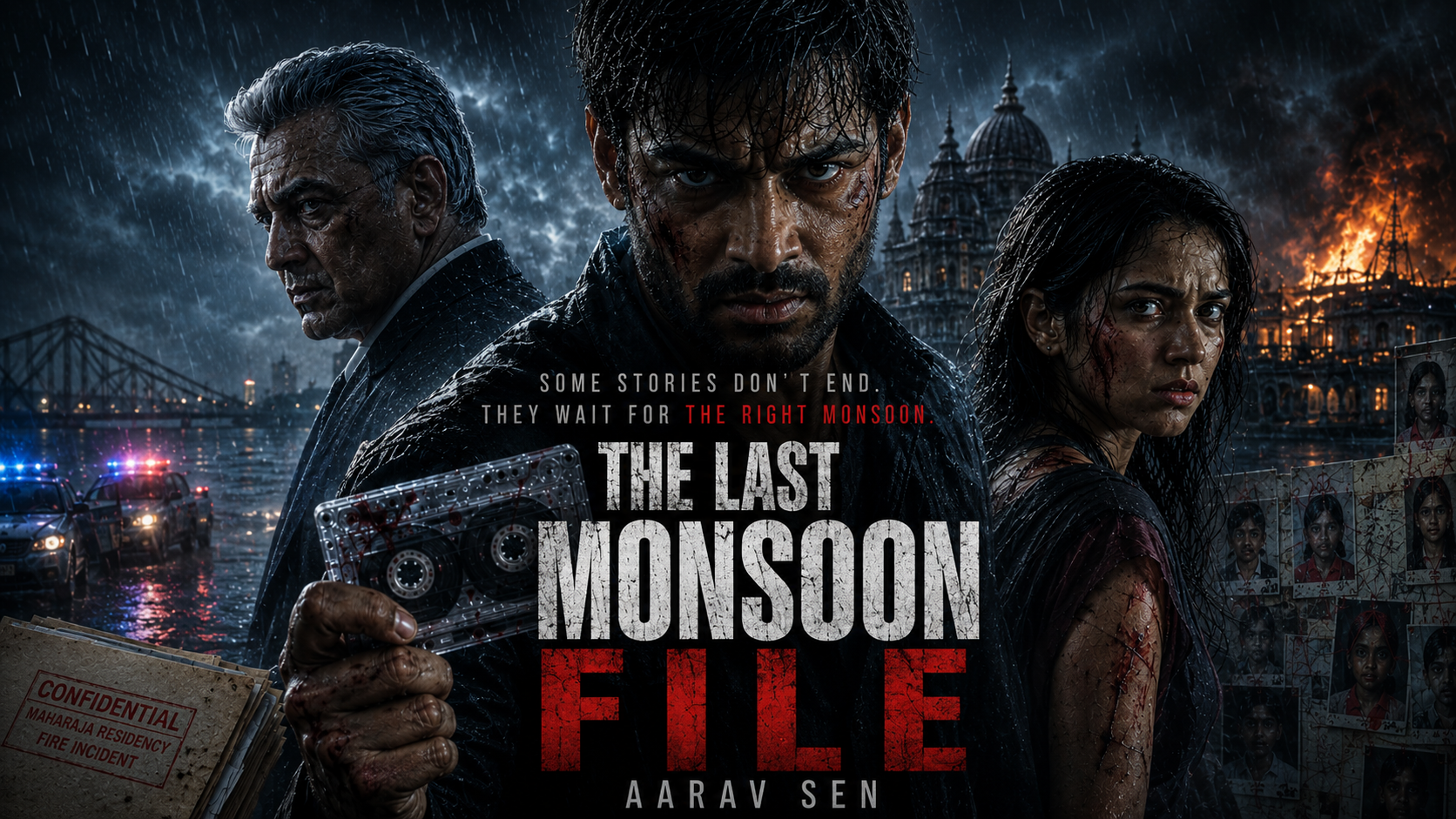
Leave a Reply