
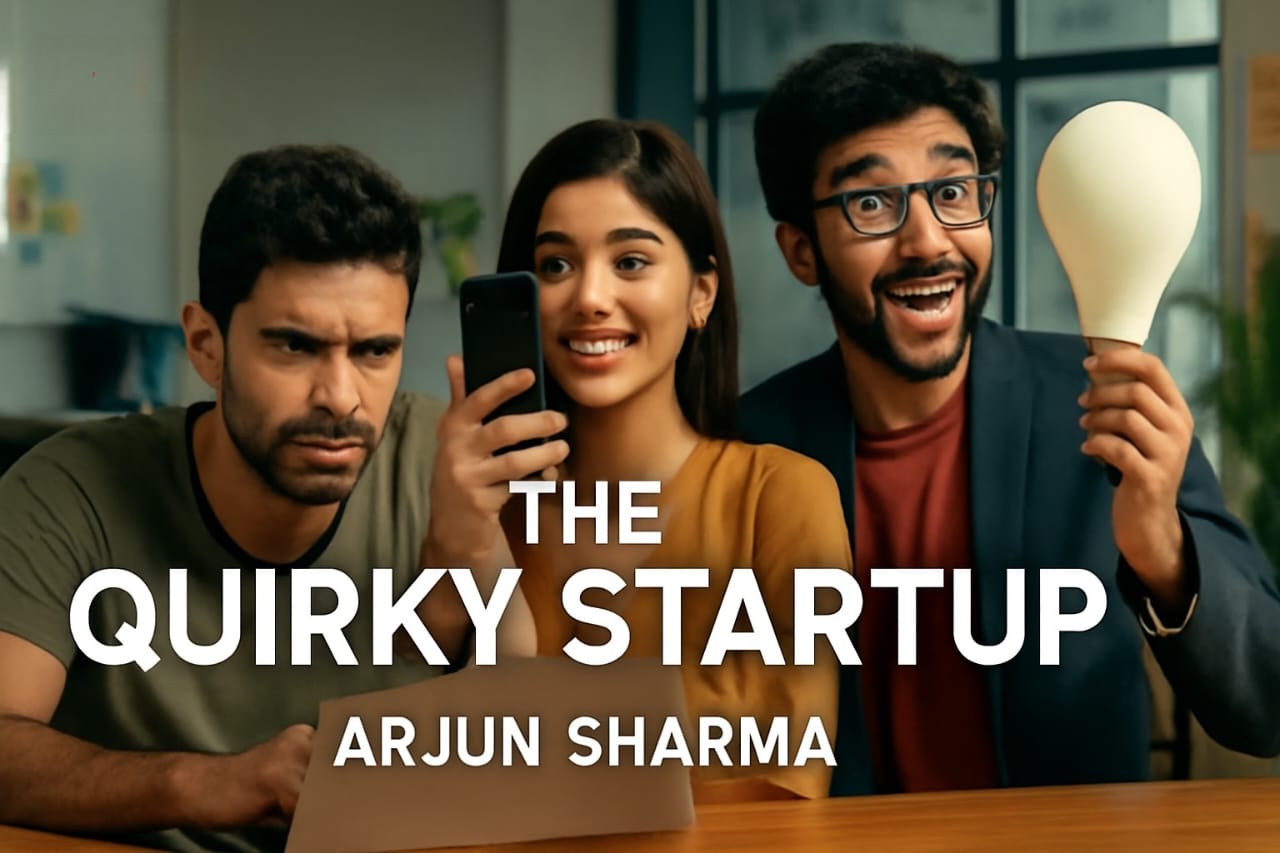
Arjun Sharma
Bangalore, the city where dreams are made—especially those involving startups and street food. For Ravi, Aarti, and Sandeep, it was a melting pot of both. The trio, childhood friends since their school days, had always been obsessed with one thing—food. But not just any food. They were street food enthusiasts. Their go-to hangouts included bustling streets filled with the sizzling sound of dosas, the smoky aroma of tandoori, and, of course, the crunch of samosas.
Ravi, the tech geek of the group, was the one who came up with the idea.
“Guys, what if we created an app to find the best street food in Bangalore?” Ravi said one evening, sitting on the balcony of their shared flat, a bowl of Maggi noodles in hand. He had the air of someone who had just discovered the cure for cancer. “We could make it so people could rate their favorite stalls, leave reviews, and even get discounts.”
Aarti, the self-declared influencer, raised an eyebrow. “And how would we make money from that? Street food is cheap, Ravi. People eat it because it’s affordable.”
“That’s where we come in,” Ravi replied confidently. “We’ll use analytics, GPS, and data-driven decision-making to make the app indispensable. Trust me, this will change the way people think about street food. Plus, we could get funding from investors who are always looking for something ‘innovative.’”
Aarti wasn’t fully convinced. “Isn’t that just a food review app? I mean, there are already a hundred food apps in the market.”
“No, no! This is different!” Ravi interrupted. “We’ll have a map, reviews, and real-time data. It’s a foodies’ paradise. Street food is an untapped market in the app world. We’ll have the edge.”
Sandeep, who had been munching on the leftover samosas, leaned forward with interest. “Wait, wait, wait. Are you telling me that we can rate the best pani puris in town? And we can get discounts on vada pavs?”
“Exactly!” Ravi grinned.
Sandeep’s eyes widened with excitement. “I’m in.”
Aarti sighed. “You’re both mad. But, okay, I’ll be the face of the app. You know, Instagram selfies, food vlogs, influencer marketing. I can totally make this go viral.”
Ravi clapped his hands. “Perfect! We’ll call it ‘StreetFoodie.’ Catchy, right?”
The next few weeks were filled with brainstorming sessions, late-night coding marathons, and endless meetings that had no purpose but to make them feel productive. Ravi spent his days obsessing over the code, Aarti worked on her social media presence, and Sandeep—well, Sandeep, true to his nature, took the unconventional route.
One morning, Ravi was knee-deep in lines of code when Sandeep burst through the door holding a bag of samosas.
“Guys, I’ve figured out our marketing strategy!” he announced dramatically, his voice full of excitement.
Aarti, who had been scrolling through Instagram, glanced up. “You mean, the five-minute marketing strategy that you’ve been promising us for a week?”
“Exactly!” Sandeep said, setting the bag of samosas on the table. “From now on, we send samosas with every email we send out. Free food for the people who sign up, a little taste of the app. It’s genius.”
Ravi frowned. “Wait, did you just say we’re sending samosas with every email?”
“Yeah! Who doesn’t love samosas? You send a samosa with every email, and suddenly we have a viral campaign on our hands. Plus, it’s street food! It’s relevant to our brand!”
Aarti laughed. “That’s the dumbest thing I’ve ever heard.”
Ravi, however, looked intrigued. “Well… it’s quirky enough to work. But, what if we run out of samosas?”
Sandeep looked horrified. “Don’t you worry about that, Ravi. I’ll handle the logistics. I’ve already set up an agreement with the best street vendors in the city. They’re ready to supply the goods.”
Aarti slapped her forehead. “We’re going to be bankrupt before we even launch.”
Despite her doubts, the group decided to go with it. Over the next few days, they worked around the clock, coding, filming videos, and setting up street food partnerships. Sandeep managed to get a deal with several street vendors who were, oddly enough, thrilled about the idea of their food being shipped alongside every email. Aarti’s Instagram followers ballooned as she posted quirky street food photos, using #StreetFoodie.
Everything was coming together—until the day they decided to pitch to investors.
The trio arrived at a glitzy tech office downtown, all dressed in their best “startup” attire. Ravi had his usual hoodie, Aarti wore a crop top with the words ‘Food Is Life’ printed on it, and Sandeep, as always, was in a Hawaiian shirt and shorts.
They were greeted by an investor who barely looked up from his phone. “You have 10 minutes.”
“Thanks for your time,” Ravi said, taking a deep breath. “We’re StreetFoodie, and we’re here to revolutionize the street food industry.”
The investor looked up briefly. “I don’t get it. What is ‘street food’?”
Aarti, who had done the most research on food trends, quickly chimed in. “It’s… you know, the stuff you eat from food stalls on the side of the road. Tacos, pav bhaji, dosas…”
The investor’s face remained blank. “I don’t really eat that stuff. I prefer five-star meals. You know, fine dining?”
Sandeep immediately jumped in, “But that’s the thing! Our app makes you feel like you’re eating at a five-star place, while still enjoying the authenticity of street food. Think about it: fine street food.”
There was an awkward silence. The investor adjusted his glasses, clearly not sold.
“Look,” Ravi said, trying to salvage the pitch, “this is an untapped market. We’ve already got thousands of users signed up. We just need the funding to scale up.”
The investor raised an eyebrow. “So… street food lovers are your target audience?”
“Exactly!” Ravi said, gaining confidence.
The investor tapped his pen against the table. “I think… I’ll pass.”
And with that, their pitch ended in disaster.
“Who doesn’t like street food?” Sandeep groaned, as they walked out of the meeting room. “This is ridiculous.”
“I can’t believe we spent two weeks building an app just for this,” Aarti muttered, scrolling through her Instagram feed.
Ravi stared ahead, deep in thought. “Okay, we’re not giving up. We need a plan B. And maybe… a plan C.”
Little did they know, the worst was yet to come.
The next morning, Ravi, Aarti, and Sandeep sat huddled in their tiny office—a cluttered room in a shared co-working space that smelled faintly of coffee and desperation. The failed pitch to the investor still hung in the air like the stale smell of a bad first date.
“So, we’re officially out of the running for investor money,” Aarti said, scrolling through her phone. She wasn’t particularly surprised, but the reality was still sinking in. “Great.”
Ravi sighed, adjusting his thick-rimmed glasses. “It’s not over yet, guys. I mean, we’ve only just begun. We need to push harder. Maybe investors don’t get it, but the people do.”
“You sound like a motivational speaker,” Sandeep remarked from the corner of the room, munching on a pack of chips. “But I get it. We’ll just keep making noise on social media and convince them with sheer… persistence?”
“Exactly,” Ravi said, his tone upbeat. “Let’s make this app viral. We’ll focus on people. The app doesn’t just show where the best food is—it’ll make people’s taste buds tingle. We need content. We need buzz.”
Aarti’s phone buzzed, and she glanced at it with a resigned expression. “Oh, great. The food fight video is up.”
Sandeep jumped to his feet. “The food fight video! It’s up?”
Aarti groaned. “I don’t know what happened. One of the vendors we partnered with got into a huge mess with a rival stall, and we accidentally caught it all on camera. It went viral. Now people think our app is somehow linked to food fights.”
She showed them the video—three street vendors, two carts, and an epic battle of samosas flying through the air. The title read, “StreetFoodie: The App That’s Stirring Up More Than Just Taste Buds.”
Ravi stared at the screen, wide-eyed. “Well, that wasn’t… part of the plan. But… maybe we could turn it into something? A viral marketing tactic?”
“Like what, a food fight competition?” Aarti snapped. “People will think we’re promoting violence now. What next? A fight to the death over pani puri?”
Sandeep, however, was already spinning ideas in his head. “No, no, listen. This is an opportunity. People love drama. We embrace it. We turn this into our ‘brand story.’ You know, like… ‘A street food app that’s not afraid to make some noise.’”
“Are you serious?” Aarti crossed her arms. “Are we really going to use this as a marketing strategy?”
“I think we should,” Ravi said slowly, warming to the idea. “It’s bold, it’s edgy, and it’s… well, it’s certainly memorable.”
“Yeah, and it’s also completely out of control,” Aarti retorted. “We’re not even sure we can legally show that video anymore. What if we get sued by the vendors?”
Sandeep ignored her objections, already texting a few of his contacts to get the video reposted. “It’s happening. People are talking about it. We can work the ‘disruption’ angle. Let’s own the chaos.”
Later that day, Ravi set to work on improving the app. He added a new feature—a “Chaos Meter”—that tracked how intense the street food scene was at various locations, based on factors like popularity, crowd size, and, of course, food fights. His fingers flew across the keyboard, inputting lines of code that somehow made the app feel both interactive and ridiculous. Meanwhile, Aarti filmed a video, showing off her “best food fight experience” from the video, with her usual influencer flair.
She uploaded it to Instagram, with the hashtag #StreetFoodieChaos. Within hours, it was all over Bangalore. The street food world was buzzing. The “food fight video” was not only trending on Twitter, but it also found its way into food bloggers’ posts and even a few mainstream news outlets. People were talking.
“I can’t believe this is working,” Aarti said, staring at her phone screen, seeing the influx of likes, comments, and shares. “People are actually buying into this.”
Sandeep clapped his hands. “You see? What did I tell you? We’re creating an experience. Not just an app.”
The three of them sat around the office table that evening, brainstorming new ideas for their startup. Ravi was furiously typing away, tweaking code and integrating social media feeds into the app. “What if we offered people the chance to win free food by reporting the best street food stalls in their area?”
Aarti nodded. “That sounds good. Let’s get people engaged. Make them feel like they’re part of the StreetFoodie community.”
“And then we’ll send them a free food voucher,” Sandeep added, “But, instead of the usual voucher, let’s send them food in the mail. Like… a box of random street food. It’ll be a surprise every time!”
“Wait,” Ravi said, tapping his chin thoughtfully. “Are we sure we can send food in the mail? That could get complicated.”
“I’m not talking about actual delivery,” Sandeep explained. “It’s more like a ‘mystery snack pack.’ You can’t go wrong with mystery snacks. We could partner with local vendors and have them ship small portions. The mystery is part of the fun!”
Aarti raised an eyebrow. “I’m starting to think this is a very bad idea.”
But Sandeep was already drafting up a plan. “We’ll call it the ‘StreetFoodie Surprise.’ People will love the mystery. You get a box of snacks from different street vendors every month. It’s like a culinary adventure in a box.”
Ravi, always eager to try something new, grinned. “We’ll integrate this with the app. People can share their mystery snack packs on social media, tag us, and get rewards. It’ll be fun. People love surprises.”
“I just hope we don’t get sued for sending people stale food,” Aarti muttered.
Two weeks later, the three friends were sitting in their office, looking at their growing list of users. The app had gone from a small idea to something much larger. They had partnered with over twenty street vendors, offered surprise snack packs, and gained a solid following of food lovers.
But it wasn’t all smooth sailing. The app’s newest feature—the “StreetFoodie Chaos Meter”—was drawing mixed reactions. Some users loved the idea of tracking chaos, while others thought it was a gimmick.
But the real problem came one afternoon when Ravi received a call from a food delivery service.
“Hello, is this Ravi from StreetFoodie?” the voice on the other end asked.
“Yeah, that’s me. What’s up?”
“You’ve been flagged for sending food via postal mail. We’re not sure how you got past the system, but we’re shutting down your account. You’ve violated health and safety protocols.”
Ravi’s heart sank. “What? No! We were just—”
“Sorry, but we have to protect our delivery standards. Good luck with your… ‘chaotic’ food app.”
Ravi looked at his phone, seeing a notification pop up—StreetFoodie had just been removed from the app store.
“Guys, I think we’re in trouble,” he said, a nervous laugh escaping his lips.
“Maybe we’re just ahead of the curve,” Sandeep grinned. “We’re innovators, after all.”
Aarti, though, wasn’t as amused. “This is bad. Really bad. What now?”
Ravi stared at his phone, fingers tapping the screen. “Well, we could go back to the drawing board… or we could just keep making noise.”
“We’ll keep making noise,” Sandeep said confidently. “After all, we’re StreetFoodie. What’s life without a little chaos?”
The next few days were a blur of chaos and frustration. Ravi had been tirelessly working on fixing the issues with the StreetFoodie app, only to find that every time they made progress, something else would go wrong. Aarti was still reeling from the food delivery debacle, her social media accounts flooded with confused and angry followers. Sandeep, on the other hand, was determined to see the silver lining, even if it was just a small glimmer.
“We’ll get through this,” he said one evening, as they sat in their cramped office, the walls covered with half-finished ideas and pizza boxes. “Every great company faces setbacks. We’re just getting ours out of the way early. Think of this as a learning experience.”
“I’m learning that we’re going to get sued into oblivion,” Aarti said with a sigh. She scrolled through her Instagram feed, grimacing at yet another complaint post from an angry follower. “Who knew people would be so passionate about food delivery regulations?”
Ravi, hunched over his laptop, sighed. “I’m trying to fix everything, but it feels like I’m just patching holes in a sinking ship. The app’s been flagged, we’ve lost access to the app store, and we’re getting slammed with emails from angry vendors who think we’ve betrayed them by messing with delivery.”
Sandeep leaned back in his chair, his fingers steepled in front of his face. “Okay, okay. Let’s take a breath. The app’s not the end-all be-all. We’re not just a tech company. We’re a brand. And brands can weather storms.”
“I’m not sure ‘chaos’ is a great brand identity,” Aarti replied dryly. “What are we supposed to do now? Just wait until our app is back up? I don’t think our customers are going to just forget we sent them stale food in the mail.”
Sandeep waved her off. “That’s where we can pivot! We can turn this into a campaign. Let’s double down on the chaos theme. Embrace it. People are already following us because we’re different, right? Why not own it?”
Aarti, who had spent the past few days fielding endless customer complaints, wasn’t convinced. “Embrace chaos? We’re on the verge of being kicked out of the food industry altogether.”
“Exactly,” Sandeep said, eyes lighting up. “And that’s why people will love us. We’re not just about food anymore. We’re about challenging the system, shaking up the status quo. Let’s be rebels.”
“Rebels?” Ravi repeated, sitting up straighter. “You mean, like… food anarchists?”
“Exactly!” Sandeep grinned. “I see it now. StreetFoodie could be the punk rock of food apps. We’re not just telling people where to get their food. We’re telling them to get it, to break the rules, to challenge the norms. We could even add a section called ‘Rebel Stalls,’ where people can rate the most daring street food stalls—the ones with crazy fusion foods, or the ones that serve at the most outrageous hours.”
Aarti raised an eyebrow, half in disbelief. “You really think ‘rebels’ is the answer? I thought our goal was to make people love street food, not make them feel like they’re breaking the law.”
Ravi’s eyes narrowed, as if a lightbulb had flickered on. “Hold on. This could actually work. If we position ourselves as the ‘bad boy’ of food apps, it could draw a whole new crowd. Street food isn’t just food; it’s part of the culture. People don’t want another polished, sterile app telling them where to eat. They want realness. They want the gritty side of the food world. And we can give them that.”
Sandeep was practically bouncing in his seat. “This is it! The revolution of food apps. No more boring, corporate nonsense. We make it raw. We make it fun. We make it street food, the way it was meant to be—unpredictable and full of surprises.”
Aarti finally cracked a smile. “I can’t believe I’m saying this, but… fine. Let’s be rebels. But if this backfires, I’m going back to Instagram selfies and sponsored posts.”
“We’ll make it work,” Ravi said, typing away at his laptop. “I’ll get the app back online with the new rebel features. I’ll make sure the ‘Rebel Stalls’ section is up and running.”
Sandeep leaned back and raised his arms as if declaring victory. “And I’ll start reaching out to vendors who love the idea of breaking the rules. The ones who are always ready to serve up food at 3 a.m. or throw together some insane fusion dish. They’re our people.”
Two weeks later, the newly rebranded StreetFoodie app was ready to go live again. The trio had worked tirelessly on revamping the concept. Ravi had added a “Rebel Stalls” section where users could vote on the craziest street food experiences, like the stall that sold dosas wrapped in ice cream or the place that served samosas filled with chocolate.
The new version of the app was a hit among food enthusiasts, especially those who weren’t interested in the usual polished, corporate food apps. They liked the idea of discovering the grittier, underground side of the food scene, where the most authentic experiences often happened off the beaten path.
Aarti’s influencer marketing had taken a new turn, too. She started posting daily videos of herself trying “Rebel Stalls” from the app, showing off wild combinations like golgappas filled with spicy fried chicken or a pav bhaji served in a cone. She’d caption each post with quirky lines like, “Where’s your favorite rebel stall? Don’t be shy, tell us! #StreetFoodieRebel #BreakTheRules.”
The word of mouth spread quickly, and before long, the app had gained thousands of new users. They weren’t just downloading it—they were engaging with it. People were uploading their own “Rebel Stalls” videos, voting for their favorite dishes, and sharing their experiences on social media.
But things really started to take off when a well-known food critic in Bangalore tweeted about the app: “If you’re tired of the usual clean-cut food apps, try StreetFoodie. It’s the app for the food rebels, the ones who want to get their hands dirty and eat something unexpected.”
That tweet sent the app viral. More vendors reached out to be part of the Rebel Stalls program, and even larger food brands started noticing StreetFoodie’s edgy marketing approach.
Still, the trio had no idea that their “chaos” marketing strategy was about to lead them into a situation they hadn’t anticipated.
One evening, Ravi received an urgent phone call. It was from a lawyer.
“Hello, Mr. Ravi,” the lawyer said. “I represent the owner of the largest food delivery service in Bangalore. It has come to our attention that your app, StreetFoodie, has been promoting unsanctioned food deliveries. We need to have a conversation.”
Ravi’s stomach dropped. “What? But we’re not delivering food anymore! We’re just an app!”
The lawyer’s tone was cold. “That may be true. But we believe you’ve found another way to breach the system. Let’s discuss it further.”
Ravi turned to Sandeep and Aarti, whose faces were full of worry.
“I think we’re in real trouble now,” Aarti said quietly.
“Let’s see if we can turn this into an opportunity,” Sandeep said, grinning. “Rebels, remember?”
The following day, Ravi couldn’t shake off the feeling of dread that clung to him like a heavy cloak. The phone call with the lawyer had left him uneasy. He had been so focused on their “rebellion” that he had failed to consider the legal consequences of their disruptive app. As he sat in their small office, watching Sandeep and Aarti excitedly brainstorm new ideas, his mind kept wandering back to the lawyer’s ominous words.
“I think we’re about to be in a lot of trouble,” Ravi finally said, breaking the silence.
Aarti looked up from her phone. “What’s the matter now?”
Ravi hesitated before telling them about the lawyer’s call. “Apparently, the big food delivery service is coming after us for promoting unsanctioned deliveries. They say we’ve breached their system. I’m not sure what they mean, but I don’t think it’s good.”
Sandeep, ever the optimist, leaned back in his chair, unfazed. “Well, well, well. Looks like we’ve ruffled some feathers. I told you we’d attract attention. But if they’re coming after us, it means we’re doing something right, right?”
Aarti threw her hands up in exasperation. “Are you serious right now? We’re on the brink of a lawsuit, and you’re acting like we just got a rave review?”
“Think of it this way,” Sandeep said with a grin, “if we survive this, we’ll be bigger than ever. The rebels are always the ones who get remembered.”
Ravi didn’t share his enthusiasm. “This isn’t the kind of publicity we need. What if they sue us? What if they shut down the app?”
Aarti sighed. “Okay, let’s not panic. We’ll figure this out. We need to contact the lawyer and find out what exactly they want. If we can clear up any misunderstandings, maybe we can avoid the lawsuit.”
Ravi nodded, still uneasy. “I’ll set up a meeting with them. But I don’t think we’ll be able to talk our way out of this.”
The next morning, Ravi arranged a meeting with the lawyer, who had warned him that it would be “a serious discussion.” As he walked into the lawyer’s office, his stomach was tied in knots. He had no idea how this would play out, but he knew one thing for sure—they needed to make this right.
The lawyer, a middle-aged man named Mr. Desai, greeted him with a firm handshake. “Mr. Ravi, I understand your startup is making waves, but I’m afraid you’ve crossed some lines. You’re not just an app company anymore—you’re involved in the logistics of food deliveries, which puts you in direct violation of several health and safety codes.”
Ravi sat down, trying to mask his anxiety. “But we don’t deliver food. We’re just connecting people with vendors. We don’t handle the actual logistics.”
“I’m aware of that,” Mr. Desai replied, adjusting his glasses. “But your app, through its ‘Rebel Stalls’ feature, has indirectly facilitated unsanctioned deliveries. People are using your app to have food delivered in ways that bypass legal channels. And this, my friend, is a problem.”
Ravi felt a cold sweat form on his brow. “We didn’t intend for that to happen. We just thought people could vote for their favorite stalls and share their experiences. We never meant to encourage illegal activities.”
“Intent doesn’t matter,” Mr. Desai said, his tone sharp. “What matters is the outcome. And your app has created a situation where food is being delivered through unofficial means. We’re not interested in your intentions—we’re interested in stopping this.”
Ravi leaned forward. “Look, I get it. We’ve made mistakes. But we’re willing to cooperate. We want to fix this. We can remove the delivery feature entirely if that’s what it takes. We don’t want to break any laws.”
Mr. Desai raised an eyebrow. “That’s not enough. The damages have already been done. You need to pay for the illegal deliveries that have already been made. And, at the very least, you’ll need to remove the Rebel Stalls feature immediately.”
Ravi’s heart sank. “What kind of damages are we talking about? Are you suggesting a settlement?”
“I’m suggesting a large settlement,” Mr. Desai said, his voice cold. “Or we can go to court. Your call.”
Ravi’s mind raced. A settlement. Court. Both options felt like the end of their startup. But he wasn’t ready to give up just yet.
“We need to speak with our team first,” Ravi said, his voice steady despite the panic swirling inside. “I’ll get back to you with a proposal.”
As Ravi walked out of the lawyer’s office, he was consumed by worry. He hadn’t expected the stakes to be this high. They had started as a fun idea, something quirky and offbeat. But now it was more than just a startup—it was a legal nightmare waiting to happen.
Back in their office, Ravi filled Aarti and Sandeep in on the situation. “They want a settlement. And if we don’t pay, they’re taking us to court. We need to act fast.”
Aarti, always the pragmatic one, sat back and thought for a moment. “This is bad, but it’s not the end. Let’s figure out a way to keep the app alive without violating the delivery laws. What if we pivot to something else? We could become the official app for discovering food trucks, food festivals, and other legit events?”
Sandeep nodded eagerly. “I like it. It’s still in the food space, but it’s totally legal. And it’s in line with the whole ‘chaos’ brand. Food festivals are chaotic by nature, right?”
Ravi hesitated. “But would it work? We’ve built our brand on street food and rebellious vendors. If we pivot, will people still care about us?”
“We’ll make them care,” Sandeep said with confidence. “We’ve already got the following. We’ll just make a big announcement, a bold move. StreetFoodie isn’t just about food anymore—it’s about experiences. We’re not going to hide anymore. We’re going to make this work.”
Aarti smiled. “And we’ll do it the only way we know how—loud, bold, and with a little bit of chaos.”
Ravi took a deep breath. “Okay. Let’s do it. We’ll announce the pivot. But we need to act fast before this lawsuit drags us down any further.”
The next day, StreetFoodie made a dramatic announcement: they were officially pivoting to a platform for food trucks and festivals. The new app would feature the best food events, live updates on food trucks, and real-time scheduling. It was still street food, but this time, it was legitimate.
The announcement was met with mixed reactions. Some users were excited about the change, while others were disappointed. But the team pushed forward, and soon enough, the new StreetFoodie app began gaining traction in the food community. They managed to strike partnerships with some of the city’s top food truck vendors and food festival organizers, giving them the credibility they desperately needed.
However, they still had one major hurdle: the legal battle. But for now, at least they had a fighting chance.
Sitting in their office, watching the app’s user numbers grow again, Ravi couldn’t help but smile. “Well, this is definitely a chaotic ride.”
“Welcome to the revolution,” Sandeep grinned. “Let’s see how long we can keep shaking things up.”
The new pivot for StreetFoodie had worked better than Ravi, Aarti, and Sandeep had dared to hope. The app’s focus on food trucks and food festivals gave them a fresh identity—a more legitimate one, yet still brimming with the energy of rebellion they had started with. Vendors were reaching out to join their platform, and food enthusiasts were quickly rediscovering the quirky charm of the app, now branded as the ultimate guide to finding food events in Bangalore.
But even as their user base grew and their market presence solidified, the team couldn’t ignore the looming shadow of the legal trouble they were still entangled in. They had managed to delay the inevitable—by offering a substantial payment to the food delivery service’s parent company as a settlement—but the deal had come with strings attached. StreetFoodie was now under strict observation, and the company’s legal advisors had made it clear that one misstep could land them in deeper trouble.
Ravi had his hands full with updating the app’s features. The app was running smoothly for now, but he knew better than to rest on his laurels. Aarti was still keeping up with her influencer posts, hyping up the new pivot with an enthusiastic tone that had her followers on edge with excitement. Sandeep, as usual, had ideas for days, most of them too far out there to even discuss. But it was when a new idea of his came to the table that the team began to wonder if they’d truly turned a corner—or if they were about to veer off the road again.
It was a Thursday afternoon when Sandeep barged into the office, beaming. He was holding his phone in one hand, and his eyes sparkled with the glee of someone who had just unearthed a treasure chest.
“Guys! I’ve figured out how we take StreetFoodie to the next level. It’s genius!”
Ravi and Aarti exchanged wary glances. “Uh-oh,” Aarti said, putting down her phone. “What now?”
“No, seriously, this is going to work,” Sandeep insisted, practically vibrating with excitement. “What if we turned StreetFoodie into an experience rather than just an app? Like, not just food trucks or festivals, but… a full-blown street food tour experience.”
Ravi frowned. “What do you mean by ‘experience’?”
“I’m thinking… guided tours,” Sandeep said, tapping his fingers on the table like he was laying out a well-thought-out strategy. “We team up with local food experts and influencers, and they can take groups of people on curated food journeys around the city—hidden gems, off-the-beaten-path stalls, the best late-night eats. We could even add a storytelling aspect—each stop could have a unique history or local flavor tied to it.”
Aarti’s interest was piqued despite herself. “Okay, I get the idea, but how is that any different from just a normal food tour? Isn’t that what people already do on weekends?”
Sandeep grinned, clearly anticipating this question. “Well, first off, we’re doing it. StreetFoodie’s brand is all about the unexpected. We’re not just running another food tour; we’re running a chaotic, rebellious food adventure. The tour could be called, I don’t know, ‘The Rebel’s Feast’ or ‘Foodie Unchained’—something that speaks to people who want more than just a safe, predictable food experience.”
Ravi raised an eyebrow. “And where do we fit into all of this? We’re not tour guides.”
“Exactly!” Sandeep said. “We don’t have to be. The app could provide the infrastructure, the marketing, and the bookings. We team up with existing food tour companies and offer them a platform to use. You know, like an Airbnb model for food tours—people can sign up through our app, pay for their tickets, and we handle the logistics.”
Aarti’s brow furrowed. “Okay, but how are we going to make money off of this? I’m guessing we’re not just doing this for fun.”
“No, no,” Sandeep said, getting more animated. “The money comes from the tours. StreetFoodie takes a small cut of the booking fee. It’s a win-win. We get to add an entirely new feature to the app, attract tourists, and still stick to our brand identity.”
Ravi wasn’t entirely sold on the idea. “But won’t this require a lot of work? We’re already struggling with the app’s regular maintenance. Are we prepared to take on an entire new section of the business?”
Sandeep waved it off. “No worries. We can outsource the actual tour guides. What we need to focus on is the platform. The app will be the go-to spot for booking food tours, getting information, reading reviews, and—this is the kicker—setting up ‘surprise’ tours. Picture this: A group of food lovers book a last-minute tour, not knowing where they’ll be going, and we’ll send them to random street food stalls all over the city. It’s chaos! It’s fun! It’s us.”
Aarti leaned forward, her expression thoughtful. “Hmm. I kind of like the sound of it. It’s different from what everyone else is doing. And it fits our brand. But, Sandeep… we need to get the logistics in order. You’re talking about working with a ton of vendors, managing bookings, ensuring the tours actually go smoothly. It’s more than just a marketing idea.”
“I know, I know,” Sandeep said. “We’ll need to be strategic. But if we can get it off the ground, it’s going to be huge. We’ll make our tours so wild and unpredictable that people won’t be able to stop talking about them. We could even make ‘secret’ tours—no one knows the destinations until they arrive.”
Ravi leaned back, rubbing his chin thoughtfully. “It could work. But we’ll have to test the idea first. We can’t just jump into a citywide operation. Let’s pilot it in a smaller, more controlled way. Maybe just one tour, one city block, to start?”
“Exactly!” Sandeep said, clapping his hands. “We’ll keep it low-key at first, make sure it’s seamless, and then expand. I’m telling you, guys, this could change the game.”
They spent the next few days strategizing. Ravi worked on implementing the necessary changes to the app, preparing the tour feature, while Aarti reached out to local food bloggers and influencers to see who might be interested in helping them with marketing. They got in touch with food tour operators who could work with them, setting up meetings to iron out the details.
As the pieces of the plan started to fall into place, the reality of what they were about to do began to sink in. This wasn’t just a small tweak to the app anymore. It was a full-fledged expansion of the StreetFoodie brand into uncharted territory. They had no guarantee it would work. In fact, it could all backfire spectacularly. But then again, wasn’t that what they had signed up for in the first place?
A week later, the pilot “Rebel’s Feast” tour was ready to launch. They had curated a one-block route featuring five of Bangalore’s most eccentric food stalls. The twist? The locations weren’t revealed until the participants showed up for the tour. The guests were guaranteed a surprise—a mystery food adventure, curated by StreetFoodie.
On the day of the tour, Ravi, Aarti, and Sandeep stood in front of a small crowd of eager food lovers. It was a modest turnout—only ten participants—but their excitement was palpable. Aarti was holding the StreetFoodie banner, ready to greet the guests. Sandeep, as usual, was bouncing on his feet, hyped up on the adrenaline of the moment.
“Welcome, welcome, all you brave souls,” Sandeep announced, his voice filled with dramatic flair. “You are about to embark on the wildest food journey of your lives. No rules. No boundaries. Just street food and chaos.”
Ravi raised a hand. “And let’s remember: We’re here to have fun. Food is fun. This is what StreetFoodie is all about.”
As the first group took off on the tour, Ravi and Aarti exchanged a glance. It was happening. They were taking a big step forward, and it felt like the beginning of something new.
The next few hours flew by in a whirlwind of excitement. The group was loving the surprise stops, and the social media posts started pouring in. Aarti couldn’t help but smile as she read the tweets and Instagram posts from the tour guests.
“This is incredible,” she whispered to Ravi. “It’s actually working.”
For the first time in a long while, they were starting to believe in their crazy, chaotic dream again.
The morning after the first “Rebel’s Feast” tour, Ravi woke up to a flurry of notifications. He had barely slept the night before, anxiously refreshing his phone every few minutes, waiting to see how the event had been received. Now, it seemed like the world had taken notice. Social media posts flooded in—photos of smiling participants holding up quirky signs reading “Food Rebel,” or pictures of them sitting cross-legged in front of a steaming bowl of biryani, grinning from ear to ear. The hashtag #RebelsFeast was trending.
“Ravi! You won’t believe this!” Aarti burst into the office, holding her phone triumphantly. “People are loving it! Check this out.”
She handed him the phone, and he saw a post from a well-known Bangalore food blogger. The caption read: “I’ve done a lot of food tours in my day, but never one like this! Today’s Rebel’s Feast with StreetFoodie was a wild ride. If you love street food and you’re not afraid to embrace chaos, this is the tour for you. Highly recommend!”
Ravi grinned, his shoulders relaxing for the first time in weeks. “This is it. We’ve found something real. We’ve cracked it.”
Sandeep, who had been pacing back and forth in the office with a cup of coffee, grinned. “Told you! I knew this would work. We’re not just another food app. We’re changing the way people experience food.”
Aarti nodded, though her usual enthusiasm was tempered with cautious optimism. “Okay, we’ve had a great first run. But what’s next? We’ve had a successful tour, but we need to think long-term. We can’t just ride the wave of one tour.”
Ravi turned to Sandeep, who was already pulling up a map on his laptop. “What’s next, Sandeep? You’ve got a million ideas running through your head, don’t you?”
“Of course!” Sandeep replied, eyes alight with excitement. “First, we scale up. We need to do more tours. I’m thinking we expand to other neighborhoods, get different food influencers involved, and make it even more unpredictable. And we can add new features to the app—like live, interactive tours where users can vote in real-time on which food stall they want to visit next. It’ll be like ‘choose-your-own-adventure’ with food!”
Aarti raised an eyebrow. “I’m listening. But how do we get people to actually pay for these tours? Are we just hoping word of mouth will keep the momentum going?”
“That’s where the magic happens,” Sandeep said with a wink. “We’re going to offer exclusive memberships. People who love the Rebel’s Feast experience can sign up for ‘Rebel Foodie’ status. It’s like VIP access to hidden food gems and secret tours. They’ll get early access, discounts, and even invites to private food events. You know, the ‘underground’ stuff.”
Ravi was impressed by Sandeep’s plan. “That’s a solid idea. We create a sense of exclusivity. People love being part of something unique, something they can brag about.”
Aarti leaned forward, intrigued. “And how do we get food vendors involved in all of this? We can’t run a tour without their participation.”
“We’ve already got a great relationship with a few vendors,” Ravi said. “Let’s just keep building on that. We could even help them promote their stalls on the app as part of the Rebel Foodie membership. It’s a win-win for everyone.”
Sandeep clapped his hands. “Exactly! Now we’re talking. I think we’ve got the blueprint for the next stage.”
But as the trio basked in the glow of their recent success, Ravi couldn’t help but feel a gnawing doubt in the back of his mind. The legal threats, while temporarily on hold, still loomed over them. The food delivery company hadn’t dropped the lawsuit yet, and if their new food tour model became too popular, they might find themselves back in hot water.
Ravi decided to take action. After their brainstorming session, he made an appointment with their legal team to address the looming concerns. The last thing they needed was for the app to become embroiled in another scandal that could derail everything.
Later that week, Ravi sat across from their legal advisor, Priya, in a sleek office downtown. She was a sharp lawyer with a reputation for keeping her clients out of trouble, but today, her usually confident demeanor was tempered with concern.
“So, the food delivery company is still monitoring your operations?” Priya asked, looking at Ravi over the rim of her glasses. “I’m not sure how they’re going to react to your new food tours, especially since they involve food from multiple vendors. That could be a gray area in terms of regulations.”
“I know,” Ravi said, rubbing the back of his neck. “We didn’t intend to go this far, but it’s clear now that the Rebel’s Feast tours have struck a chord. People are loving it. The app’s traffic is up, our followers are growing, and we’ve got new revenue streams with memberships.”
“I understand that. But you’ve created something that doesn’t quite fit into any legal framework right now,” Priya warned. “You’re facilitating tours, but the delivery element is still there, even if it’s not your primary business. You need to be cautious.”
Ravi leaned forward, his voice steady. “What if we made the tours completely independent from any kind of delivery service? What if we focused purely on the experience—no food being shipped or delivered? The app would only be a platform for people to sign up, see tour schedules, and get updates. We’re only acting as a connector, not a delivery provider.”
Priya nodded slowly. “That could help. But you’ll need to be very clear in your messaging. Make sure the app never facilitates the actual movement of food outside of what’s strictly legal. Any perception of you acting as a delivery company again could come back to haunt you.”
Ravi’s mind raced. Could they make that work? Could they isolate the food tour business enough to avoid legal trouble while still capitalizing on their newfound success?
“I think we can do that,” Ravi said finally. “We’ll make it clear that StreetFoodie is all about the experiences, not about delivery. I’ll talk to Aarti and Sandeep. We can keep expanding the food tours and focus on creating new experiences for users.”
Priya smiled, but her expression remained serious. “Just make sure your terms and conditions are watertight. If you continue to innovate in the food space, you need to be prepared for the long haul. Stay ahead of the curve, and always be ready for any potential legal issues.”
Back at the office, Ravi briefed Aarti and Sandeep on the meeting. “We’ve got a green light to continue expanding the tours, but we have to be extra careful. We’re not in the clear yet, so we need to make the app all about the experience, not about delivery.”
Sandeep was already running through ideas. “What if we partnered with local food festivals to make the tours more of an all-day event? A day of food, music, and culture? We could even feature street art and performances.”
Aarti raised her hand. “Wait, wait! What about exclusive access to food festivals? We could offer our Rebel Foodie members VIP passes for entry. Think about it: ‘VIP Foodie Tours’—they get to skip the line and go straight to the best food trucks.”
Ravi smiled. “I think we’re on the right track. Let’s take this slow, stay legal, and keep the fun going. If we get this right, we’ll be unstoppable.”
The next chapter of StreetFoodie was beginning. But with their innovative spirit and unwavering ambition, it seemed like only a matter of time before they were in the spotlight once again—hopefully for all the right reasons.
The glow of success from the Rebel’s Feast tours hadn’t faded, but Ravi knew that in the startup world, it was easy to go from hero to zero in the blink of an eye. The app was expanding rapidly, but so were the challenges. Legal concerns still loomed over them, and there was the constant pressure of maintaining the momentum they’d built. They were no longer just a small food app. They were a brand—an unpredictable, chaotic, sometimes controversial, but always exciting brand.
StreetFoodie’s pivot to food tours had given them an edge in the market, and their “Rebel Foodie” membership was growing in popularity. People loved the idea of secret food experiences and having VIP access to the most exclusive, off-the-beaten-path food vendors. But, as their following grew, so did the complications.
It was a typical Friday afternoon when Ravi received the message that would set the next stage of their journey in motion. His phone buzzed, and a name flashed on the screen: Priya Deshmukh, Legal Advisor. Ravi’s stomach did a little flip.
He picked up the phone. “Priya, what’s up?”
“Ravi, we’ve got an issue,” Priya said, her voice sounding more urgent than usual. “The food delivery service is escalating. They’ve sent us a formal cease-and-desist order. They’re claiming that StreetFoodie’s new business model is still encroaching on their territory. This time, they’re not playing around.”
Ravi’s heart sank. “What do they want now?”
“They want you to halt any further expansion of the Rebel’s Feast tours. They’re claiming that by organizing these events and acting as the intermediary for food vendors, you’re indirectly providing delivery services without a proper license,” Priya explained. “I’m advising you to take this seriously. They’re prepared to sue if you don’t comply.”
Ravi leaned back in his chair, a deep sigh escaping him. Aarti and Sandeep were sitting across the room, their heads snapping up at his reaction.
“What’s wrong?” Aarti asked.
“It’s the delivery service,” Ravi said, his voice low. “They’ve sent us a cease-and-desist. They’re claiming our food tours are still violating delivery regulations. They want us to stop expanding the tours—at least until we can prove we’re not acting as a delivery service.”
Sandeep raised an eyebrow. “But we’re not delivering anything! We’re organizing food tours.”
“I know,” Ravi said, rubbing his temples. “But that’s the problem. We’re facilitating the experience. We’re not just connecting people with food stalls. We’re acting as an intermediary in the food ecosystem. That’s what they’re arguing. And this time, they’re serious.”
Aarti groaned. “This is insane! We’ve jumped through every hoop we can to stay legal, and now this? We’re not even delivering food!”
“I know, I know. But this is the situation we’re in,” Ravi said. “We need to decide whether to fight this or pull back.”
Sandeep leaned forward, tapping his fingers on the table. “What if we go even further with the tours? We add more content, make them even more immersive. If we offer food experiences—not deliveries, not even food sampling—just experiences, we might be able to sidestep the legal issues.”
Aarti raised an eyebrow. “What kind of experiences?”
“Well, what if we did something like food history tours?” Sandeep said, clearly thinking on his feet. “We could partner with food historians, chefs, and cultural experts to provide guided walking tours around food heritage sites in Bangalore. The goal wouldn’t be to deliver food; it would be to educate people about the food culture, the origins of street food, and its evolution.”
Ravi’s eyes lit up. “I like that. We keep it legal, and we still keep the food theme. We could offer some ‘behind the scenes’ looks at how food is made, and even have live cooking demonstrations. No deliveries involved, just knowledge and experience.”
Aarti was on board too. “And we could even tie in with some local festivals. Maybe get some of the vendors to teach cooking classes, or host food storytelling nights. People are obsessed with immersive experiences right now.”
Ravi smiled, feeling the weight on his shoulders start to lift. “It’s risky, but it might just work. We pivot, but stay within the lines. We focus on the cultural aspect of food, rather than just the consumption of it.”
The next few weeks were a whirlwind of activity. The team, fueled by new energy, worked tirelessly to redesign the food tours as an educational, immersive experience. They called it the “Food Heritage Walks”—a deep dive into the history, culture, and flavors of Bangalore’s street food scene, from its early roots to the contemporary culinary landscape.
The app was updated to reflect this new direction. They added a new section that allowed users to sign up for various “experiences,” ranging from historical tours to cooking demonstrations, and live storytelling sessions from renowned chefs. They even partnered with local historical sites and cultural centers to host events where participants could explore food culture from a deeper, more authentic perspective.
But even as they rebranded, the team was still mindful of the legal threats hanging over them. Ravi stayed in constant contact with Priya, making sure their terms of service were ironclad, and that they weren’t stepping on any legal toes. Sandeep worked with food vendors to shift the focus from delivery to experiences, making sure to emphasize education and cultural engagement. Aarti reached out to influencers and food bloggers to promote the new tours, all while ensuring that the marketing didn’t mention any form of delivery.
The first test run of the Food Heritage Walks was set for a Saturday morning. Ravi, Aarti, and Sandeep stood outside a bustling historical site in the heart of Bangalore, ready to kick off the first tour.
Aarti grinned at the group of participants, who were eagerly chatting about the day’s itinerary. “This is it,” she whispered to Ravi and Sandeep. “Our chance to prove that we can offer something beyond just food. We’re here to tell stories.”
Ravi nodded. “And hopefully stay out of legal trouble.”
The tour began with an introduction to the history of the city’s food culture. The guide, a local food historian, talked about the early influences of the Mughal Empire on South Indian street food and how ingredients like spices and rice became integral to the cuisine. Participants were led through narrow alleys, visiting traditional food vendors who had been around for generations, offering everything from fresh chutneys to hand-rolled dosas.
As they reached the first stop, a small food stall serving chai and biscuits, Aarti turned to Ravi. “You know, I think we’re onto something. This is exactly the kind of thing people want right now.”
Sandeep beamed. “I told you. People are hungry for more than just food. They want to experience food culture in its purest form. And we’re giving it to them.”
The rest of the day passed in a blur of cooking demonstrations, historical talks, and engaging food experiences. By the time the last stop was reached—a beautifully set-up food court that featured dishes from all the stalls they’d visited throughout the tour—Ravi couldn’t help but feel a sense of accomplishment. The tours had been a success, and they had done it without stepping into the risky territory of food delivery.
That night, as they wrapped up, Sandeep slapped a hand on Ravi’s back. “We’ve done it. We’ve actually done it.”
Aarti, ever the influencer, checked her phone and grinned. “Look at this—people are already posting photos and tagging us. We’re trending!”
Ravi took a deep breath, smiling. “We may have found our way through this mess after all.”
The following week after the success of the “Food Heritage Walks,” StreetFoodie found itself standing at the crossroads of opportunity and danger. The app was doing better than ever, with users eagerly signing up for tours and the membership program growing exponentially. People loved the immersive, educational food experiences, and the team had managed to navigate the treacherous waters of their legal concerns—at least for now.
But as the team celebrated their recent success, Ravi knew better than to get too comfortable. In the startup world, success was fleeting. The food industry was volatile, and they had been skirting the edges of a much larger, more powerful market. While the legal issues were on pause, they had no guarantees that they wouldn’t resurface. Plus, the competition was starting to take notice of StreetFoodie’s rise.
“I’ve been reading up on what’s happening in the food app world,” Aarti said one morning, scrolling through her phone with a frown. “Look at this.”
She showed Ravi and Sandeep a news article about a large, established food delivery service that had just launched its own ‘curated food experiences’ platform, much like StreetFoodie’s tours. The company had the money and resources to bring in top influencers, hire the best chefs, and partner with high-end food festivals. It was a direct challenge to what StreetFoodie had built.
Ravi leaned over to read the article. “They’re going to kill us,” he said, almost in disbelief. “This is exactly what we’re doing, but with a massive budget and all the connections. We’re not going to be able to compete with them directly.”
Sandeep’s usual enthusiasm dimmed. “We’re too small. We don’t have their resources, their marketing, or their scale. How do we fight back against that?”
Aarti shook her head. “No. We can’t think like that. Remember what we’ve done so far. We’ve built a unique identity. It’s about the experience, not just the food. They might have the money, but we have the chaos. We have the rebels.”
Ravi thought for a moment, pacing back and forth. “She’s right. We’ve carved out a niche that’s different from anything they’re offering. But we need to push it even further. We need to differentiate ourselves.”
Sandeep perked up. “How?”
Ravi stopped pacing and turned to face his friends. “What if we made the tours even more unique? I mean, what if we made them live—real-time, immersive events that people can participate in from anywhere? And instead of focusing on the standard food tour concept, we incorporate something like… food challenges.”
Aarti’s eyes lit up. “Wait, you mean like a ‘Rebel Foodie Challenge’? People can compete in food-related tasks during the tour?”
“Exactly!” Ravi said, getting excited. “What if we made certain elements of the tour interactive, where participants have to complete challenges, answer trivia, or even cook a dish on the spot? It’s still about the food, but we’re turning it into an experience they can’t find anywhere else.”
Sandeep’s eyes widened. “I love it! We’ll give them food challenges that are wacky, chaotic, and totally fun. Think ‘cook with one hand,’ ‘create a crazy fusion dish with the ingredients in front of you,’ or ‘speed-eat the spiciest food.’”
Aarti laughed. “I can already see the Instagram posts coming in. People would love to share their wacky challenges. It’s perfect.”
Ravi continued, “We could even host live-streamed versions of these challenges. Imagine people from all over the world tuning in to watch a group of foodies competing in a wild Bangalore street food challenge. We can host online events where participants can join in and cook along in real-time. Let’s make it global.”
Sandeep, already thinking ahead, nodded enthusiastically. “And we can partner with brands that align with our rebellious vibe—like local beer companies or street food vendors that are out of the box. We’ll make sure to do something disruptive every month.”
Aarti smiled. “We’ll make ‘Rebel Foodie Challenges’ a viral sensation. We’ll take the food world by storm.”
The next few days were a whirlwind. Ravi worked on integrating new features into the app for the live, interactive challenges. Aarti immediately contacted influencers who had participated in the first Rebel’s Feast tour to build excitement around the upcoming challenges. Sandeep worked on securing partnerships with street food vendors and brands who could sponsor the challenges. The plan was ambitious, but it felt right.
On the day of the first live challenge event, the energy in the office was palpable. Ravi checked his phone every five minutes to make sure everything was running smoothly. Aarti stood in front of a crowd of excited participants, ready to launch the live challenge on Instagram. Sandeep was busy setting up the event space, making sure everything was in place for the first Rebel Foodie Challenge: “The Spice Rush.”
Ravi stood at the edge of the setup, watching the crowd of participants. They were a diverse group—young, old, food lovers from all walks of life—all eager to dive into the experience. The challenge was simple, but brutal: participants had to eat a variety of spicy street foods, one after another, without drinking any water. The last person standing would win a year’s worth of free Rebel Foodie tours.
Aarti, who was hosting the event, held up her microphone and grinned at the crowd. “Welcome to the first ever Rebel Foodie Challenge! You’re here because you’re brave, you’re bold, and you’re not afraid of a little heat! Are you ready?”
The crowd cheered, and Ravi’s heart started to race. This was the moment that would define their next step. If this challenge went well, it could catapult StreetFoodie into a new level of recognition.
Aarti continued. “Today’s challenge is ‘The Spice Rush.’ You’ll be eating some of the spiciest street foods this city has to offer. Your goal? Finish them all without drinking any water. You’re here to embrace the chaos, and the winner gets a special prize!”
As the challenge began, the participants dug into their first spicy dishes—pani puris with chili-infused water, fiery samosas stuffed with spicy potatoes, and super-hot vada pavs topped with homemade chutney. The crowd cheered each participant on, and the live stream captured every moment.
Ravi watched the event unfold, a smile tugging at his lips. People were genuinely enjoying themselves, laughing, cheering, and embracing the chaos that had come to define StreetFoodie.
By the time the last contestant finished the challenge, the atmosphere in the room was electric. Aarti announced the winner, who was given a special golden ticket for free access to every Rebel Foodie event for a year. But the true victory wasn’t just the prize—it was the excitement, the engagement, and the shared experience. The app’s user numbers soared, and the live stream had gone viral.
Later that night, as the team sat in their office, looking over the numbers, Ravi couldn’t help but feel a surge of pride. “We did it. This is the future of food experiences.”
Aarti grinned. “People can’t get enough of this chaos. This is what we’re all about. No one else is doing this.”
Sandeep, always looking for the next big thing, leaned back in his chair. “What if we took this to a whole new level? Imagine a global food challenge. We make it a world tour. We go from city to city, challenging foodies everywhere.”
Ravi smiled, feeling the spark of excitement again. “You know what, Sandeep? I think that’s exactly what we’re going to do.”
The night after the first Rebel Foodie Challenge was a blur of excitement and anticipation. StreetFoodie’s app was buzzing with activity—notifications flooding in from users, influencers tagging the company in their posts, and the team’s social media feeds lighting up with #RebelsFeast and #SpiceRush hashtags. The challenge had gone viral, and for the first time in months, Ravi, Aarti, and Sandeep felt like they had a chance at real success.
As Ravi sat in the office the next morning, reviewing the app’s performance, a sense of quiet satisfaction washed over him. StreetFoodie’s user base had grown exponentially overnight. The app had gained over 5,000 new users in just 24 hours. It was clear that they had struck a chord with their audience. People weren’t just downloading the app—they were engaging with it, sharing it, and talking about it.
“We did it,” Aarti said, walking in with her phone in hand. She was grinning from ear to ear, as usual. “Look at this—our engagement numbers are through the roof. We’re trending again, and the influencers are jumping on the bandwagon.”
“I know,” Ravi said, still scrolling through the numbers. “We’re actually onto something here. But we can’t rest on our laurels. This is just the beginning. We need to keep pushing. Keep making noise.”
“Noise is our specialty,” Sandeep chimed in from the corner of the office, where he was pacing with a cup of coffee in hand. “Now that we’ve got people’s attention, we need to take it up a notch. We need to turn this into something they can’t ignore. The global Rebel Foodie Challenge. A world tour. I’m telling you, we take this to every major city, and people will lose their minds.”
Ravi smiled at Sandeep’s enthusiasm. “A global tour… I don’t know, Sandeep. That sounds massive. Logistics, funding, vendors, marketing—we’d need a ton of resources to pull it off.”
“I’ve already started reaching out to potential sponsors,” Sandeep said, unfazed. “We’ll get the money. It’s just a matter of positioning StreetFoodie as the next big thing in food culture. Once we’ve got a few big brands on board, we can make it happen.”
Aarti nodded. “We’ve proven that people love our concept. The food challenges, the unpredictability, the chaos—it’s all part of the experience. We’re not just another food app. We’re creating a movement. And people want to be a part of it.”
Ravi rubbed his temples. “I know we’re onto something, but we need to plan this carefully. The last thing we want is to overextend ourselves. We don’t have the infrastructure of a giant food delivery company. We can’t afford to make any mistakes.”
Sandeep’s face lit up. “That’s why we need to go big. We can’t play it safe anymore. We’ve gotten attention—now we need to own it. If we go global, we’ll be on everyone’s radar. Food brands will flock to us. The app’s features will be more interactive. Imagine live, global food challenges where participants from all over the world can compete together. We create a global community of Rebel Foodies.”
Aarti’s eyes sparkled. “Think about it, Ravi. We’re not just talking about an app anymore. We’re talking about experiences. Real-time competitions, live-streamed challenges, global collaborations with food vendors. We could partner with international food festivals, even set up pop-up events in different countries. This could be bigger than we ever imagined.”
Ravi sat back, processing everything they were saying. There was no denying the excitement building in the room. They had something special on their hands. A true cultural phenomenon. But the reality of what they were proposing felt overwhelming. A global food challenge tour was a huge leap from their modest beginnings in Bangalore. But if anyone could pull it off, it was the team that had turned chaos into a brand.
“We’ll need to be smart about this,” Ravi finally said, his voice steady. “We can’t just throw money at it and hope it works. We need a solid plan. And we need to make sure our infrastructure can handle the growth. If we’re going global, we need to scale up.”
Sandeep’s eyes narrowed. “I’m not worried about the money. We’ll find the investors, the sponsors, the partners. We’ll crowdsource if we have to. The real question is how fast we can move.”
Ravi looked at his two friends, both brimming with excitement. They had a vision. They had passion. But did they have the resources to pull it off? And more importantly, did they have the stamina to keep going when the inevitable challenges arose?
“I think we need to start by testing the waters. Let’s choose a few cities—cities where food culture is thriving—and run a pilot global challenge. We can’t go all in until we know it’ll work on a larger scale. But if we can pull this off, we’ll have a blueprint to expand even further,” Ravi said, feeling a spark of determination.
Aarti grinned. “Where do we start?”
Over the next few weeks, the team worked tirelessly to refine the global Rebel Foodie Challenge concept. They reached out to international food festivals, food bloggers, and influencers to gauge interest. Ravi worked on updating the app’s back-end to handle international users, while Aarti negotiated partnerships with food vendors and brands from various countries. Sandeep focused on the marketing aspect, creating hype around the upcoming pilot challenge and reaching out to potential sponsors who would be interested in getting involved.
They eventually chose three cities—London, Tokyo, and Mexico City—for their pilot Rebel Foodie Challenge. These cities were known for their vibrant food scenes, diverse culinary offerings, and large, passionate food communities. They planned to host live, interactive food challenges in each city, with the goal of making them global events that could be streamed and watched by food lovers from around the world.
As the days went by, the excitement among StreetFoodie’s user base grew. The global challenge was gaining traction, and people from all over the world were signing up for early access. The app’s user base doubled in size within weeks, and sponsorship offers began rolling in.
But the closer they got to the launch, the more the pressure mounted. The team had put everything on the line to make this work, and the stakes had never been higher. The global challenge was no longer just a fun idea. It was their shot at transforming StreetFoodie into a global brand.
The day before the first international Rebel Foodie Challenge, Ravi, Aarti, and Sandeep stood in front of their office windows, looking out over Bangalore’s skyline. They had come a long way since their humble beginnings, and the future was uncertain—but for the first time, they were ready to embrace the chaos.
“We’re about to make history,” Aarti said, her voice full of excitement.
Ravi nodded, a smile tugging at his lips. “This is just the beginning.”
Sandeep raised his coffee cup in a toast. “To chaos, to food, and to the rebels who made it happen.”
And as they clinked their cups together, they knew that no matter how this all played out, they had already changed the food scene forever.
The days leading up to the first international Rebel Foodie Challenge were nothing short of madness. The team had poured every ounce of energy into making sure the event would be a success. Aarti was working overtime to finalize sponsorship deals and influencer partnerships, Sandeep was glued to his laptop organizing the logistics, and Ravi—always the problem-solver—was tweaking the app to handle a flood of international users. The excitement was palpable, but so was the pressure.
The morning of the first challenge, Ravi woke up to a barrage of notifications. His heart raced as he scrolled through the messages—everything from sponsors confirming their attendance, to food bloggers excitedly promoting the event, to messages from their ever-growing user base in the three selected cities: London, Tokyo, and Mexico City. The buzz was unlike anything they had experienced before.
Ravi had to admit, he was nervous. StreetFoodie had reached a critical point. If this global challenge was a success, it would solidify their place as a cultural force in the food world. If it failed, it could derail everything they had worked for.
He walked into the office, where Aarti and Sandeep were already at their stations, deep in their respective tasks.
“Morning, guys,” Ravi said, trying to keep his voice calm despite the racing thoughts in his head.
“Good morning!” Aarti replied, not looking up from her phone. “I’ve just finalized the influencer lineup. We’ve got some pretty big names in the food space. People are already asking about the next challenge. It’s amazing how much hype there is around this.”
Sandeep, standing by the whiteboard covered in maps, timelines, and colored sticky notes, looked up and gave Ravi a wide grin. “We’re ready. I’ve sent out the challenge rules to the participants in London. Tokyo’s all set for tomorrow, and Mexico City is looking solid. The app’s ready to go, and the food vendors are lined up.”
Ravi smiled, his nerves settling just a little. “Good. Let’s make sure everything runs smoothly today. No surprises. We can’t afford any slip-ups.”
Aarti glanced at him, her eyes sharp. “Are you kidding? This is all about surprises. If we don’t keep the chaos going, we’re not doing our job.”
Ravi chuckled, feeling a little of the weight lift off his shoulders. “Alright, let’s do this.”
The first city to host the challenge was London. StreetFoodie had partnered with a renowned food festival in the city’s East End—a vibrant neighborhood known for its diverse food culture. Ravi, Aarti, and Sandeep watched the live feed as the first participants arrived at the challenge location: a bustling street food market filled with eager spectators and vendors. The challenge—dubbed “The Spice Gauntlet”—was simple yet brutal: participants had to eat a series of spicy dishes without taking a drink of water. The last person standing would win a coveted Rebel Foodie membership, granting them access to exclusive challenges for an entire year.
The live stream was bustling with energy. Ravi watched the participants squirm as they dug into fiery dishes—spicy biryanis, vindaloo-inspired samosas, and a sizzling hot chili chutney that had even the toughest contestants sweating. The audience was on the edge of their seats, watching in real-time as the competitors struggled to keep going.
Sandeep’s voice crackled through Ravi’s earpiece. “The numbers are through the roof, Ravi. We’ve got a hundred thousand people watching the stream, and they’re commenting like crazy.”
Ravi nodded, unable to tear his eyes away from the screen. “I’m glad people are loving it. But let’s make sure we’re giving them something they can’t find anywhere else.”
Aarti, monitoring the app’s real-time updates, jumped in. “We’ve got users from all over the world tuning in. The app’s really holding up, and the engagement’s high. The global challenges are a hit, no doubt.”
As the challenge in London wrapped up, the winner—a fiery young woman who had managed to finish every dish without flinching—was presented with her prize: a Rebel Foodie golden ticket. She was interviewed by the live-stream host, sharing her excitement and a recipe for her favorite spicy dish.
The crowd went wild, and the live stream’s comments section exploded. Ravi smiled at the screen, watching the excitement unfold. This was it. This was the moment they had worked so hard for.
The next day, it was Tokyo’s turn. The team had partnered with a food festival in Shibuya, one of Tokyo’s most iconic districts. The challenge for Tokyo was “The Sushi Showdown”—a race against time where participants had to assemble and eat a sushi platter faster than anyone else. The twist? They couldn’t use chopsticks, and they had to make it with one hand tied behind their backs. The idea was to force the participants into a chaotic, high-stakes situation that would make for entertaining viewing.
Ravi, Aarti, and Sandeep watched in awe as the challenge kicked off. The atmosphere was electric. Participants were laughing and shouting as they tried to assemble sushi with one hand, rolling rice, fish, and seaweed in a frenzy. The live-stream was filled with cheers and laughter from viewers across the globe. The sense of community was unmistakable.
“Tokyo’s doing better than expected,” Aarti said, checking the stats. “We’ve hit a new milestone in terms of views, and we’re trending all over Japan.”
“Good. Let’s keep the momentum going,” Ravi said, eyes focused on the screen.
Sandeep was already thinking ahead. “What if we expand the challenges? Not just food events but all kinds of interactive experiences. We could make it like a global scavenger hunt—food-related, of course—where participants get clues about secret dishes and hidden food gems. We turn every city into an adventure.”
Ravi thought about it for a moment, impressed by Sandeep’s ideas. “I like it. A global scavenger hunt with a food twist. Let’s start planning it for the next challenge.”
By the time Mexico City’s turn came, the global excitement had reached a fever pitch. The team’s app had exploded in popularity, and the live-stream numbers were through the roof. The challenge, “The Taco Frenzy,” had participants racing against the clock to assemble the most creative taco combinations using ingredients from all over Mexico. The more creative and outlandish the taco, the higher the points.
In the heart of the event, vendors were handing out sizzling tacos, filled with everything from classic carnitas to unconventional combinations like tamarind-infused shrimp and mole sauce. The crowds were cheering as the contestants, now completely immersed in the experience, created taco masterpieces.
“Mexico City’s rocking it,” Sandeep said, grinning. “Look at these insane taco creations. I don’t think anyone expected this level of creativity.”
Aarti, monitoring the app, nodded. “And look at the engagement. People are sharing their taco creations on Instagram, tagging us, and we’re getting requests for the next challenge already.”
Ravi, feeling the adrenaline, turned to them. “This is it. The challenges have opened up an entire world of possibilities. We’re not just another food app. We’ve become an experience—something that’s driving culture.”
By the end of the day, the team sat together, watching the global challenge streams conclude. The numbers were beyond anything they had imagined. StreetFoodie wasn’t just a food app anymore—it had become an event. A movement. The global Rebel Foodie Challenge was a success, and the feedback was overwhelming.
Ravi looked at Aarti and Sandeep, feeling a mixture of exhaustion and exhilaration. “We’ve done it. We’ve really done it.”
Aarti smiled. “We’ve created something people want to be a part of. And they’re not just eating food—they’re experiencing it.”
Sandeep raised a toast with his coffee cup. “To chaos. To food. And to the rebels who made it happen.”
Ravi grinned, his mind racing with possibilities. “And to what comes next.”
END
Leave a Reply