Post Views: 209
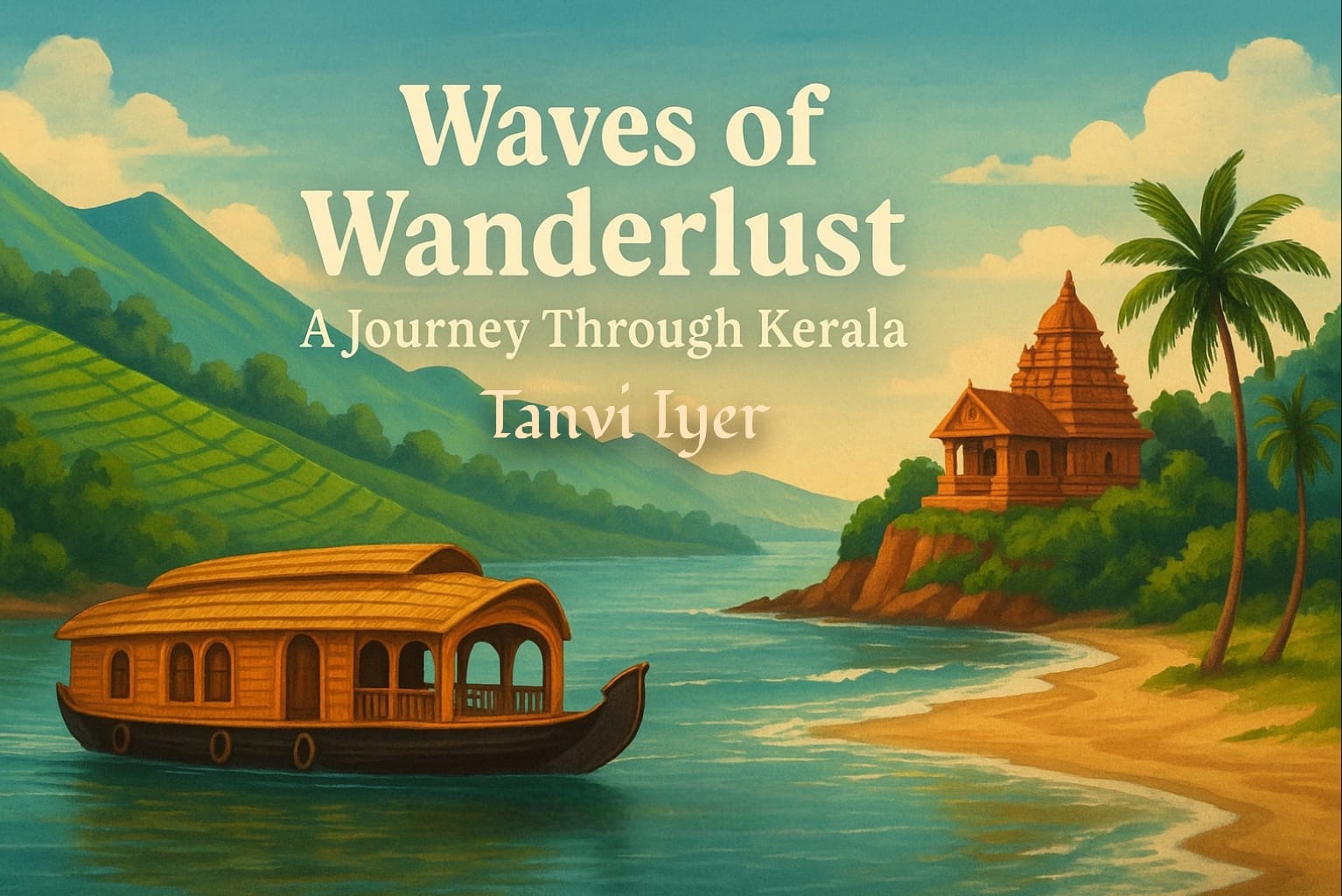
Tanvi Iyer
Chapter 1: Arrival & Munnar’s Tea Gardens
The winding road through Kerala’s Western Ghats unfolded like a lush green ribbon beneath the soft morning mist. Rohan leaned slightly out of the car window, breathing in the cool, damp air tinged with the sweet fragrance of earth and tea leaves. The city chaos he’d left behind in Mumbai seemed like a distant memory now, replaced by the gentle murmur of nature awakening in the hills of Munnar.
At 1600 meters above sea level, Munnar was a sanctuary of rolling tea plantations, winding rivers, and misty mountains that seemed to hold ancient secrets. The steady drizzle painted the landscape in fresh, vivid greens, and the soft drizzle’s rhythm became a soothing soundtrack to Rohan’s thoughts.
This was the start of his journey—not just a physical escape, but a quest to reconnect with himself.
Rohan’s car finally stopped at a small guesthouse perched on a hilltop, offering panoramic views of the endless tea gardens below. The house was a cozy structure of wood and stone, its veranda lined with pots of blooming hibiscus and jasmine.
He stepped out, feeling the cool air on his skin, and was immediately greeted by Anil, the friendly caretaker, whose warm smile felt like an old friend’s welcome.
“Welcome to Munnar, sir,” Anil said, his Malayalam accented but fluent Hindi making Rohan feel at ease. “You’ve come at the perfect time. The rains have just freshened the hills.”
Rohan smiled back, grateful for the kindness. His luggage was swiftly carried inside, and soon he found himself settling on the veranda with a steaming cup of cardamom tea, watching clouds drift over the tea fields like gentle waves.
Unable to resist the call of the hills, Rohan took a slow walk down the winding paths weaving through the tea plantations. The bushes were immaculately trimmed, each leaf glistening with droplets from the morning mist.
He watched as pluckers—mostly women in colorful saris and scarves—moved expertly among the bushes, their baskets hanging from their shoulders filling steadily with tender shoots.
One woman, Lakshmi, noticed Rohan’s curious gaze and smiled warmly. “Would you like to try?” she asked in soft Malayalam.
Rohan hesitated but nodded. Lakshmi showed him how to gently pinch and pluck only the youngest, greenest leaves. His fingers fumbled at first, but laughter soon bridged the language gap.
Lakshmi shared stories of her village and the rhythm of tea harvesting that shaped life here—early mornings, monsoon rains, and the constant dance between nature and nurture.
Later, Rohan found a small tea stall near a stream where locals gathered for chai and conversation. The air was fragrant with spices—ginger, cardamom, pepper—and the tea was thick and sweet.
The elderly man who ran the stall, Govindan, shared tales of Munnar’s history: how the British had established tea plantations in the 19th century, transforming the landscape and livelihoods.
Govindan spoke of the hill tribes—like the Muthuvan and Malayarayan—whose ancient traditions still whispered through the forests and hills. He told of legends about the hills themselves—how spirits of the mountains protected the land, and how the mist was said to be the breath of ancient gods.
Rohan sipped his chai slowly, feeling the warmth seep into his bones, and felt the story of the land settling into his heart.
The next day, Rohan set off early to explore beyond the tea gardens. He hiked up to Echo Point, a serene spot where the hills reflected voices and sounds back with surprising clarity.
As he called out into the valley, the echo returned his voice, making him laugh with delight. Nearby, he discovered a patch of wild orchids and butterflies dancing in the filtered sunlight.
Further along, he visited the Blossom Park, where terraced gardens bloomed with hibiscus, orchids, and native wildflowers. The gentle rustle of bamboo and the distant call of a Malabar hornbill created a symphony of life.
Rohan paused to meditate by a small waterfall, letting the cool spray wash away the lingering stress. The natural beauty was intoxicating, and he felt a growing sense of peace.
As dusk settled, Rohan joined a group of travelers and locals gathered around a bonfire near the guesthouse. The firelight flickered against the faces of storytellers and singers, and the scent of wood smoke mingled with jasmine.
Anil introduced Rohan to Ravi, a local guide and historian, who recounted tales of the Neelakurinji flower—known for blooming only once every twelve years, carpeting the hills in blue and drawing pilgrims from far and wide.
Ravi shared the story of the Kuravan and Kurathi, legendary tribal lovers whose love was immortalized in local folklore. Their tale of devotion against all odds resonated with Rohan, weaving a thread between past and present.
Under the vast starlit sky, Rohan felt a deepening connection not just to the land, but to its people and stories.
That night, in the quiet comfort of his room, Rohan opened his journal. He wrote of the gentle rains, the vibrant tea fields, the kindness of strangers, and the sense of calm settling over him.
He realized his journey was more than a getaway; it was a return—to nature, to simplicity, and to the stories that shaped him.
The hills had welcomed him with open arms, and he was ready for the adventures that lay ahead.
Chapter 2: Alleppey Backwaters & Houseboat Life
The early morning sun cast a golden hue over the sleepy town of Alleppey, known to many as the “Venice of the East.” Rohan stood on the dock, breathing in the cool, humid air mingled with the scent of freshwater lilies and distant spices. Before him stretched a labyrinth of shimmering canals, lagoons, and lakes, a watery world woven into the very fabric of Kerala’s landscape.
His eyes settled on a traditional kettuvallam, the iconic houseboat that would carry him through this tranquil maze. Its curved thatched roof and wooden hull, handcrafted from local jackfruit wood and tied with coir ropes, looked both sturdy and inviting. The boat glided gently as the boatmen prepared to cast off.
Stepping aboard, Rohan felt a wave of excitement mixed with calm. The interiors were a harmonious blend of rustic charm and cozy comfort—bamboo furniture, soft cushions, polished wooden floors, and large windows framing lush green vistas. The gentle rocking of the boat promised a slow journey into the heart of Kerala’s backwaters.
As the boat began its glide, the familiar bustle of town faded behind him, replaced by the rhythmic lapping of water against the hull and the whisper of the breeze through coconut palms. Paddy fields stretched endlessly on either side, dotted with farmers tending their crops and water buffaloes wallowing in the mud.
Rohan watched as children splashed and waved from small wooden boats, their laughter ringing like bells. Women washed clothes along the banks, their bright saris a splash of color against the green backdrop. It was a world that seemed untouched by time.
Throughout the day, the boatmen navigated narrow canals lined with swaying reeds and flowering water lilies. Fishermen cast their nets from slender canoes, moving with practiced grace. Rohan was invited to try his hand at casting a net—his awkward attempts met with patient guidance and hearty laughter.
The gentle sway of the boat, the call of exotic birds—kingfishers with electric blue feathers, elegant herons, and vibrant dragonflies—wove a peaceful melody. Occasionally, the boat passed quaint villages where thatched roof houses nestled among coconut groves. Curious faces peeked from windows as the houseboat drifted by, smiles greeting the travelers aboard.
Midday brought a fragrant feast prepared by the onboard cook. Plates of soft appam, spicy fish moilee, tangy prawn curry, and sweet ripe mango slices tempted Rohan’s palate. The food was a celebration of Kerala’s coastal bounty—fresh, vibrant, and layered with spices that told stories of ancient trade routes and cultural fusion.
As afternoon shadows lengthened, the sun dipped low, painting the sky in hues of orange and pink. Rohan found a quiet spot on the deck to watch the sunset mirror itself in the still waters—a moment of perfect stillness and gratitude.
As night fell, lanterns were lit, casting a warm glow over the boat. The gentle rocking and distant sounds of nocturnal wildlife lulled Rohan into a restful sleep, cradled by the peaceful backwaters.
As the houseboat floated deeper into the maze of canals, the scenery shifted subtly but beautifully. The wide paddy fields gave way to clusters of coconut palms bending gently in the breeze, their tall silhouettes etched against the sky. Narrow earthen pathways lined the waterways, connecting tiny villages where time seemed to pause.
Rohan leaned over the wooden railing, mesmerized by the sight of an elderly man balancing expertly on a narrow canoe. With a single long paddle, he navigated the water with practiced ease, weaving through floating vegetation. Nearby, a woman stood waist-deep in the water, gathering water chestnuts from the muddy bottom, her colorful sari clinging to her.
The houseboat slowed near one such village. Curious children gathered along the banks, waving shyly but with bright smiles. Anil, the boatman, called out greetings in Malayalam, and the villagers responded warmly.
Rohan was invited ashore by a small group to visit a traditional village home. The air was thick with the smell of wet earth and fresh spices. Inside the simple but lovingly kept house, Rohan was welcomed with fragrant garlands and cups of sweet, hot kaapi—Kerala-style coffee brewed with chicory.
The matriarch of the household, Amma, shared stories of daily life—how mornings began with collecting fresh coconut water, preparing meals from garden produce, and weaving mats from palm leaves. She explained the importance of festivals like Onam, when the whole village came alive with floral carpets, boat races, and feasts that lasted days.
Rohan watched as children practiced kalaripayattu, Kerala’s ancient martial art, their movements graceful and powerful. The rhythmic chants and beating of drums created an atmosphere charged with energy and history.
Back on the houseboat, as dusk softened the world, Rohan felt a deep gratitude for the simple richness of this life—so connected to land and water, tradition and community.
That night, beneath a canopy of stars reflected in the backwaters, Rohan wrote in his journal. He described the colors, sounds, and smells that had filled his day and the unexpected warmth of strangers who had opened their hearts to him.
This journey was becoming more than sightseeing; it was a profound immersion into a living culture, a meditation on harmony with nature, and a gentle awakening of his own spirit.
The following morning, the houseboat glided into the lively village of Kainakari, just in time for the annual Vallam Kali — the celebrated traditional boat race that electrified the backwaters each year. Rohan’s heart quickened with anticipation as colorful snake boats lined the banks, their long, sleek hulls painted in bright reds, yellows, and greens, adorned with flags fluttering in the breeze.
Villagers gathered in excited clusters, dressed in crisp white mundus and vibrant saris, the air alive with the rhythmic beating of drums and the lilting sound of conch shells. Children darted among the crowd, while elders exchanged stories of past races and legends.
The boatmen, their muscles taut and glistening with sweat, took their places, gripping oars polished smooth by generations of use. As the starting signal echoed across the water, a chorus of chants and synchronized strokes erupted, sending the boats slicing through the shimmering canals with astonishing speed.
Rohan watched, spellbound, as the teams raced in perfect unison, the thunderous drumbeats driving them forward like a pulse through the very veins of the water. Spectators cheered wildly, the energy contagious, uniting everyone in celebration of tradition and community spirit.
Later, near the festival grounds, Rohan was invited to join a small gathering for a performance of Sopana Sangeetham, Kerala’s haunting classical music sung traditionally in temples. The singer’s voice rose and fell like a gentle tide, accompanied by the soft resonance of the edakka drum and the delicate plucking of the chenda.
The music seemed to weave stories of gods and nature, of love and loss, carrying Rohan deeper into the soul of Kerala’s culture. As the final notes lingered in the air, he closed his eyes, feeling a profound sense of connection to the land, its people, and the timeless rhythms that shaped their lives.
That evening, as the houseboat drifted quietly beneath a sky dusted with stars, Rohan penned his thoughts by lantern light. He reflected on how the backwaters were not just waterways but living arteries of tradition and life—where history, nature, and community flowed seamlessly together.
This journey, he realized, was transforming him, opening his eyes to a world of beauty and meaning beyond the ordinary.
As the first faint light of dawn painted the sky in soft pinks and golds, Rohan woke to the gentle rocking of the houseboat and the distant calls of water birds. Stepping onto the deck, he inhaled the cool morning air, thick with the scent of damp earth, fresh lotus blooms, and the salty tang from where the backwaters met the Arabian Sea.
The world was hushed, the still waters mirroring the sky so perfectly it felt as though the boat floated between two heavens. Fishermen prepared their nets in quiet harmony, their silhouettes framed against the rising sun. A kingfisher flashed its brilliant blue wings before settling on a nearby branch, watching Rohan curiously.
Sipping a warm cup of ginger tea brought by the cook, Rohan felt an overwhelming sense of peace. The simple beauty of this moment—the delicate balance between water, earth, and sky—felt like a sacred blessing. The backwaters had whispered their secrets to him through every splash, song, and smile.
As the houseboat slowly cruised toward the dock, Rohan packed his belongings with a bittersweet feeling. This part of his journey was ending, but the memories—the sights, sounds, and stories—would remain etched in his heart.
Before stepping off, he thanked the boatmen, the cook, and the villagers he’d met. Their warmth had made his experience unforgettable.
He promised himself he would return someday, to these waters that flowed not just through the land but through the soul.
With one last look at the shimmering canals and waving palms, Rohan stepped onto solid ground, ready for the next chapter of his adventure in Kerala.
Chapter 3: Exploring Kochi — History, Culture, and Colours
After the tranquil embrace of Alleppey’s backwaters, Rohan’s journey led him to Kochi — a city where history whispered from every corner, and vibrant life pulsed through its bustling streets. Known as the “Queen of the Arabian Sea,” Kochi was a melting pot of cultures, shaped by centuries of trade, colonization, and tradition.
The moment Rohan stepped off the train at Ernakulam Junction, he was greeted by a kaleidoscope of sounds: honking vehicles, the calls of street vendors, and the lively chatter of locals. The warm, humid air carried the mingling scents of spices, fresh seafood, and incense.
His first stop was the iconic Fort Kochi area, a historic neighborhood where old colonial architecture stood side-by-side with colorful street art and quaint cafes. The cobbled lanes, shaded by swaying palm trees, invited slow wandering.
Rohan found himself captivated by the sight of the famous Chinese fishing nets — gigantic wooden structures poised along the waterfront, their silhouettes striking against the shimmering sea. He watched as fishermen worked in graceful synchrony, lowering the nets into the water and then hauling them up heavy with fish, a ritual unchanged for centuries.
Nearby, the grand St. Francis Church stood as a solemn reminder of Kochi’s colonial past. Built in the early 16th century, its weathered walls echoed stories of explorers, missionaries, and traders who had once walked these streets.
As Rohan wandered further, the vibrant Jew Town unfolded before him — a labyrinth of spice shops, antique stores, and synagogues. The aroma of cardamom, cinnamon, and cloves filled the air, mingling with the dust and laughter of merchants. Here, the echoes of the ancient Jewish community still lingered in the narrow alleyways and the famous Paradesi Synagogue, its hand-painted Chinese tiles telling tales of cultural exchange.
Rohan stopped at a bustling café where locals gathered over steaming cups of kadak chai — strong, spiced tea. Conversations flowed around him in Malayalam, English, and hints of Portuguese, reflecting the city’s diverse heritage.
The afternoon took him to the Dutch Palace (Mattancherry Palace), its walls adorned with exquisite murals depicting scenes from Hindu epics. The palace gardens offered a quiet refuge, where he reflected on the confluence of art, history, and spirituality.
As dusk settled, the streets came alive with colors and sounds — vendors selling fresh jasmine garlands, children playing cricket in narrow lanes, and the distant strains of Kathakali music preparing for the evening performance.
That night, seated beneath a starry sky, Rohan felt the pulse of Kochi — a city where the past and present danced in harmony, inviting every visitor to discover its stories.
As the twilight deepened, Rohan made his way to a small open-air theatre near Fort Kochi, where a Kathakali performance was about to begin. The art form, a centuries-old classical dance-drama native to Kerala, promised a spectacle of colors, music, and storytelling unlike anything he had seen before.
The performers were already preparing backstage — their faces smeared with thick, vibrant makeup in hues of emerald green, ruby red, and dazzling gold. Elaborate costumes with stiff pleated skirts, towering headgear, and intricate jewelry transformed them into mythic characters — gods, demons, and heroes from the great Indian epics.
As the drums began their rhythmic beat and the shrill sound of the chenda pierced the night, Rohan felt the air thicken with anticipation. The actors’ eyes flickered wildly, communicating fierce emotions and divine tales through precise gestures and facial expressions, known as mudras.
The story unfolded through the night — battles of good versus evil, tales of love and betrayal — each movement meticulously choreographed, every look heavy with meaning. Rohan was captivated, lost in a world where sound and silence, motion and stillness, blended into a living poem.
After the performance, stepping out into the cool night, Rohan’s stomach reminded him it was time for dinner. He wandered toward a bustling street lined with food stalls and small eateries, their open kitchens filled with the smoky aroma of grilled seafood and sizzling spices.
He settled at a modest roadside restaurant recommended by locals, where the specialty was Kerala Sadya — a grand vegetarian feast traditionally served on a banana leaf. The meal was a symphony of flavors: steamed rice, tangy sambar, spicy avial made with fresh vegetables and coconut, crunchy pappadams, and sweet payasam to finish.
Each bite was a revelation — the harmony of coconut, mustard seeds, curry leaves, and tamarind awakened his senses. The friendly owner explained the significance of each dish, sharing stories of Kerala’s agricultural bounty and culinary traditions.
As he ate, Rohan reflected on how Kochi was a mosaic — layers of history and culture, flavors and sounds, ancient rituals and everyday life — all blending seamlessly to create something vibrant and alive.
That night, walking back to his guesthouse through the narrow lantern-lit lanes, he felt a deep gratitude for the city’s generous spirit and the chance to be part of its timeless story, even if just for a moment.
The next morning, Rohan set out early to explore Kochi’s famous spice markets in Mattancherry. As he entered the narrow lanes, he was immediately engulfed by a heady mix of scents — pungent black pepper, sweet cardamom pods, earthy turmeric, and the warm aroma of cloves and cinnamon bark.
Stacks of colorful spices were piled high on wooden carts and in woven baskets, their vibrant hues gleaming under the dappled sunlight. Vendors called out friendly greetings, offering small samples and inviting Rohan to smell and taste their wares.
He paused to chat with a spice merchant named Rajan, whose family had been trading these aromatic treasures for generations. Rajan explained how spices from Kerala had once fueled global trade routes, attracting merchants from Arabia, Europe, and beyond.
With a small bag of freshly ground spices in hand, Rohan wandered deeper into the market, passing stalls selling dried fish, exotic teas, handcrafted souvenirs, and delicate sandalwood carvings. The market buzzed with energy — locals bargaining, tourists snapping photos, and children weaving through the crowd.
From there, Rohan took a short walk to the ferry terminal for a ride across Kochi’s harbor. Boarding a modest ferry filled with commuters and vendors, he settled near the open windows, watching as the boat cut through the calm waters.
The sea breeze cooled his face as the city skyline unfolded — a mix of modern buildings, colonial-era forts, and towering palm trees. Fishermen mended nets on floating platforms, while colorful boats bobbed gently near the docks.
Across the harbor lay Willingdon Island, an artificial island created during the British era, now home to ports, hotels, and parks. Rohan admired the sight of ancient lighthouses standing sentinel alongside cranes and cargo ships — symbols of Kochi’s enduring role as a maritime hub.
As the ferry docked, Rohan felt the pulse of Kochi’s endless fusion — where tradition met progress, water met land, and countless stories flowed like the tides.
Chapter 4: The Mystical Hills of Munnar
Leaving behind the lively streets and coastal breeze of Kochi, Rohan boarded a winding mountain road toward Munnar — Kerala’s famous hill station nestled in the Western Ghats. As the bus ascended through dense forests and tea plantations, the air grew cooler and fragrant with the scent of wet earth and eucalyptus.
Mist clung to the slopes like a soft veil, obscuring the towering peaks and creating an otherworldly atmosphere. The hills rolled in endless waves of lush green, punctuated by rows upon rows of tea bushes, their leaves shimmering with morning dew.
Munnar’s charm was in its gentle quietness, a sharp contrast to the sensory richness of Kochi. The journey through winding roads offered glimpses of cascading waterfalls, small villages with red-tiled roofs, and farmers tending spice gardens bursting with cardamom and pepper vines.
Arriving at his cozy hillside cottage, Rohan was greeted by the cool mountain breeze and the distant call of birds hidden in the canopy. The cottage, built in traditional style with wooden beams and large windows, opened onto a balcony overlooking endless tea gardens stretching to the horizon.
That evening, Rohan sat with a steaming cup of locally grown tea, savoring its delicate aroma and mellow flavor. The setting sun painted the sky in hues of orange and purple, while the valley below was slowly cloaked in a gentle twilight mist.
He reflected on the magic of the hills — how these ancient mountains held secrets in their shadows and stories in the rustle of every leaf. Here, nature’s quiet grandeur invited stillness, introspection, and a deep sense of peace.
The next morning, Rohan set out early for a walk through the famous tea gardens that carpeted the hillsides. The air was crisp and cool, with a delicate mist still lingering over the emerald rows of tea bushes. The neatly trimmed leaves stretched in endless waves, rolling like green velvet over the contours of the land.
As he wandered along narrow dirt paths winding between the plantations, Rohan noticed small groups of tea pickers bent low, their skilled fingers deftly plucking only the tender new leaves. The women wore brightly colored saris and wide-brimmed hats, chatting softly as they worked, their baskets gradually filling with the precious harvest.
Stopping to greet one of the workers, Rohan learned from Meena, a cheerful young woman, about the careful process of tea picking and how the fresh leaves were taken each day to the nearby factory for processing. Meena spoke of the rhythm of life here — early mornings in the cool mist, the satisfaction of hard work, and the close-knit community bound by generations of shared labor.
The sound of distant waterfalls echoed through the valley as Rohan continued his walk toward Attukal Waterfalls, a hidden gem nestled deep within the forest. The path grew steeper, shaded by towering teak and eucalyptus trees whose leaves whispered in the breeze. Brightly colored birds flitted between branches, and the occasional call of a monkey punctuated the stillness.
Reaching the falls, Rohan was rewarded with a breathtaking sight: water tumbling gracefully over moss-covered rocks into a crystal-clear pool below. The spray created tiny rainbows in the sunlight filtering through the canopy. It was a perfect spot for quiet reflection, the sound of rushing water blending with the gentle hum of the forest.
Later, returning to the town of Munnar, Rohan explored a local market bustling with vendors selling fresh spices, homemade jams, and woven crafts. The scent of cardamom and cinnamon filled the air, mingling with the laughter of children and the calls of merchants.
That evening, as the sun dipped behind the hills, Rohan sat by a campfire at his cottage, sipping warm chai and listening to the soft songs of the forest night. The hills had welcomed him with their quiet mystery and humble beauty, a world apart from the cities he had visited.
He felt his heart open to the slow, deliberate pace of mountain life — a journey inward as much as outward.
The following day, Rohan set out early for a guided trek through the hills, eager to explore the deeper wilderness beyond the tea gardens. The trail meandered through dense forests of sandalwood, bamboo groves, and towering eucalyptus, the path soft beneath his feet with fallen leaves and pine needles.
His guide, Ravi, a local naturalist, pointed out the myriad flora and fauna — from wild orchids blooming in hidden nooks to colorful butterflies dancing in sunlit clearings. Occasionally, the distant calls of hornbills echoed through the canopy, lending an air of enchantment to the journey.
As they climbed higher, the panoramic vistas unfolded: mist-shrouded valleys, emerald plantations, and distant peaks fading into the horizon. At a quiet clearing, Ravi shared stories of the Muthuvan tribe, indigenous people who had lived in these hills for centuries, in harmony with nature.
Later, they visited a nearby tribal village where Rohan was warmly welcomed. The Muthuvan homes, made of bamboo and thatch, stood clustered around a central hearth. Villagers dressed in traditional attire greeted him with shy smiles and curious glances.
Rohan joined in their simple meal — rice, tubers, and forest greens — cooked over an open fire. The villagers told tales of the forest, their rituals, and the deep respect they held for the land that sustained them. Watching their graceful dances and hearing their songs under the starlit sky, Rohan felt humbled by their connection to the earth.
Returning to his cottage late that night, he gazed out over the silent hills, his mind swirling with images and emotions. The mountains had shown him a world of timeless rhythms — of nature, culture, and spirit intertwined.
He realized that this journey was more than sightseeing; it was a pilgrimage to the heart of life’s simplicity and wonder. In Munnar’s mist and shade, Rohan found not only beauty but a quiet transformation unfolding within.
Chapter 5: The Serene Shores of Varkala
After the mystical hills of Munnar, Rohan’s journey carried him southward toward the coast once again, to a place where the land met the sea in a dramatic embrace — Varkala, a quaint beach town perched on towering cliffs overlooking the Arabian Sea.
The moment he arrived, Rohan was struck by the sheer cliffs rising abruptly from golden sands, crowned with swaying coconut palms and dotted with colorful cafés, artisan shops, and quaint guesthouses. The sound of crashing waves below mixed with the calls of seagulls and the distant chant of temple bells.
Varkala’s cliffs, weathered by centuries of wind and salt spray, formed a natural promenade offering breathtaking views of the endless ocean. Rohan wandered along the narrow paths, stopping often to gaze down at fishermen casting their nets in the turquoise waters or children playing barefoot on the warm sand.
The air was thick with a salty freshness, carrying the mingled scents of seaweed, jasmine, and incense from nearby shrines. The pace of life here was slower, infused with a spiritual calm that seemed to seep from the very rocks beneath his feet.
One of Varkala’s most famous landmarks was the Janardanaswamy Temple, an ancient Hindu temple dedicated to Lord Vishnu. Rohan visited the temple early one morning, joining the devotees in the rhythmic rituals of prayer and music. The temple’s intricate carvings and sacred tanks spoke of centuries-old devotion, and the gentle chanting created a serene atmosphere that resonated deeply within him.
Beyond the temple, the town’s narrow streets bustled with markets selling fresh catch, spices, and handmade crafts. Local artists displayed vibrant paintings and sculptures inspired by the sea and local mythology, adding splashes of color against the whitewashed walls.
One afternoon, Rohan joined a yoga class held on the cliff’s edge, where the instructor guided the group through gentle asanas with the backdrop of the setting sun melting into the horizon. The experience was both invigorating and peaceful, blending physical awareness with the vastness of nature.
As evening fell, the cliffside cafés lit up with lanterns, their soft glow reflecting on the waves below. Rohan savored freshly caught seafood — grilled fish marinated with Kerala spices, tangy lemon rice, and sweet coconut desserts — while listening to the soft strumming of a local musician’s guitar.
Under the vast starlit sky, with the ocean breeze carrying whispers of ancient stories, Rohan felt a profound sense of connection — to the land, the sea, and the timeless rhythms of Kerala’s coastal soul.
A few days into his stay, Rohan learned about the Varkala Beach Festival, a vibrant celebration held every year to honor the sea and the local community’s deep connection with it. He eagerly joined the festivities, arriving just as the sun began to dip low, casting golden light across the cliffs.
The beach was alive with music, dance, and laughter. Traditional Kerala percussion ensembles, called Chenda Melam, filled the air with energetic rhythms, while dancers in colorful costumes performed folk dances that told stories of fishermen, gods, and nature. Children ran barefoot along the sand, flying kites that soared like painted wings against the fading sky.
Among the crowd, Rohan met Anjali, a young artist who painted vivid murals inspired by Varkala’s culture and landscapes. Her studio, a cozy space overlooking the cliffs, was filled with canvases splashed with bright blues, greens, and oranges — capturing waves, palm trees, and local legends.
Anjali shared stories about the town’s transformation from a sleepy fishing village to a haven for travelers and creatives, and her hope to preserve its soul amid growing tourism. Through their conversations, Rohan discovered a deeper layer of Varkala — one where tradition and modernity wove together in a delicate balance.
One morning, seeking rejuvenation, Rohan visited an Ayurvedic wellness center renowned for its ancient healing therapies. The soothing atmosphere of the center, with its fragrant oils, soft chants, and gentle touch, offered a profound sense of calm.
He experienced a traditional Abhyanga massage, where warm herbal oils were rhythmically applied to his body, easing tension and restoring energy flow. The expert therapist explained how Ayurveda’s holistic approach nurtured balance between mind, body, and spirit, rooted in Kerala’s centuries-old wisdom.
The treatments, combined with quiet moments watching the sea from his cliffside room, deepened Rohan’s appreciation for the healing power of nature and tradition.
As his days in Varkala unfolded, Rohan felt a quiet transformation. The cliffs, the ocean, the people — all seemed to whisper timeless truths about harmony, resilience, and beauty in simplicity.
When it was time to leave, he carried with him not only memories of stunning sunsets and ocean breezes but a renewed sense of peace — a gift from the serene shores of Varkala.
Chapter 6: The Backwaters and Beyond
As Rohan traveled deeper into Kerala’s heartland, he found himself drawn to the legendary backwaters — a labyrinth of shimmering canals, tranquil lakes, and slow-moving rivers that weave through lush landscapes and sleepy villages.
He arrived in Alleppey (Alappuzha), often called the “Venice of the East,” where narrow waterways crisscross endless stretches of emerald paddy fields and coconut groves. The air was thick with the scent of fresh water lilies and damp earth, and the gentle lapping of water against wooden hulls created a soothing symphony.
Boarding a traditional houseboat, Rohan was struck by its simple elegance — handcrafted teakwood walls, open verandas framed by bamboo shades, and soft cushions arranged to welcome guests into peaceful comfort.
As the boat slowly drifted away from the dock, the rhythm of life on the water began to reveal itself. Women in colorful sarees washed clothes along the banks, children played gleefully in the shallows, and fishermen cast their nets with practiced grace.
The boat glided past villages where thatched huts stood beside neat gardens, and temples with golden domes shimmered in the afternoon sun. Coconut palms bent over the water’s edge, their reflections mirrored in the glassy surface.
Rohan spent hours absorbing the gentle pace of the backwaters — reading on the deck as kingfishers flitted nearby, savoring fresh coconut water offered by the boat crew, and marveling at the sunset painting the sky in hues of pink and gold.
At night, the quiet was profound. Only the occasional croak of frogs and distant calls of night birds broke the silence. The stars overhead seemed impossibly close, their light shimmering like diamonds on the calm water.
The backwaters were not just a place but a way of life — a living ecosystem where people and nature moved in harmony, timeless and unhurried.
As the houseboat cruised slowly along the narrow canals, Rohan felt like he had stepped into a painting come to life. The villages lining the banks were alive with simple routines, yet carried an unmistakable warmth and community spirit.
Along one stretch, he saw women gathered beneath the shade of a large banyan tree, chatting animatedly as they sorted freshly harvested vegetables and bright red chilies. Children chased each other barefoot, their laughter echoing across the water. Elderly men sat on wooden benches, smoking cheroots and exchanging stories about the day’s catch.
Rohan was invited by the boat’s captain, Hari, to visit a nearby village. Walking along narrow earthen paths lined with hibiscus and jasmine, he was welcomed into a modest home where a family prepared a traditional Kerala meal. The aroma of spices—mustard seeds, curry leaves, and coconut—wafted through the air.
Seated cross-legged on mats, Rohan tasted the local delicacies served on banana leaves: steaming hot appam (fermented rice pancakes), spicy fish curry simmered with tamarind and coconut milk, and crunchy thoran—a stir-fried mix of grated coconut and vegetables. Each bite was a burst of flavor, telling stories of the land and sea.
After the meal, the family shared tales of the backwaters—how the monsoon rains could swell the rivers, how the festivals celebrated the bounty of the water, and how the community thrived on the delicate balance between farming and fishing.
Later, the houseboat took Rohan to a bustling local market where farmers and fishers sold their produce at dawn. The colorful stalls brimmed with tropical fruits—mangoes, jackfruit, and bananas—and fresh spices packed into small cloth bundles. Vendors called out prices, while customers haggled good-naturedly.
Rohan admired the vibrant energy of the market, a stark yet harmonious contrast to the slow, peaceful drift of the backwaters. It was a vivid reminder of the richness and diversity that made Kerala’s culture so unique.
As evening fell, the houseboat anchored near a quiet village where a small temple stood beside the water’s edge. Rohan joined the locals for Aarti, a ritual of light and music, where oil lamps floated on the water, flickering gently in the twilight. The chants and rhythmic drums filled the air, stirring a deep sense of reverence and belonging.
That night, beneath a blanket of stars reflected perfectly on the still backwaters, Rohan lay on the deck and contemplated the gentle pulse of life around him. Here, where water, earth, and sky blended seamlessly, he found a profound sense of peace and connection — a perfect culmination to his journey through Kerala.
Chapter 7: Reflections and Farewell
As Rohan’s time in Kerala drew to a close, he found himself sitting quietly on the veranda of a small guesthouse nestled amid swaying palms. The gentle rustle of leaves and the distant call of birds created a peaceful symphony around him, a fitting soundtrack to his final moments in this land of contrasts and beauty.
His journey had taken him from the tranquil backwaters of Alleppey to the misty tea gardens of Munnar, from the sacred temples and cliffs of Varkala to the bustling spice markets and hidden tribal villages. Each place had offered its own unique rhythm, its own stories woven into the fabric of Kerala’s soul.
Rohan reflected on the slow mornings spent watching fishermen mend their nets, the vibrant festivals echoing with drums and dance, the rich aroma of spices mingling in the humid air, and the warm smiles of strangers who became friends. He realized that this journey was never just about seeing new places, but about rediscovering a simpler, more connected way of being.
Kerala had taught him to slow down, to listen more deeply — to the earth, to people, and to himself. The natural beauty of the hills and seas had opened his eyes to the vastness of the world, while the kindness and resilience of its people had rekindled his faith in human spirit.
Sitting there, as the sun dipped low, casting long shadows across the palm-fringed landscape, Rohan felt a profound gratitude. This journey was more than a travel story; it was a chapter of transformation — a bridge between who he was and who he wished to become.
With a heart full of memories and a mind rich with newfound wisdom, he knew that Kerala would always be a part of him — a place to return to, in spirit if not in body, whenever life’s pace threatened to sweep him away.
As night fell and stars glittered overhead, Rohan closed his eyes, carrying the serene shores, lush hills, and winding backwaters within — a treasure beyond words, a journey beyond time.
The End