Manoj Ojha Chapter 1: The Girl with the Red Ball The dawn in Mangaldoi wasn’t the kind that arrived in silence; it came humming with birdcalls, the hiss of kettles from roadside stalls, and the occasional bark of restless stray dogs. Yet, amid this subtle chaos, a different rhythm echoed through the empty school playground—thud… thud… thwack—the steady beat of a red cricket ball hitting a battered concrete wall. Arohi Nath, seventeen and barely five feet tall, stood poised like a coiled spring, the ball returning to her palm with ghostlike familiarity. Her fingers were calloused, her sleeves rolled to…
-
-
Shibani Das One The announcement crackled overhead like a lazy yawn: “Passengers on Flight TK 1827 to Berlin, please note your flight has been delayed due to weather conditions. Further updates will follow.” Antara Rao barely flinched. Her noise-canceling headphones cushioned her in a half-reality, but she heard enough through the calm of piano jazz to know: she was going nowhere anytime soon. Outside the massive glass panes of Istanbul Airport, snow fell in clumps—thick, lazy tufts swirling like cotton candy being spun by invisible hands. The terminal buzzed with an odd kind of tension: an orchestra of shuffling boots,…
-
Karan Vaidya Part 1: The Man at Platform Nine It was 6:07 a.m. when the Howrah-Kalka Express pulled into Platform Nine of New Delhi Railway Station. The fog hung low, clinging to the tracks like a secret. Among the passengers stepping onto the platform, one man stood apart—not because of what he wore, but how he moved. Precise. Intentional. Almost like he didn’t belong to the chaos of Indian mornings. His name was Arjun Sen—or at least that’s what his current ID said. Officially, he was a mid-level policy analyst with the Ministry of External Affairs. Unofficially, he was something…
-
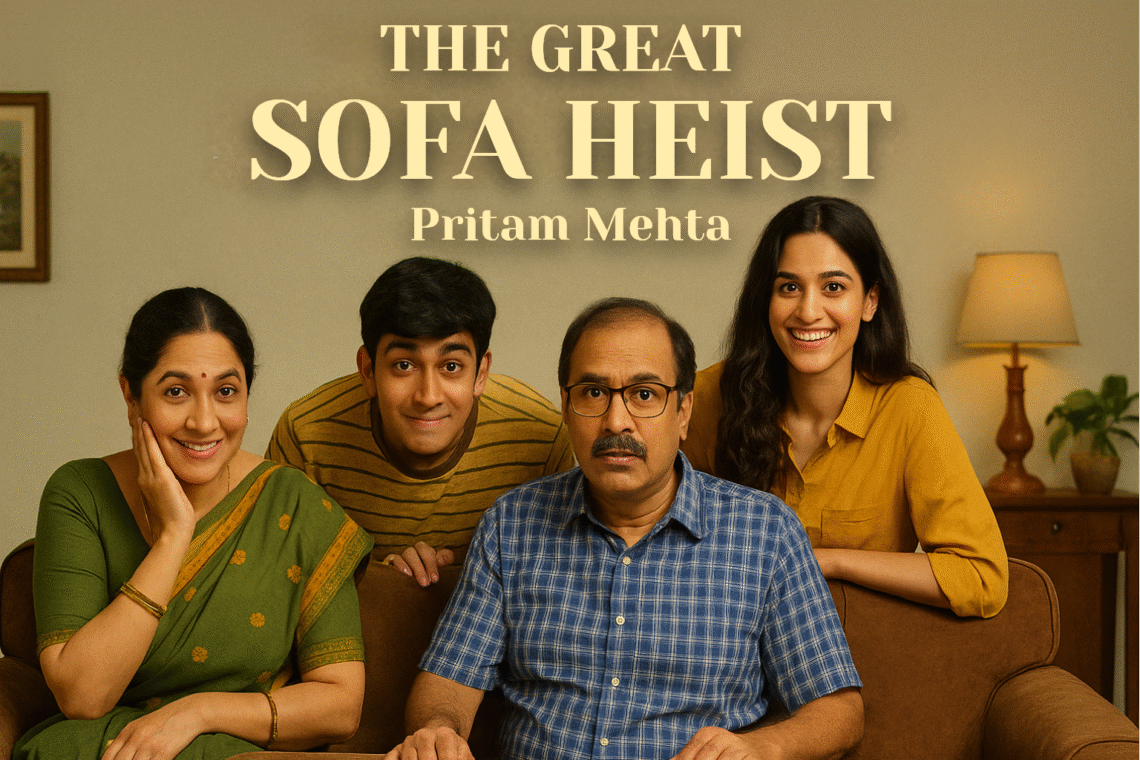
Pritam Mehta Chapter 1 The morning began with the sharp clanking of steel utensils and the hiss of a pressure cooker — routine sounds in the Pradhan household — but this time, there was something different in the air. Madhuri Pradhan stood in the middle of the living room, hands on her hips, eyes fixed on the old brown sofa like a general inspecting a battlefield. Its once-beige upholstery was now a tapestry of curry stains, dog hair, and timeworn sagging. One of its wooden legs had been replaced with a stack of old Amar Chitra Katha comics and the…
-
Indranil Bhattacharya 1 The mist hung low over Kalimpong that morning, as if the mountains themselves were holding their breath. Colonel Rudra Sen (Retd.), now 83, stood at the edge of his moss-covered verandah, wrapped in an old shawl that smelled faintly of mothballs and eucalyptus oil. His sharp, sunken eyes scanned the hills that rolled endlessly into Bhutan and Tibet beyond, but his mind was stuck somewhere in 1962—an icy ridge, a blizzard of bullets, and a voice over crackling radio screaming for help. The kettle whistled from the kitchen, breaking his trance, and as he turned to go…
-
Rishiraj Dubey 1 It began on a train. The Mumbai local was packed, as always—bodies pressed close, the smell of iron and monsoon sweat thick in the air. Somewhere, a vendor shouted about samosas. A mother hushed her crying child. I had wedged myself into a corner seat near the window, one earbud in, the other dangling, as the city buzzed around me, uncaring and loud. And then, at Dadar, she boarded. White kurta, blue scarf, a jhola bag slung over one shoulder. Her hair was still damp from a rushed morning bath. She moved through the crowd like someone…
-
Bimalesh Sarkar Chapter 1: The Last Note The Patna Junction platform trembled under the thunderous arrival of the Howrah-Mumbai Express, sending ripples through the rows of barefoot porters, impatient vendors, and women clutching brass tiffin boxes. Ravi Yadav stood among them, not as a commuter, but as a hopeful fugitive escaping the suffocation of poverty. Dressed in a faded shirt two sizes too large and rubber slippers worn thin at the heel, he carried a single plastic bag—inside which were two pairs of clothes, a dry roti wrapped in newspaper, and a notebook with laminated pages now wrinkled from sweat…
-
Sohini Chattopadhyay Chapter 1: The Rented Room Tuhina Roy arrived at the old mansion just as the late November light began to fade into the haze of North Kolkata’s dusk. Ahiritola Ghat loomed just beyond the house—a crumbling stretch of stone steps and moss, where the Hooghly whispered its slow secrets. She was here to research colonial bathhouses, but what drew her was something less academic, more instinctive. A longing she couldn’t explain. The house stood like a reluctant witness to time. Faded green shutters flanked its tall windows, the wrought-iron balconies sagging under decades of neglect. A strand of…
-
Tara Dutta Part 1: The Last Bench always felt like a refuge. From here, Meera Kapoor could watch the world unfold without being noticed. The rustle of papers, the scrape of chairs, the lazy ticking of the wall clock—all part of the ritual she had come to know by heart in Room 21. It was her final year at St. Agnes, and while everyone else seemed obsessed with entrance exams, college brochures, and farewell sarees, Meera remained on the edge, quietly detached. Until the day Mr. Rayan walked in. He wasn’t what she expected in a literature teacher. Most of…
-
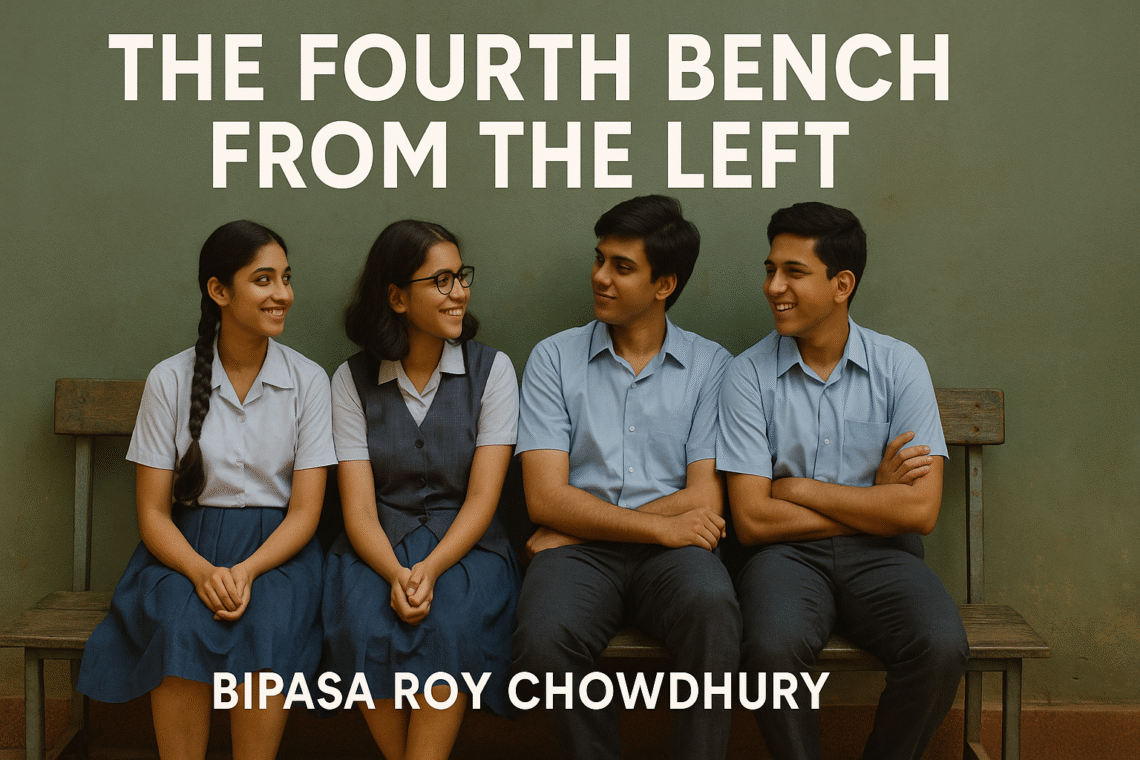
Bipasa Roy Chowdhury Chapter 1: Assigned Seats and Accidental Fates On the first day of the new academic year, Oakridge High buzzed with the scent of freshly bound notebooks, sharp pencils, and the distinct nervous energy that only teenagers in half-creased uniforms could produce. In Class 10-B, the fans creaked overhead like tired old men, and sunlight streamed through dusty glass, illuminating years of chalk smudges and scraped graffiti. A printed seating chart stuck hastily on the blackboard, like a bureaucratic lottery ticket, dictated the year’s fate for every student. And it was here, in faded Arial font and alphabetical…