
Amitava Basu
Chapter 1: The Disguise
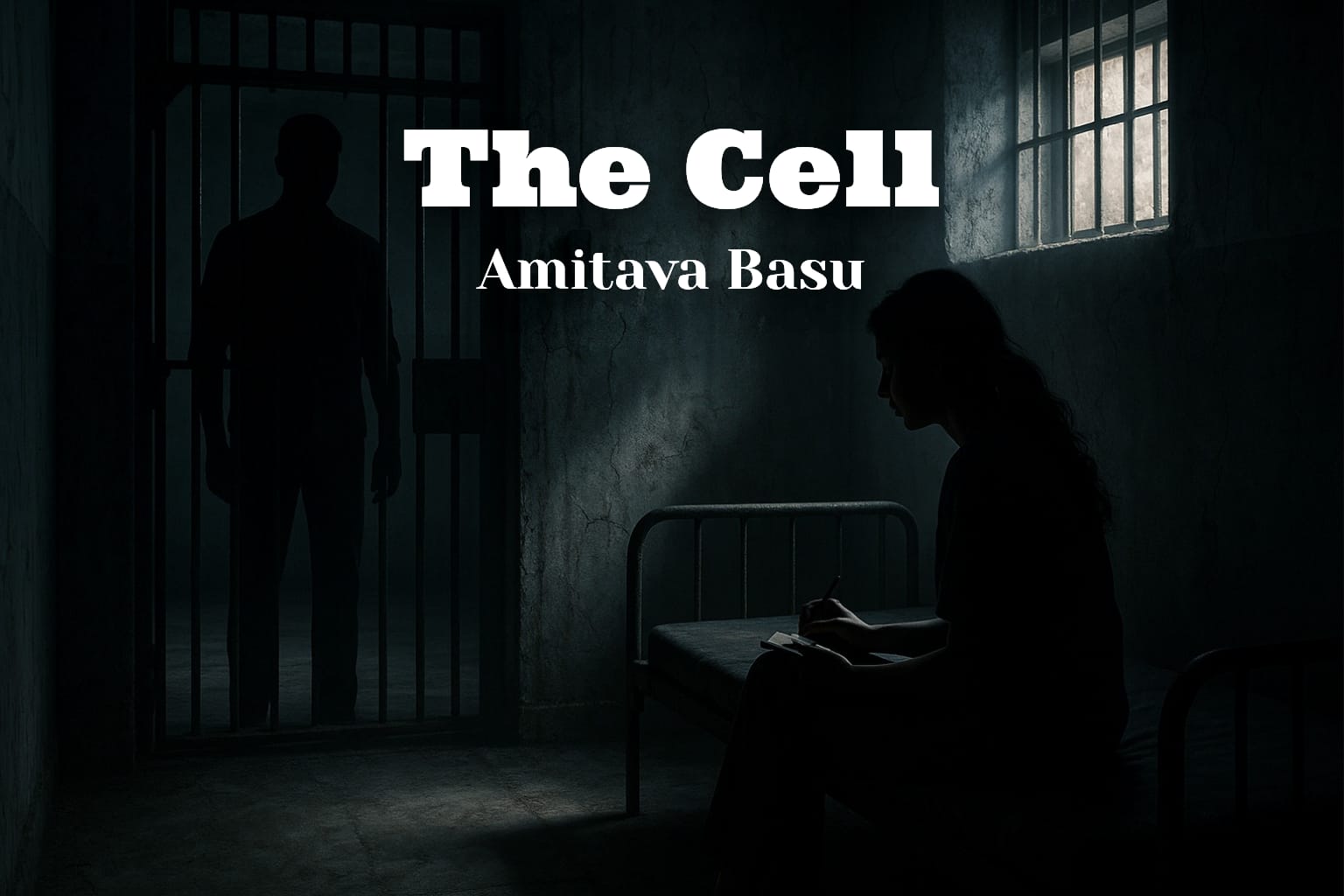
The heat was dry and biting as the prison gates of Bhairavgarh creaked open, the ancient iron groaning like it was waking from a deep slumber. Asha Rane stepped through with her head lowered and shoulders slumped, wearing a plain khaki salwar kameez and a bruised expression painted with theatrical precision. Her wrists bore plastic bruises from makeup, and her gaze was dulled intentionally — years of investigative journalism had taught her how to camouflage confidence into submissive silence. She clutched her forged file of charges — embezzlement, impersonation, Section 419 — all part of a grand plan that began six months ago when the whispers of this prison reached her desk at The Weekly Enquiry. Whispers of inmates who vanished from records, of guards who ran rackets under the Warden’s nose—or perhaps with her blessing—and of a rumored serial killer in solitary who never stopped writing. The guards didn’t care who she was; to them, she was just another broken woman coming to rot in Madhya Pradesh’s most feared prison. One of them sneered, “Welcome to Bhairavgarh. If you didn’t do anything before, you will by the time you leave.” Another laughed like it was an inside joke. As they led her in past high walls crowned with broken glass, through corridors that reeked of rust and sweat, the chill of confinement set in deeper than the heat outside. Every step felt like a descent. She knew there would be no way out unless her plan worked. She was no longer Asha Rane, the fierce Marathi reporter who’d once exposed police bribery in Thane or toppled a local MP with a sting. Here, she was Sunita Joshi — small-time fraud, expendable, invisible.
The intake officer, a thick-necked man named Devprakash, glanced at her file with boredom before waving her off to be frisked. The strip search was expected, humiliating, but necessary to complete the illusion. Every fingerprint was documented, iris scanned, blood sample taken. Asha remained silent through it all, replying only when spoken to, mimicking the docile nature of a woman who had accepted her fate. She was led into the women’s wing first—a dull grey hall crammed with twenty-four bodies and only twelve beds. The air was thick with gossip, stale rotis, and mosquito smoke. Pencil-thin bars filtered the late afternoon sun onto cracked walls filled with graffiti: names, dates, crude prayers. Her bunkmate was a snoring woman with betel-stained teeth and a scar across her neck who grunted and made space without opening her eyes. The first night passed with sleepless tension; Asha kept her face buried in the hard pillow, listening to murmured threats, random weeping, and the occasional clang of a guard’s lathi dragging along the bars. Somewhere near dawn, a voice whispered near her ear: “Too clean to be one of us. Careful where you stare.” She didn’t turn. She knew better than to answer shadows in a place like this. Over the next three days, she began to gather fragments—names of guards who “arranged” packages for a price, prisoners who were transferred mysteriously and never returned, the silent hierarchy built not just by violence, but favors and secrets. And always in the background: whispers of D-Block, the isolated wing where the most dangerous inmates were kept. It was said even the guards feared entering there after dark. And among them, the one they called The Saint of Silence—Kabir Tiwari.
On the fourth day, things shifted violently. A staged fight over a stolen meal led to Asha being dragged into the superintendent’s office. Warden Shalini Dutta watched her with eyes like polished onyx—cold, unreadable. “You don’t belong here,” she said, almost curiously. Asha froze. Did she know? Had the cover failed? But Shalini only smirked and signed a transfer. “Let’s see how Sunita Joshi likes D-Block.” It was rare for female inmates to be sent to the men’s section at all, even under discipline orders. But Bhairavgarh wasn’t ordinary, and rules were meant to be broken when silence was more profitable than protocol. That night, under the light of a humming sodium lamp and two guards who looked far too pleased with their task, Asha was led down the narrow stairwell of the main yard. D-Block emerged like a separate universe—dark, damp, colder than the rest of the prison, its cells carved from stone and silence. As she was shoved into an empty cell opposite an eerily quiet cell with heavy double doors, a voice from inside drifted out, calm and toneless: “New guest. You don’t snore, I hope.” Her breath caught. The voice didn’t shout, didn’t threaten—just observed. The guard laughed nervously and walked away quickly. Asha sat on the steel bench and stared at the door across her. The voice spoke again, softly this time. “Sunita is a borrowed name. You’re here for something else.” Her blood ran cold. Her disguise was meant to fool the prison, not the inmates. She didn’t reply. But deep inside, she realized: the most dangerous man in this place knew she was lying. And somehow, that made her feel both terrified… and safe.
Chapter 2: D-Block Whispers
The silence in D-Block was not the silence of rest—it was the silence of calculation, of unseen eyes watching, of words held back like loaded bullets. Asha spent the first full day trying not to draw attention, her senses stretched to breaking as she learned the geography of her new environment. Her cell was one of ten in a dimly lit corridor that always smelled of wet metal and old antiseptic. The guards posted here were different—less talkative, eyes darting even in daylight, as though this part of the prison answered to something deeper than law. The man in the opposite cell, Kabir Tiwari, remained unseen but ever present. His voice was like a thread running through the darkness—occasionally breaking the hush with measured words, never louder than necessary. “You’re awake. Good. You’re not like the last one,” he said once, just before dawn, and Asha, still determined to keep her distance, kept her silence. But he was patient. “They always send one. Not often a woman though. Makes them nervous.” The guards, for their part, showed no signs of unease about Asha’s presence in a men’s block—just a cruel indifference, as if she were not a woman, not a reporter, but merely a pawn dropped into a game long in progress. By evening, she began to realize how information flowed here. Not with voices, but with eyes. Pencil, the wiry inmate who delivered food trays, looked like a joke at first—his wild hair and pencil tucked behind his ear gave him the air of a cartoon—but he whispered warnings without looking at her: “No names. No notes. No questions.” She nodded once. He never repeated himself. On her second night, someone scratched a single word onto her door with a nail: “Watch.”
By the third morning, Asha witnessed her first act of casual horror. A prisoner in the farthest cell—she hadn’t seen his face yet—screamed incoherently in the early hours. No one responded. The screams became sobs, and then choked silence. When the guards came, they carried out a limp body wrapped in a stained sheet. “Withdrawal,” one said carelessly, and the other added, “Too soft for D-Block.” No one spoke about it after. Not even Kabir, who that night offered a new cryptic sentence: “One down. Seven left. Including you.” She turned to the wall, heart pounding. She had entered this place thinking herself in control, armed with a camera hidden in a prison-issued pen, a recording mic sewn into her kurta collar, and a careful narrative to follow. But already her plan was unraveling. No one answered to logic here. Conversations ended before they began. Even Warden Shalini, who visited briefly and smiled without mirth, said, “They’ll break you before you can break them.” That same evening, the cell lights flickered. Pencil passed her a piece of stale roti and murmured, “Tonight, stay awake.” When she asked why, he only tapped the floor with his knuckle twice. Hours later, the reason came. Asha heard footsteps—slow, measured, not belonging to guards—and then a whisper through the keyhole: “I know what you’re looking for.” She jolted upright. The voice didn’t belong to Kabir. She leaned against the metal grate and whispered back, “Who are you?” Silence. Then, retreating footsteps, deliberate and slow. The next day, the guards found a crude drawing slipped under her cell—five faces, red crosses over four. The fifth? Hers.
That was the day she finally responded to Kabir. “Why are you helping me?” she asked across the corridor, her voice barely a breath. The silence was long, then came the reply: “Because everyone else here has a price. You still don’t.” Asha clenched her fists. “You don’t know anything about me.” “Don’t I?” he said softly. “Sunita Joshi. No records prior to 2023. No family visits. No street address. No scent of fear on your first day.” She felt naked, exposed, her constructed identity peeling away with every word. Kabir never raised his voice. He didn’t threaten. But he knew things, more than an inmate should. “I’ve been in this block for 2,182 days,” he said later, as though reading her curiosity. “I’ve watched them come and go. I read faces. You’re not here for a sentence. You’re here for a story. But stories here cost blood.” The words chilled her, but strangely, she believed him. That night, unable to sleep, she crept to the bars and whispered, “Who were the others?” He replied with a name: Anirban Nair. The name struck her heart like a blow. Anirban Nair was a young civil rights intern who disappeared after investigating prison corruption in Madhya Pradesh two years ago. No body was ever found. Asha’s own research before this operation had hit a dead end with that name. Now Kabir confirmed it—he had been here. He had been silenced. And then Kabir said something else that turned her blood to ice: “He left you a message. But they erased it. I didn’t.” Asha pressed closer to the bars. “Where is it?” Kabir gave the faintest smile—his first. “Earn it.” And in that moment, despite the danger, despite the whispers and warnings and threats, she knew her story had just begun. But so had the real prison—one not built of walls and guards, but of secrets, trust, and the slow unraveling of truth.
Chapter 3: Blood on the Floor
The morning began deceptively calm, the corridors of D-Block unusually quiet, with even the usual grumble of the guards absent as Asha sat on her cold bench, the steel beneath her thighs growing warm from the rising heat trapped inside the concrete walls. Kabir had not spoken since the cryptic promise of a hidden message from the vanished activist, Anirban Nair. Asha tried to focus, running questions through her mind, trying to remember everything she could about Nair’s last known investigation, but the mental clarity she once prided herself on was beginning to blur under the weight of endless grey walls and sleepless nights. The hours crawled until lunchtime, when Pencil slid her metal tray through the slot with an unusual stiffness. “Don’t eat,” he murmured, eyes averted, his fingers twitching nervously. “Watch the corridor.” Asha pretended to pick at the dry lentils but kept her ears alert. At first, she heard only the faint drip of leaking pipes and the distant creak of a fan, then a sudden noise—sharp and shrill—followed by the thud of flesh hitting cement. A man’s voice screamed incoherently, a second voice cried in response, and then came the sound that silenced all movement in the block: a gurgling, wet and final. Something had snapped. Doors rattled. Guards shouted. Kabir’s calm voice cut through the confusion: “Don’t move. Whatever happens, don’t move.”
She stood up in reflex, but the bars stopped her. Across the corridor, a body had hit the floor—face-first, blood pooling beneath a shaved scalp. The prisoner’s name was Mahesh, a mute who rarely even looked at anyone. Asha had seen him shuffle past once, always carrying a ragged notebook. Now he lay in a widening pool of crimson, his limbs twitching once before going still. Guards stormed in too late, one screaming into his walkie-talkie, another laughing nervously as if trying to shake off the shock. They didn’t call for a stretcher. They didn’t secure the scene. Instead, one guard kicked the body hard, muttering, “Junkie bastard must’ve stolen the last dose,” before motioning for two others to drag him away. No investigation. No doctor. No camera. The floor was washed hastily, the trail of diluted red water snaking under the cells. Pencil muttered to himself in the corner of the corridor, scratching on the wall with his namesake tool like a man trying to erase memory through graphite. Asha sat frozen, her breath shallow. Kabir finally spoke again, his voice low: “Mahesh had been asking questions about the medicine dispensed here. Painkillers. Nerve suppressants. Mostly expired. He figured out that inmates were being used to test unlicensed drugs in exchange for reduced sentences—only no one ever got out.” Asha felt her throat go dry. She had heard whispers of pharmaceutical testing inside jails, especially private prisons in the north, but Bhairavgarh was government-run—wasn’t it? She opened her mouth to ask, but Kabir cut her off. “Don’t ask me. Ask Warden Shalini. But ask her nicely. Or she’ll put you in the Ghost Cell.”
That night, Asha barely slept. She watched the ceiling, counting the flickers in the single tube light outside, replaying the events again and again. The next morning, she was summoned—without warning—by two guards who yanked open her door and cuffed her roughly, muttering only, “Warden’s orders.” The walk through the inner corridors felt longer than before. Bhairavgarh was a rabbit warren of halls and sealed doors, each lined with peeling paint and rust stains. She was led into Warden Shalini Dutta’s office—cool, air-conditioned, elegant in a way that felt surgically sterile compared to the rot outside. Shalini sat behind a large desk, a single framed photo of a young man placed beside a green file. She didn’t invite Asha to sit. Instead, she studied her silently, eyes narrowed like a falcon. “Sunita Joshi,” she began. “Age thirty-one. Convicted for forgery and fraud. But your file’s incomplete. And the signature on your transfer order…” She turned the file toward her. “…isn’t mine.” Asha’s heart pounded. This was it. The moment her cover would crumble. But instead, Shalini leaned forward with a crooked smile. “Which means either you’re someone important… or you’re bait.” Asha said nothing, but her breathing betrayed her. Shalini stood and walked slowly around her. “Let me tell you something, Miss Whoever-You-Are. This place doesn’t care about your truth. Your allies outside? They’ve already stopped looking. You were allowed in here for a reason, but don’t be fooled—it wasn’t to uncover corruption. It was to disappear.” Asha bit her tongue until she tasted blood. Shalini circled her once more. “You’ve seen Mahesh’s blood on the floor. That was a warning. You’re not the first to come sniffing around. But maybe you’ll be the last.” Then she did something unexpected—she handed Asha a sealed envelope. “Deliver this to Cell 9. Don’t open it. And don’t speak of it. If you do this, you get hot food and a clean uniform for a week.” Asha accepted it with a nod, hands shaking. That night, as she passed the envelope to Kabir through a makeshift rope he lowered, he didn’t open it immediately. He only smiled grimly and said, “Now you’ve entered the real trial. Good. Because there’s blood on everyone’s hands here. Even yours… soon.”
Chapter 4: The Killer’s Story
The envelope passed from Asha’s hand to Kabir’s was not opened immediately, nor was its weight physical — it hung in the air between them like a silent agreement, a shift in balance that neither acknowledged with words. Kabir had spoken less since Mahesh’s death, his voice quieter, more restrained, as if the blood had reminded him of something long buried. But the night after the delivery, he spoke again — not as a cryptic observer but as a man with a story he had been waiting to tell. “You asked me why I know what I know,” he said softly. “You deserve the story. But only if you don’t interrupt.” Asha, crouched by the bars, nodded once. The corridor was quiet, save for the occasional skitter of a rat and the far-off clang of distant gates. Kabir began. “I was not always a prisoner. I was a teacher. Varanasi, 2014. I taught Sanskrit at a private school, mostly slum children whose parents couldn’t afford convent fees. I lived simply — a flat above a temple, a bicycle, a morning routine of tea and poetry. And then she came — Sneha — a volunteer who ran a sanitation campaign, idealistic, loud, always barefoot in the classroom.” His voice held a strange nostalgia, almost warmth. “We didn’t fall in love, not at first. We argued. She said language meant nothing without action. I said action meant nothing without understanding. Eventually, we met in the middle. We had nine months. Nine bright, unrepeatable months.”
But light does not survive long in corrupted systems, and Kabir’s narrative turned darker like a string dipped in ink. “She was investigating a land grab case — local politicians clearing out the basti where most of my students lived. Illegal demolitions, no resettlement. Sneha gathered evidence, confronted names. She was brave. Too brave. One night, she told me she had documents that could bring them down — photos, affidavits, secret recordings. She never made it to court. They found her body in a river two days later. Police said suicide. I knew it wasn’t.” His voice tightened, stripped of sentiment. “I protested. Wrote letters. I went to the press. I tried to file an RTI. Then I was arrested.” Asha, despite herself, leaned closer. “On what charge?” Kabir’s laugh was soft and bitter. “They said I had murdered five women. All young, all connected — either activists or workers linked to that demolition zone. Their bodies had been found over three months. One had worked with Sneha. The evidence was perfect. Too perfect. My fingerprints were planted. Witnesses were anonymous. The media devoured it — ‘The Sanskrit Killer,’ they called me. My trial lasted four weeks. I was sentenced in two hours.” He paused. “No appeals. No bail. They wanted me gone.” Asha felt a cold nausea twist in her gut. “And you think it was because you knew too much?” Kabir’s voice lowered. “I don’t think. I know. Because one of those women had left me a copy of Sneha’s recordings in a temple locker. And I still have it. Hidden.” Asha stared at the shadows. “Here? In this prison?” He didn’t answer. He didn’t need to.
That night, the boundaries between reporter and prisoner blurred for the first time. Asha found herself wondering not if Kabir was guilty, but who else had ensured his silence. She couldn’t deny the pattern. The charges, the rushed trial, the missing activists — it all mirrored Anirban’s case, and possibly others before him. She lay awake, trying to recall every case she’d discarded in her newsroom as “open and shut” — stories of missing files, corrupted FIRs, prisoners who died before trial. Bhairavgarh was not just a holding center for criminals. It was a graveyard for inconvenient truths. The next morning, Kabir passed her a small folded paper through their shared water pipe — it contained a name: Dr. Ujjwal Joshi. “He was the medical officer who certified every death in my case. Now he’s here. Head of the infirmary. Get to him.” Asha stared at the name. The plan had just deepened. The ledger she had hoped to build — names, timelines, connections — had begun to take shape. But time was against her. Pencil warned her that the Warden’s patience was thinning. “She thinks you’re fishing,” he said. “She’s got eyes now. You’ve got three days. Maybe less.” That afternoon, under the pretense of dental pain, Asha requested medical assistance. She was escorted through the internal corridor to the infirmary — white tiles, the smell of disinfectant, and rows of pill cabinets. Dr. Joshi was older now, but she recognized him from a news clipping — same rectangular glasses, same prim moustache. He looked up once, squinted at her, and paused. “I know you,” he said. Asha froze. “You should’ve stayed in Mumbai.” He wrote a prescription without checking her and leaned in. “They’re watching. But I can still give you what she wanted.” She didn’t dare reply. But in that moment, she knew: the truth hadn’t died. It had just gone underground. And she was now the tunnel they would try to bury next.
Chapter 5: The Ghost Cell
The infirmary visit altered everything. Dr. Ujjwal Joshi, once a silent cog in the judicial machinery that condemned Kabir Tiwari, had cracked for just a moment, and in that crack, Asha saw the entire rotten architecture behind Bhairavgarh. He hadn’t given her much—only a slip of paper folded beneath the antibiotic blister pack, scribbled in trembling ink: “Look for Room 17, lower yard archive.” It meant nothing to her yet, but it was the first physical lead she’d touched since arriving. The guards never searched her mouth or medicine, a flaw she suspected was due to arrogance more than leniency. Back in D-Block, Kabir’s cell remained silent that evening, his silhouette barely visible in the flickering light, but when Asha whispered “Room 17,” he turned slowly toward the slot in his cell door. “You’ve moved faster than I expected,” he said, approvingly. “But that room is locked for a reason. You’ll need a guide.” She was about to ask who when Pencil, emerging from the shadows like a poorly drawn cartoon, appeared near her cell door with that nervous, manic grin. “You’re brave, didi,” he whispered. “Most journalists die in the papers. You came into the paper.” She blinked. “You know?” He nodded, tapping his temple. “The walls don’t talk. But the floors listen. And they tell me things.” That night, he offered to show her the path to Room 17 during cleaning duty. “But,” he added, “you must promise me something in return — when you go back to the real world, tell them about the Ghost Cell.”
The name alone made Asha uneasy. She had heard it murmured before—always in fragments, always in fear. She followed Pencil through a back corridor the next morning, mopping lazily, heads down, blending into the background noise. Room 17 was not far—it lay behind a rusted filing section now used for broken chairs and sealed shelves. Inside, she found what looked like years of neglected documentation—boxes of transfer records, disciplinary logs, medication trials. As she sifted, she saw names—some crossed out in red, some duplicated with different ID numbers. Her stomach turned when she found Mahesh’s intake file—stamped twice, with differing dates of death. “He died before he entered,” Pencil muttered, reading over her shoulder. She stared at him, and he shrugged. “The dead are easier to control.” But then her eyes caught something handwritten, nearly torn from the corner of a register: a roster titled Unnumbered Wing – Experimental Transfer List. The names matched the missing: Anirban Nair. Sneha Sharma. Three others she hadn’t even known to look for. At the bottom was one word written in larger, erratic handwriting: GHOST. “What is this place?” she whispered. Pencil’s grin vanished. “The Ghost Cell isn’t a place. It’s an experiment. A silence chamber. They put people there to break their memory. No clocks. No voices. Only one meal a day. Lights on all the time.” His eyes flicked to the side as if remembering something he didn’t want to. “Some return. Most don’t. Some… forget they were ever real.” The air around Asha thickened, and her throat closed. “Why haven’t they put Kabir there?” Pencil gave a sad smile. “They did. He came back.”
Later that evening, Kabir confirmed it, in a voice more tired than usual. “They left me in there for twelve days. It’s not the silence that kills you—it’s the noise inside your head.” Asha sat motionless in her cell, the weight of this revelation pressing against her ribs like a stone slab. That night, Warden Shalini Dutta made an unscheduled round through D-Block, flanked by two younger officers and a man in civilian clothes who didn’t speak. They paused outside Kabir’s cell, and the civilian man scribbled notes, glancing occasionally at Kabir like a lab animal. Then they turned to Asha. “How are you adjusting, Ms. Joshi?” the Warden asked, her smile thin. “You’ve been quieter lately.” Asha forced a nod. “Finding my rhythm.” Shalini leaned closer. “Good. Because we’re moving you tomorrow.” Asha stiffened. “To where?” Shalini didn’t answer, but the civilian handed her a sealed envelope, almost identical to the one she’d given Kabir. Inside was a schedule. Her name was listed under Evaluation – Wing X3. The time: 0300 hrs. Pencil saw it too. “They’re sending you to the Cell,” he whispered that night, his eyes hollow. “You’re too close now. They want to make you forget what you came for.” But Kabir, when she shared the note, gave her something more chilling—a torn page from his own journal, written in a trembling hand during his confinement. On it were only these words, looped over and over: “I am not the lie they want me to be.” Asha folded it carefully, placed it in her pocket, and stared at the darkness. She would go to the Ghost Cell. But unlike the others, she intended to come back louder.
Chapter 6: Dheeraj’s Empire
They came for her just before dawn, when the sky outside Bhairavgarh was still cloaked in ink-black fog and the prison corridors echoed only with the hum of fluorescent lights and the wheeze of an ancient generator. Asha didn’t resist as the guards escorted her, this time without cuffs, which somehow made the journey more ominous. She’d read enough history to know: executions rarely need chains, just silence. The hallways they took were unfamiliar—lower, damper, and lined with dark windows that reflected only her shadow. As they passed through a biometric door, a faint smell of burnt plastic and cloves filled the air. Finally, they reached a wide chamber not unlike a conference room but with no furniture except for a single metal table and two plastic chairs facing each other like opponents in a chess match. The guard gestured for her to sit. “He’ll be here.” Then he vanished through a side door, locking it with a quiet click. Asha waited in the pale yellow glow of a ceiling lamp, heartbeat steady but sharp, like a camera shutter. Minutes passed. Then the door opened again—and in walked Dheeraj Mishra. He was younger than she expected, lean, almost athletic, with salt-flecked hair tied loosely and an expression of effortless control. His white prison uniform was immaculately clean, his slippers polished. A crimson tilak marked his forehead, and in one hand, he carried a steel tumbler filled with warm milk. “You don’t look like a fraudster, Miss Rane,” he said without sitting. “You look like someone who grew up reading Satyajit Ray and decided real life should work the same way.” She stiffened. “You know who I am?” He smiled. “Everyone who matters does.”
Dheeraj finally sat down, legs crossed like a man about to recite scripture. “I respect curiosity. It’s what made me powerful in the first place,” he said. “You see, people think jails are about punishment. But Bhairavgarh—it’s a laboratory. Men and women, cut off from society, no witnesses, no questions. All it takes is a little imagination and the right incentives. Pharmaceutical trials, blackmail syndicates, political favors—this prison is a marketplace, and I am its stockbroker.” Asha clenched her fists. “And what do you want with me?” He sipped his milk before replying, “Your silence. But more importantly—your cooperation.” He pulled a folded paper from his waistband and slid it across. “That’s a ledger. Names of judges, doctors, inspectors, politicians. People who were once honest. People I bought.” Asha stared at it without touching. “Why would you show me this?” He leaned forward. “Because truth without proof is noise. But noise with leverage? That’s music.” The room seemed smaller suddenly, the air denser. “You can take this outside. Publish what you want. But if you do, you’ll die before your second paragraph. Or,” he added, “you can give it to my lawyer on the outside, and in return, I’ll ensure you’re released within a week. New identity. A house in Shillong. Silence.” His voice remained gentle, but his eyes were full of fire. “You choose: martyrdom or memory loss.” Asha didn’t respond immediately. Instead, she asked, “What happened to the others who said no?” Dheeraj’s smile widened. “There are graves under this building no one has ever counted.”
That night, Asha returned to D-Block not just exhausted, but rearranged. The ledger, folded into the hem of her kurta, burned against her skin like a secret too big to hold. Pencil met her eyes from a corner and nodded once, as if to say he’d already heard. Kabir, however, was furious—not loud, but controlled, his voice like cold steel. “You should’ve destroyed it,” he said. “You think that list is proof? It’s bait. He’s using you to measure their reach. If they kill you, they’ll know where the cracks are.” Asha pulled the ledger free and stared at the names. Some she recognized: a Deputy Commissioner from Pune, a television anchor from Delhi, even a retired Supreme Court judge. She whispered, “But with this, I can bring the whole network down.” Kabir shook his head. “And they will make sure you never speak again.” Silence hung between them. Then, from deep inside the corridor, a voice called out—a voice they hadn’t heard before. It came from Cell 1, the sealed end of the hall. “Burn it,” the voice rasped. “Before it burns you.” The guards banged their lathis once and the voice went silent. Pencil leaned in and whispered, “That’s Bhagat. He was a human rights officer. Came here to audit the food program. They made him a permanent resident.” Asha felt the walls press in closer. Dheeraj’s empire wasn’t a metaphor—it was real, brick by brick, silence by silence. She spent that night awake, staring at the ceiling, the ledger folded on her chest. And as dawn approached, she realized the only way out wasn’t to keep the truth safe. It was to make it so loud they couldn’t silence it fast enough.
Chapter 7: The Broadcast That Wasn’t
At exactly 3:17 a.m., Asha made her decision—not by logic, not by fear, but by a deep, hollow conviction that if she didn’t act soon, her identity would dissolve into Bhairavgarh’s stone like the others before her. She stood in the darkness of her cell, the contraband pen-camera still hidden inside her pillow, now loaded with over a week’s worth of audio, images, names. The ledger from Dheeraj Mishra had been carefully photocopied—thanks to Pencil, who had access to a decrepit Xerox machine in the admin wing under “library duties”—and the original had already been burned and flushed. Kabir had been against it, warning that once the list was destroyed, Dheeraj’s protection—if it ever existed—would vanish. But Asha didn’t need protection anymore. She needed impact. That morning, under the pretense of documenting library books, Pencil slipped her the final piece: access to a server room on the third floor of the East Wing—usually locked, but occasionally opened when Warden Shalini’s staff updated their data logs. “Five minutes,” Pencil had said, eyes darting nervously. “That’s all I can give. And no rewinds. You fail, you vanish.” Asha smiled thinly. “Good thing I never learned how to fail quietly.” At 11:42 a.m., during a planned power outage for maintenance, she was led by an underpaid junior staffer into the records room under the impression that she was part of a documentation trial. Her credentials, forged but flawless, passed inspection. The guard left her near the door, distracted by a tea run. Asha slipped inside the server room, shaking only slightly.
The room was colder than expected—rows of humming machines stacked like steel sentinels, blinking with coded life. She worked quickly, connecting her micro-transmitter to an unsecured port. The device, purchased illegally from a Mumbai fixer two years ago and never before used, was designed to upload 200 MB of encrypted data to a satellite burst node every ninety seconds. Once it initiated, it would signal a burst to a preset channel—her editor’s secured inbox at The Weekly Enquiry. All she needed was a clean ninety seconds. She pressed the button. The blue LED blinked. Uploading. Asha crouched beside the terminal, sweat collecting between her shoulder blades despite the chill. Then she heard it: the unmistakable creak of a polished leather shoe. She froze. A man stood at the door—not a guard, not a prisoner. The civilian. The same man who’d accompanied Warden Shalini days ago. “You were never good at hiding,” he said, stepping in. “Curious how you made it this far.” She stood, eyes scanning the room for a weapon, a fallback. None. “You’re too late,” she said. “The story’s out.” He smiled. “Is it?” He reached behind and unplugged a master switch. The LED went black. Upload failed. “The server here isn’t live. It hasn’t been live for months. Warden prefers old-school backups. Portable hard drives. You just uploaded your evidence… to nothing.” Asha stared at the blank terminal. “Why let me come this far?” she whispered. “Why not stop me earlier?” He leaned close. “Because watching someone run toward false hope is more instructional than crushing them immediately.” Then he injected something into her neck.
She awoke hours later in a white cell with no bars, no windows, no voices. The lights above were too bright to think clearly. She had no idea how long she’d been there—no clock, no noise, just the hum of electricity. Time passed like water through cracked hands. She counted each flicker in the light, each pulse in her wrist. Her mind slipped. Dreams bled into memory. She saw her father’s voice on the radio, her mother’s hands folded in temples, the smell of old ink on the newsroom floor. But she remembered something else, too—a whisper through the keyhole, Kabir’s voice telling her that truth must echo to survive. And in that moment, even as her tongue felt thick, her throat like sand, she began speaking aloud. She recited names. She described the ledger. She spoke of Dheeraj’s empire, the Ghost Cell, the experiments, the disappearances. Every hour, she repeated it. Even if no one heard, she would not let herself forget. Then, after what she guessed were five days, the door opened. Kabir stood there. Not a vision. Not a hallucination. He looked thinner, bruised, but his eyes were clear. Behind him stood Pencil, eyes wide and wet. “You remember,” Kabir said, voice rough. Asha nodded, tears forming for the first time in weeks. “Yes,” she croaked. “Every name.” Kabir helped her up. “Then let’s give them a story that will outlive us all.” And as they escaped into the corridor—one floor below the administration wing—Asha knew: this wasn’t the climax. It was only the beginning of a war against forgetting.
Chapter 8: Bhairavgarh Burns Quietly
The escape was not cinematic. It was slow, methodical, almost too simple to be real. Kabir and Pencil had spent weeks quietly cutting the pattern of movement in the prison—the timings of the maintenance staff, the routes where CCTV coverage looped for ten blind seconds, the spare access cards swapped during “routine” water inspections. The night they pulled Asha out of the Ghost Cell, the staff had assumed she was beyond function. What they hadn’t accounted for was the one flaw all tyrannies eventually develop—familiarity. Once you believe a prisoner has broken, you stop watching them. And so Asha, still disoriented but speaking her truths like incantations, walked barefoot through the underbelly of Bhairavgarh, her memory the only weapon she had left. Pencil led them past the old laundry ducts, crawling through spaces blackened with mold and mouse droppings. At one point, they hid for over an hour as a pair of guards smoked and discussed cricket scores just two meters away. Kabir pressed his hand over Asha’s chest to still her panic as she gasped in silence. When the hallway cleared, they moved again, finally reaching the water filtration room where, according to Pencil, “the wires go both ways.” What he meant was that the emergency communication panel—built during British times and never fully modernized—had a fallback radio frequency, one that wasn’t monitored because, as Pencil put it, “it never works anyway.” But Kabir had fixed it. Or, at least, enough of it to make it scream.
The signal they sent wasn’t encrypted. It wasn’t even particularly professional. It was raw, static-laced, and spoken directly into an open loop patched to a coastal Navy frequency by Pencil’s tinkering and Kabir’s desperation. “This is journalist Asha Rane,” her voice crackled through the storm of white noise. “Bhairavgarh Central Prison. Ongoing human trials. Murder cover-ups. Political collusion. My name is real. I’m alive. And I am not alone.” Then Kabir took the mic. “You know me as Kabir Tiwari. I was called a killer. I am not. I was a witness. I am still one. There are others. We are breaking the silence.” Pencil followed with a short burst of laughter and said, “Tell Mumbai my pencil still works.” That was all. It lasted forty-seven seconds. But it was enough. Alarms rang. Not from outside—but inside. The Warden had been monitoring Pencil’s maintenance shifts more closely than anyone had thought, and the moment the backup power activated to support the transmission panel, she knew someone was inside. Guards swept the ducts, and it became clear that no escape would be clean. The trio split—Asha to the outer corridor toward Cell Block A, Kabir to create a distraction in the mess hall, and Pencil… Pencil vanished. She saw him last giving her the tiniest nod before slipping behind a collapsing shelf of cleaning fluid barrels. Asha ran, blood crusted under her nails, sweat burning her eyes, until she reached the corridor with the intake fingerprint scanner. She had memorized the guard’s biometric trick days ago—he always pressed his thumb at an upward slant. She mimicked it. The light turned green. She was out of D-Block.
But the compound wasn’t over. It took another fifteen minutes of breathless hiding, sharp turns, and sheer luck to reach the dispatch bay, where an old civilian van—meant for medical drop-offs—was waiting unattended. She climbed in, pulled the tarp over her body, and lay there trembling as the driver returned, unaware of the hidden passenger. The gates opened without incident. Bhairavgarh faded in the rearview mirror, a fortress of whispers tucked back into the belly of the hills. By the time she emerged, hours later, covered in filth and blood, into the waiting room of a post office in Satna district, she collapsed from dehydration. But before fainting, she handed a flash drive to the only man who came forward to help her—a schoolteacher who took one look at the bruises and turned off the CCTV in the room. That flash drive contained everything. A backup of the pen camera. Pencil’s rosters. Kabir’s voice logs. The ledger. Within 48 hours, The Weekly Enquiry ran the largest front-page exposé in its 32-year history: “Inside Bhairavgarh: A Prison Built to Silence.” The media storm was immediate and polarizing. Some called her a liar. Others called her a savior. But the storm was too loud to contain. Asha Rane gave no interviews. She returned to anonymity, somewhere in northeast India, where the only noise she listened to now came from rivers and trees. Kabir Tiwari’s conviction was reopened. The state stayed silent. Pencil was never found. But sometimes, once a year, Asha receives a package—no return address, no message—just a pencil, sharpened perfectly, wrapped in newspaper. And in her silence, she smiles. Because she remembers. Because they didn’t win.
Chapter 10: No One Leaves Clean
The storm that followed “The Forgotten Wing” was not instant fire—it was slow erosion. Not everyone believed it. Government spokespeople labeled it “digital sensationalism.” One national anchor called Asha a “ghost writer for anarchists.” But she had learned long ago that truth didn’t need consensus—it only needed time. And so, the cracks deepened. Old Bhairavgarh staff were pulled into quiet investigations, some arrested on minor unrelated charges. Dheeraj Mishra’s name vanished from the prison registry; rumor had it he’d been moved to a black site in Chhattisgarh after trying to blackmail a minister. Cell 1 was sealed, and Wing X3 was closed “for structural repairs.” The Human Rights Commission requested an on-site inspection. The state delayed it. But someone had heard. Several someones. Across the country, families of the missing began reaching out to Asha—through secret messages, voice drops, encoded emails. Mothers who hadn’t heard from their sons in years. Wives who never received trial notices. Asha became more than a journalist. She became a conduit, a ghost-archivist for the vanished. She mapped each story, matching voices to names, dates to disappearances. And each time, the circle grew wider. She found herself looking out over valleys and thinking of Kabir, of the way his voice never broke even when the system tried to crush it. He hadn’t reappeared. No confirmation of death. But she believed he was alive—because she could still hear him in her head, whispering chess strategies and quotes from forgotten Sanskrit texts. Her grief became a movement. Her silence, a scream that others learned to echo.
One year after her escape, Asha received an unmarked parcel at the edge of a post office in Leh. Inside it were two items: a small, sealed container of black salt and a crumpled photograph. The photo showed the back of a man seated beneath a banyan tree, shadowed by twilight. She didn’t need a face. She knew the slope of those shoulders. Kabir was alive. Somewhere in the world, he had found refuge. But the salt? That puzzled her—until she remembered what Pencil once told her: “When they erase you, they forget your taste. But salt? Salt never forgets.” She clutched it like a relic. Later that night, she sat beside a Himalayan stream, audio recorder in hand, and spoke aloud. Not an exposé. Not an article. Just a message: “This is for those still buried in paper. For the woman whose name was redacted. For the boy whose age was falsified. For the ones whose silence became state property. You are not gone. I remember you.” She uploaded it anonymously to the same encrypted node that had once failed her in Bhairavgarh. This time, the signal held. And people listened. Not millions. But enough. In a Delhi slum, a mural was painted overnight: a barred window, with a pencil breaking through it like a flame. In Gujarat, a missing prisoner’s brother tattooed his sibling’s intake number on his forearm. In Shillong, a public library held a reading of names—not poems, not books—just names. The names of those erased. The names that survived only because Asha refused to forget.
A year later, the state quietly issued a circular stating “reforms” in the carceral system. Bhairavgarh was rebranded, renamed, and repainted. Asha laughed when she heard. “Paint doesn’t cleanse blood,” she told the young woman who now handled her transmissions. The movement had passed on—others carried the flame. Asha didn’t want celebrity. She wanted distance. But one last time, she returned. She took a bus through dusty roads, her hair now fully grey, a shawl wrapped tight. She stopped at the hill road near Bhairavgarh’s perimeter wall—now cleaned, guarded, but still humming with that old rot. She placed a small brass plaque in the earth: “To the disappeared. May your names live longer than your chains.” Then she walked away. Behind her, the prison didn’t scream. It never had. But she did not need its voice. She had stolen its soul. In the silence that followed, Asha Rane found peace—not the kind that forgets, but the kind that remembers too clearly to ever rest. She was never declared a national hero. There were no awards. But somewhere in the cracks of this country, under the floorboards of forgotten cells, a name echoes each time a system tries to bury truth in concrete. And that name is hers.
___
Leave a Reply